In a digital landscape often dominated by negative reviews and conflicting student feedback, choosing the right TEFL certification can feel like navigating a minefield. While peer reviews are a vital tool for the modern student, distinguishing between valid critiques and isolated venting is essential for making an informed career investment.
Imagine: you’re scrolling through TEFL Reddit, researching TEFL certification programmes like The TEFL Academy’s Level 5 TEFL course, wondering Is The TEFL Academy legit? You click on a thread and immediately wish you hadn’t.
“Waste of money.”
“Employers don’t trust online courses.”
“TEFL teachers are just backpackers pretending to have real jobs.”
Welcome to the internet in 2026, where misleading reviews can drown out real insights and helpful advice.
Online, you’ll see endless debates about which TEFL course is worth it and whether specific providers are legitimate. They’ll try to sway you from your potentially amazing TEFL adventure before you’ve even booked your course!
But they are uninformed. Choosing to get TEFL-certified isn’t naive. It’s actually a smart move for anyone serious about teaching abroad — physically or virtually!
This guide breaks down how to look past the noise, verify accreditation, and select a high-quality course that will stand up to the scrutiny of international employers in 2026.
Read more: How To Get TEFL-Certified: Everything You Need To Know
But what’s up with all the negativity?
The rise of online noise
Online reviews should be taken with a grain of salt.
Think about it. Happy customers rarely leave feedback since they have nothing to complain about. It’s usually when someone is frustrated that they head online to vent and take their frustrations out on their keyboards, giving birth to the negative review.
But there’s something about TEFL and TEFL teaching that attracts criticism online, particularly in TEFL course reviews.
Of course, there are low-quality TEFL courses out there that slip through the cracks, because people are attracted to cheap-as-chips courses. These are isolated cases, but they can attract attention and result in sweeping reviews that put people off legitimate providers.
You’ll find blacklisted TEFL providers, schools and academies to avoid on TEFL discussion forums like Reddit’s r/TEFL, curated by members to share experiences. These teacher forums serve as valuable resources for addressing legitimate concerns — but they can also exaggerate individual bad experiences, blowing them out of proportion.
TEFL scams are real, but scams are everywhere — exacerbated by technology that makes it easier than ever to create convincing fake TEFL certificate documents, forge credentials, and target vulnerable job seekers with just a few clicks.
Read more: TEFL Scams And How To Avoid Them
On the other side of the fence are those who go into TEFL with their eyes wide shut. And when unrealistic expectations aren’t met, disappointment finds an outlet in scathing TEFL course reviews, leading people to question, “Is TEFL worth it?”
But often the issue isn’t with the qualification itself, but poor planning or unrealistic expectations.
That’s why doing research is so important.
Questions that require careful consideration include, “What TEFL course should I do?” and “Which TEFL course is best?”
So, don’t make hasty decisions after reading a few angry course reviews. TEFL teaching is not an extended vacation with a pay cheque. It’s a real job with real challenges.
Read more: 7 Things To Consider When Choosing A TEFL Course
Many passionate TEFLers turn it into a full-blown career. You can progress from teacher to TEFL instructor, move into materials development and ELT publishing, become a teacherpreneur, or even delve into further degree-level studies.
TEFL doesn’t have to be your entire career, but it can be. It’s flexible like that.
Read more: Is TEFL A Career?
Why get TEFL-certified anyway?
So is a TEFL course worth it? Let’s look at it objectively.
Tons of people get TEFL-certified every year. This wouldn’t be the case if it were shady. They’ve discovered the real benefits that a TEFL qualification brings, like…
- Practical skills: A quality TEFL course teaches you classroom management, lesson planning, and how to break down language concepts for learners — the basics of effective TEFL teaching.
- Global mobility: TEFL is one of the few fields that gives you the freedom to live and work abroad legally in dozens of countries. And in some cases, you can make the move without a degree and without any teaching (or work) experience! That’s pretty rare.
- Career flexibility: Opportunities for what you can do with a TEFL qualification are endless. You can use it for a gap year adventure, make a career change or keep yourself busy and fulfilled during retirement. Or maybe you’re still weighing your options — TEFL lets you stay productive and earn while you decide your next step.
- Personal growth: Living in a foreign country will change you. Sure, you may live through some uncomfortable times, but in the end, you’ll be glad you did.
Read more: The Reality Of Teaching Abroad: Is A TEFL Necessary?
Reading between the lines
Being able to tell the difference between useful criticism and plain noise will help you decide which TEFL course is best suited for your needs.
There are a host of persistent myths about TEFL out there. Don’t let someone’s bad experience determine your reality.
Read more: Common TEFL Myths Busted
Here are some points to consider when you’re trying to decipher what’s worth your attention in TEFL course reviews.
Things worth paying attention to:
- Accreditation concerns: Accreditation matters for online courses.
- Specific complaints about a course’s lack of teaching practice or feedback.
- Assessment worries: A course assessed purely by MCQs just doesn’t cut the mustard. Rigorous assessment is a marker of a rigorous course.
- Job sear support reality: No one wants to be left high and dry after their TEFL course so if someone complains about a lack of job support, take note.
Read more: Are online TEFL courses legitimate?
Things to take with a pinch of salt:
- Vague complaints like “total waste of time” with no details.
- Anger at the entire industry rather than specific TEFL courses.
- Misunderstandings around what a TEFL course involves. If a review says the course was ‘too hard,’ that actually means the provider is gatekeeping the profession, which is a good thing. This means that when you show up to a school in Tokyo or Madrid, you actually know what you’re doing.
- Promotion of free courses. Free TEFL courses are not readily accepted by TEFL employers, plus they won’t prepare you adequately for the job, so why bother?
The best course reviews — positive or negative — are detailed, balanced, and acknowledge that experiences vary depending on the person, the programme and the placement. Keep an eye out for these qualities when browsing teacher forums.
So how do you make a decision you’re comfortable with, and won’t regret?
Making an informed choice
Thoroughly research TEFL courses.
Look for courses with at least 120 hours of coursework, a teaching practice component, and the all-important accreditation (from a recognised body!).
Read multiple course reviews from multiple sources. And don’t rely solely on TEFL Reddit or just one teacher forum; make your search broad to get the full picture.
Read more: Is There Really A Demand For TEFL Teachers?
Talk to real people.
Find TEFL teachers on social media, in online communities or through alumni networks and ask questions. Make sure you cover major topics, like course content, tutor responsiveness, and job support after completion.
Check accreditation.
A legitimacy vibe check is super important. Make sure the course is accredited by a recognised body. Think of accreditation as the blue checkmark of the TEFL world. It’s the easiest way to filter out the scammers from the actual career-starters.
You can verify this by checking the TEFL provider’s website. Verify the accreditor’s reputation and confirm whether employers accept the qualification. You can also ask past graduates whether employers accepted their TEFL qualification.
Here are some common examples of online reviews to help you identify illegitimate causes for concern:
| The Red Flag (Take with a grain of salt) |
The Green Flag (Take as a sign of quality) |
| “The tutor was so mean/strict.” – Usually means the reviewer didn’t follow the rubric, or expected an easy A. |
“The feedback was tough but specific.” – Indicates the course has actual standards and isn’t just a certificate mill. |
| “I haven’t found a job yet.” – Often posted by people who haven’t applied to many roles or are looking in highly competitive markets without a degree. |
“The josb board/support helped me narrow down my options.” – Shows the provider gives you the tools, even if you have to do the legwork. |
| “It took way longer than 120 hours.” – This is actually a sign the content is deep and the student wasn’t engaging with it properly. |
“The platform was user-friendly and the content was up-to-date.” |
| “The grammar was too hard.” – TEFL is literally about teaching grammar; if the course is “too hard”, it’s doing its job. |
“I feel prepared to stand in front of a classroom.” – The ultimate vibe check for whether the course was worth the money. |
| “I saw a TikTok saying TEFL is a scam.” – 15-second hot takes shouldn’t be considered the authority on an entire industry. |
“I reached out to an alum on LinkedIn and they confirmed it’s legit.” – Real-world networking beats anonymous forum tea every time. |
Once you’ve done your homework and heeded all the warnings, there’s only one thing left to do: make a decision and go for it!
The choice is yours

No matter what anyone says, the ultimate decision rests with you.
Don’t get pulled into other people’s spiral of hate. Success stories are everywhere; they’re just quieter.
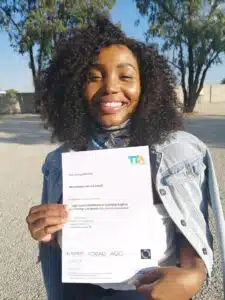
Our alumni stories are proof of that.
Remember, negative reviewers are stuck venting on forums, while the people who ignored the noise are currently eating street food in Bangkok or working from a cafe in Buenos Aires.
An accredited TEFL qualification is never a waste, no matter how you use it.
Author Bio
Lauren is a Web Content Writer & Editor for The TEFL Academy with a background in media, film, English literature, and education, and a passion for language and learning. A University of Cape Town graduate, she holds a PGCE, is a licensed teacher, and is TEFL-qualified. She has taught English to learners of all ages and levels, both in South African and South Korean classrooms, as well as online. When she’s not writing, she’s likely deep into academic readings or enjoying a well-earned gym session.
Read
Lauren Johnstone's story →
 United States
US
United States
US