 United States
US
United States
US










How To Engage Young Learners Online
Join a global community of over 200,000 TEFL teachers working throughout the world! Enrol me!


Last Updated
July 27, 2026Online English teaching has grown tremendously in recent years, and it’s now a regular part of life for many TEFL teachers. And like any classroom, the virtual one comes with its own set of challenges.
Authentic learner engagement is key to a successful lesson, and online lessons are no different. But facilitating this online can be difficult, especially if you’re teaching Young Learners. Young Learners tend to be more energetic and require much more than good content to keep them motivated and attentive.
So, let’s take a closer look at some of the most common challenges to teaching Young Learners online and, more importantly, what you can do to keep your students engaged.
Read more: Motivational Tips For Online Teachers
Problem: Young Learners crave movement
Online lessons can be very static. By its very nature, online learning requires students to sit in front of their computers for the entire lesson. They can’t get up out of their seats, play a ball game, or change partners like they would in a regular classroom.
And for Young Learners with a lot of energy, sitting still is not really an option. Without some form of physical element, they are likely to become disinterested or bored after extended periods of time. As a teacher, that’s exactly what you want to avoid.
Solution: Change it up
Adding some movement can instantly enhance your lessons. You don’t need to create a full physical activity to do this – it can be as simple as asking them to use gestures or giving them a reason to leave their seat.
For example, you can ask them to put their hands on their heads when they’re finished, or put a hand up to ask or answer a question. Both these options keep them active without detracting from the lesson.
One advantage of having your learners in their own homes during class time is that they are surrounded by their own stuff. You can consider incorporating their house into your lessons to give them a reason to move around.
For example, if you are talking about clothes, you can ask them to stand up and describe what they are wearing, or they can fetch certain items from their cupboard to show you.
Read more: Brain Breaks For Young Learners

Problem: Online lessons are not very communicative
Generally, lesson plans keep the communicative activity until the end of the lesson. This allows sufficient time for the teacher to introduce the language and work on accuracy before the students get to practice the language in a communicative situation. Because online lessons are usually shorter than usual lessons, this often means the communicative activity is very short. For Young Learners, communication is important to keep their attention.
Also, in regular lessons, we utilise pair work and group work to maximise opportunities for communication. However, organising pair work and group work is difficult to do online. This can mean that students often don’t get to engage in the fun (and arguably the most important) part of EFL lessons – talking and interacting with their classmates.
Solution: Adapt
Start by incorporating communicative activities in every stage of your lesson. If you are teaching an individual student, make sure there are plenty of opportunities for meaningful communication between the two of you, rather than only checking answers, for example. If you are teaching more than one learner, make sure you know how to divide the group up into break rooms for students to work with partners as much as possible. Also, make sure that your students know what they need to do to chat to their partners!
Read more: PPP In The EFL Classroom
Problem: Screen fatigue
Young Learners might already spend a significant portion of their day looking at screens before even entering your virtual classroom. As a result, the additional screen time required for your classes can feel particularly tiring.
In a physical classroom, students’ attention shifts from different people, tasks, and objects. Online lessons, on the other hand, require them to focus on a single screen for the entirety of the lesson. This can lead to screen fatigue, which causes students to become distracted by what’s around them.
Solution: Use the right tools to keep energy high
Fortunately, technology can also help us resolve this issue.
There are a variety of digital tools you can use to make your lessons more engaging, even when teaching online. Digital whiteboards, quizzes, polls, flashcards, and games can help to regain students’ attention when their energy starts to drop. It also gives them a fun change of pace from sitting and listening. But be mindful of overusing these tools as they can make the lesson overstimulating and overwhelming.
Read more: Surprising Ways To Boost Engagement In Online Lessons


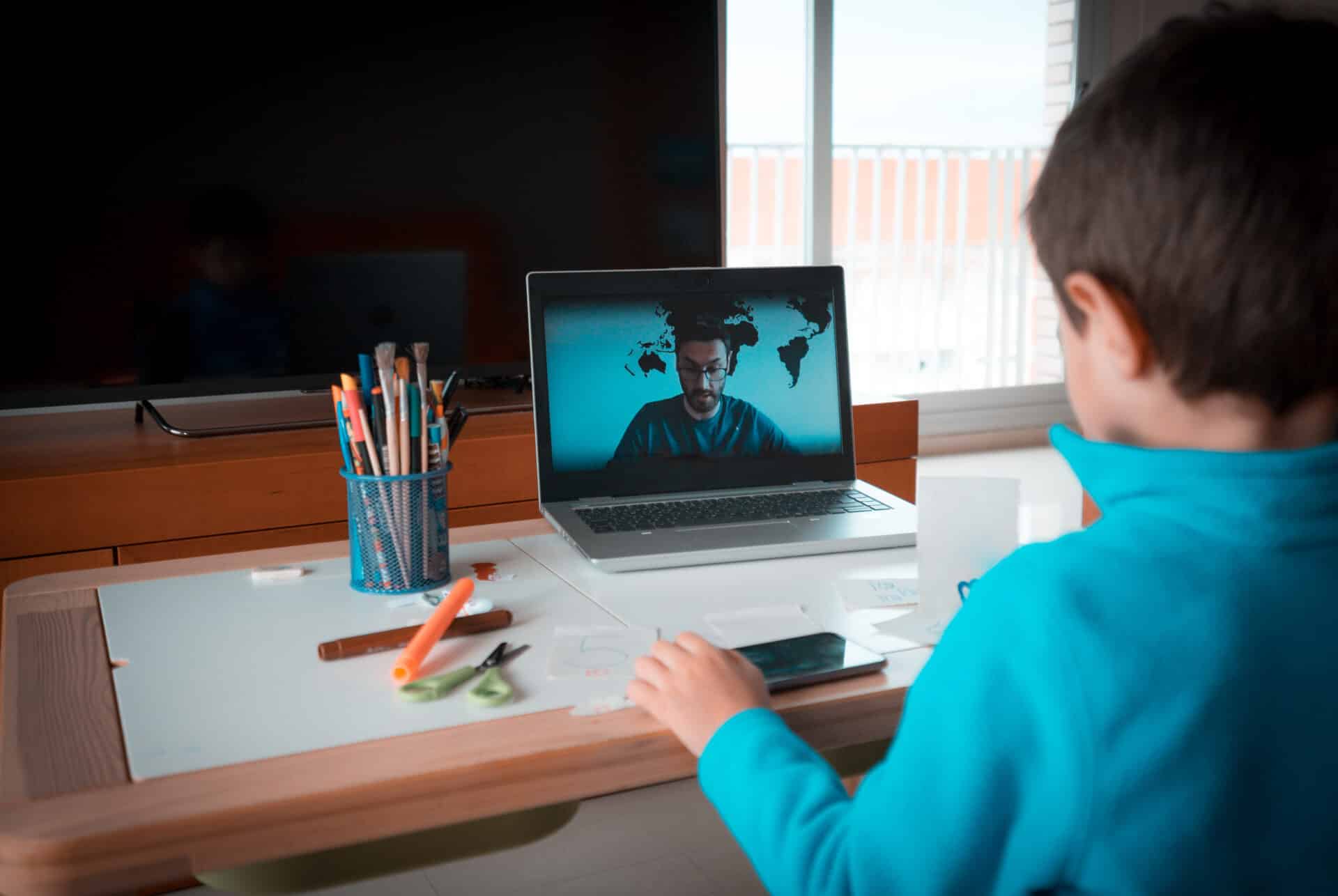
Problem: Personal connection is harder to build online
A large part of our EFL lessons involves connecting with our students, but building a good relationship with them can be difficult from behind a screen for two reasons.
Firstly, we rely on body language and tone to help us understand each other. Unfortunately, these don’t always translate well when you’re online. Certain movements might not be in frame, or a facial expression might not be clear enough to interpret. As a result, it can be challenging for both you and your students to warm up to each other.
Physical distance is the second reason. Since students don’t share a space with you, something as simple as chatting can feel unnatural. And when you factor in that you might be sitting in a flat in New York while your Young Learner is in a house in Bangkok, the physical divide becomes a cultural one too. If you have no prior knowledge of Thailand, it can be difficult for you to get to know your learners to the level they need you to.
Solution: Make relationship-building part of every lesson
As an online teacher, building a relationship with students needs to be more intentional. With Young Learners, it’s not essential to jump straight into your lessons. Rather, start each lesson with a quick chat about their day. For example, you can ask them about what they had for lunch, what they watched on TV the day before, and what their parents are doing. This will not only gear them up for the lesson but also give you a glimpse into their lives. Do this every lesson, and soon you will have a better understanding of them, their interests, and their cultural background.
Problem: Some Young Learners won’t participate
For many Young Leaners, being on camera can make them anxious. Some become self-conscious, while others feel nervous about speaking in front of someone they have not met in person. Technical issues, such as poor internet connection, audio delays, frozen screens, or poor-quality microphones, can also stop them from participating. Another reason could be that students might not know how to use all the online tools if they are unfamiliar with online learning.
Solution: Lower the stakes
The best way to encourage participation is to make students feel comfortable.
Rather than asking learners to always answer questions using their mics, you could offer simpler alternatives, such as using the chat feature, emojis, or shorter yes or no questions. These options are less intimidating and can reduce some of the anxiety students may experience. With time, they will get used to participating and become more involved in the lesson.
Focus also on creating an environment where students feel comfortable enough to make mistakes. Remember to praise their efforts, even if their answer is wrong. You can always correct them later, but they are unlikely to learn anything new if they’re too nervous to answer in the first place.
Teaching Young Learners can be challenging on any given day, but when you add in the extra element of teaching online, it can be very tricky. That’s not to say that it’s impossible! Being clever and using a few simple tweaks to your lessons will ensure your Young Learners are engaged and happy in your online lessons.

Author Bio
Comments:

Accreditation & Quality Assurance
The TEFL Academy was the world’s first TEFL course provider to receive official recognition from government regulated awarding bodies in both the USA and UK. This means when you graduate you’ll hold a globally recognised Level 3 (120hr) Certificate or Level 5 (168hr) Diploma, meaning you can find work anywhere and apply for jobs immediately.




Thank you very much for the valuable information.