Do you speak English as a first language? If so, I want you to try and imagine this:
It’s January and you are experiencing the dead of winter – shorter days and cold weather. You yearn for the summer but realise warm weather is many months away. But, wait – you remembered you can monetise yourself as an online English teacher. You get TEFL certified and begin your TEFL adventure. This means you don’t need to be cold and miserable in January.
Say you want to go to the Caribbean to escape winter for the month of January. Here’s the thing – you can do just that. As an online English teacher, your laptop and a sound wifi connection are all that you need to make this a reality.
And yes, it can be that easy. You really can travel long-term without savings if you have the right remote setup.
Say you get bored of your January wherever you decide to call home – well then, move to the next place for February… and then the next place for March. The world is literally your oyster.
And the best part is, you don’t need big savings to make long-term travel a reality.
Read more: How To Get TEFL Certified: Everything You Need To Know
Our transition from classroom teachers to digital nomads

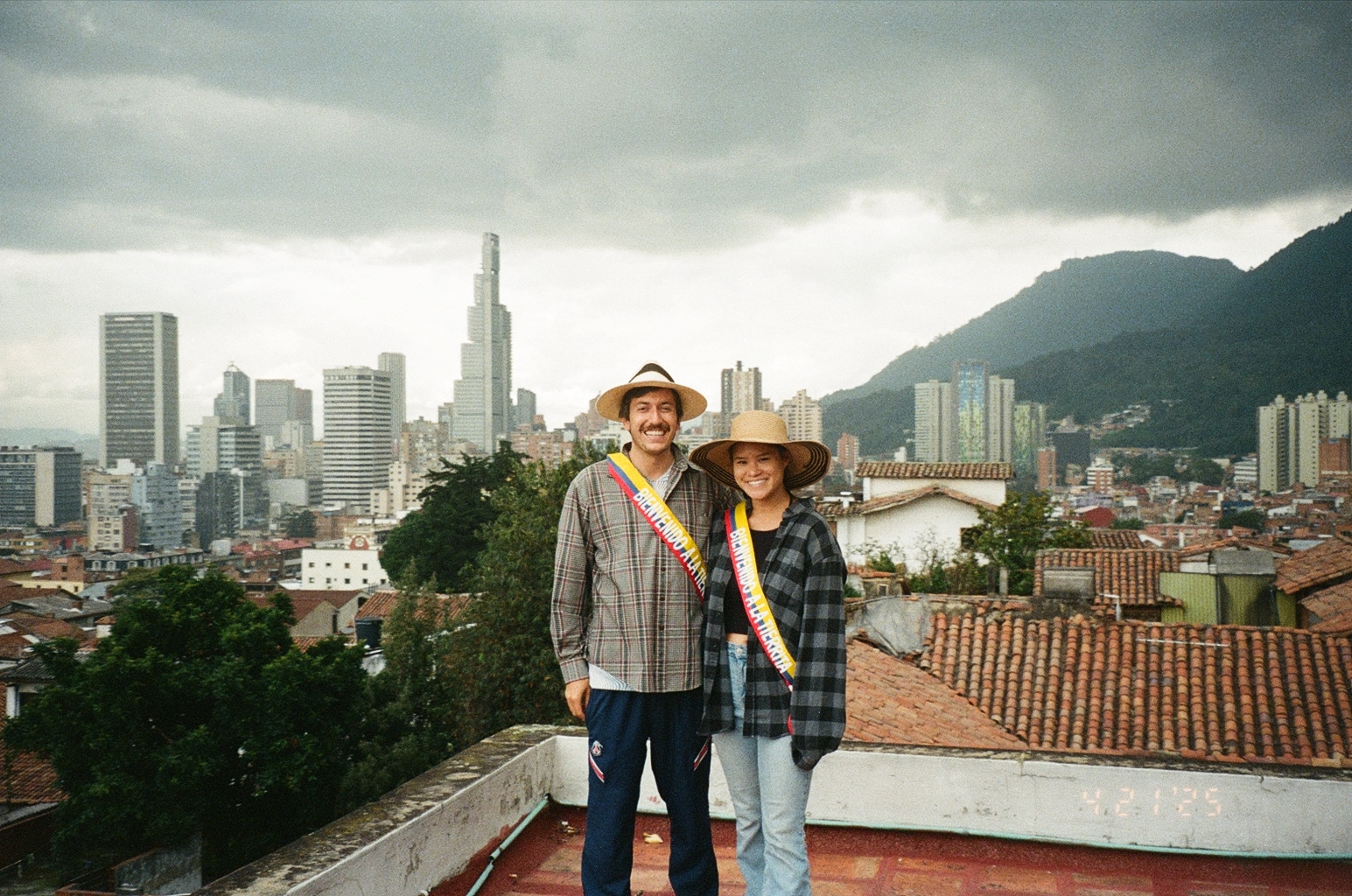
Take us, Matt and Perlie, as an example. We have been travelling long-term and teaching online for the last 2.5 years. We have made it our mission to spend each month in a different country and our journey has literally taken us around the globe.
We certainly aren’t rich; just a couple of nomads living the TEFL digital nomad lifestyle who have spent time in a little over 40 countries in this time frame.
Let’s dive into how to make this lifestyle a reality for you!
Read more: The Digital Nomad Visa: A Ticket To Your Best Life
As mentioned above, we are Matt and Perlie – two American TEFL teachers who have been making the globe our classroom and workplace. After getting TEFL certified in 2017, I was off to Spain to teach in a small town in Spain’s autonomous community of Galicia for six months.
I loved my job teaching children so much that he wanted to sign on again; this time to experience the hustle and bustle of Barcelona. With one year in a Barcelona high school under my belt, I decided to completely shift gears and spend 14 months teaching in Busan, South Korea.
This is where Perlie came into the picture.
Perlie’s story is similar to mine in the sense that she got her TEFL certificate right out of college. However, her first TEFL experience was spent in Busan. After meeting, we hit it off and officially became an item. As our contracts in Korea wound down, we decided we wanted to continue teaching in-person and then moved to Istanbul, Türkiye.
We resided in the megacity that is Istanbul for a year where we continued to grow as TEFL teachers – yet, there was something missing. As we are avid travellers always looking to plan our next trip, we decided that we wanted to work and travel on our own terms. We didn’t want to be confined to a 9-5 classroom schedule where we were limited to travel on weekends and holidays.
So, we took the leap and literally took our journey on the road as an online English teaching digital nomad duo. We started with a large online company based in Poland and spent our first month living in Guatemala. We then spent a month in Montenegro and Poland to round out that year. We loved the freedom to travel while working from the comfort of our home (well, in this case – our AirBnBQ).
After building up a clientele, we switched to private lessons where we work for ourselves and have been travelling the world ever since.
Read more: Online Teaching Platforms You Should Know
The secret to funding travel: Planning vs saving
As our time in Istanbul came to a close, we were faced with an important decision: stay at our schools for another year, find work in another country, or pursue the online teaching route. We chose the thrid option because we wanted to try the digital nomad lifestyle.
I can speak for both of us in saying that we certainly didn’t have big savings from our time teaching in-person. However, we planned ahead to see how much money we would spend each month when compared to how much we were going to earn through teaching online.
The plan was to never touch savings and use one month’s salary to not only support us wherever in the world we were but also to save a little to roll into the following month.
2.5 years later, I’d say we have done a great job at this. We haven’t spent any month in overly-expensive countries (if we have, it has been using Trusted Housesitters to save on accommodation) and we have never had to touch savings or ever felt strapped for cash.
We are real-life examples as to how you can travel long-term without breaking the bank.
Read more: How To Start Teaching Online To Earn Money
A community of support: Navigating the TEFL world
Both of our sets of parents were certainly supportive in our decision to teach online and travel because they have seen how happy we’ve been with our life on the road. My parents actually pushed me to get TEFL certified in the first place. They actually visited me in two out of the three countries I was living in (with the exception of Korea, because of COVID). So, naturally, our parents were excited to see where our journey would take us next.
Within the TEFL community, there are so many people to run ideas by, whether it be to learn more about teaching in a particular country or even for research into a particular company for teaching English online. We have never once felt alone or isolated with regards to anything within this incredible field.
The “startup cost” of a life on the road
We have never once touched savings during this journey.
As we completed our last month teaching in Istanbul, we set aside the entire paycheque (roughly $2,200 per person) for our first month living in a different country as we were going to build our online teaching schedule. This was more than enough for both of us as a startup cost, especially for a country like Guatemala. With that being said, if we embarked on this journey individually, $2,000 is a great amount of money to start with in an inexpensive country.
Editor’s note: This is known as geo-arbitrage: earning a high income (or an income in a strong currency) while living in a place with a low cost of living. This helps you save while still living a comfortable lifestyle.
The math behind the magic: monthly income and expenses
In our current positions as online private English teachers, we make between $2,000-$2,200 a month each.
This range accounts for things like holidays and vacation taken by our students. We have students based mostly in the US with others scattered around Poland (compliments of our first online teaching job with a Polish company). So, some months where there are more American or Polish holidays, we tend to see less money coming in. Also, during the summer, more students take vacation so we anticipate the lowest salaries in these months.
Regarding monthly rent, it depends on where we go and how high/low the cost of living is in each particular country.
We try to keep a baseline of $500-$800 for a month-long AirBNB. We have noticed that we will be paying closer to $800 in countries where there are less AirBnb options, meaning less competition.
For example, we spent closer to this in El Salvador (an inexpensive country) because there were far fewer month-long stays when compared to Buenos Aires, in Argentina.
Additionally, as mentioned before, we always keep our eyes out for housesitting gigs using Trusted Housesitters. We have been able to save a lot of money by taking advantage of this in countries like Singapore, Germany, and Luxembourg (where month-long AirBnbs would be more than double our budget).
Regarding food, we always try to cook during the week and eat out on the weekends to further save money. However, in countries like Vietnam and Colombia (amongst others), eating out is quite inexpensive; therefore we wouldn’t actually cook. On average, we spend between $600-$700 for the two of us on food.
These are the kinds of affordable long-term travel tips that make the lifestyle sustainable.
Read more: 8 Simple Money-Saving Hacks All Travelling Teachers Should Know
Balancing full-time work with global exploration
We always try to work between 35-40 hours a week to maximise our earning potential. Our biggest monthly cost comes in the form of travel. We always spend a month in a major city with a lot of flight options so that we can see as much as possible of a country.
In countries like Vietnam or Peru, we found flights to surrounding domestic cities to be quite inexpensive. However, in countries like Argentina or Chile, we would often have to pay a little more. Therefore, we have a common goal to make as much money as possible by working as many hours as possible.
Our top two hacks for ultra-affordable accommodation
We have two main hacks to keep costs down as we move.
Firstly, we always take advantage of the “month-long” stays offered on AirBnB. Most properties use this, which drives down the nightly cost. Even if we only want to stay 3 weeks, we would opt to pay for the month instead of a nightly price for those 3 weeks. You can save a lot this way!
Secondly, we can’t stress enough how important it is to sign up for Trusted Housesitters. With a yearly membership fee of approximately $100, you can watch someone’s pet while they travel and have access to their house at no additional cost. You can pay off this membership fee in literally 2-3 nights. This has been amazing in expensive countries that we wouldn’t normally have spent the month. We spent two weeks in Singapore and didn’t pay a penny for accommodation! This is a travel hack – and you can make some truly awesome furry friends!
Your turn: why you should take the leap today
If you have any interest in travelling for longer than a holiday, how to fund long-term travel shouldn’t be the thing that stops you – JUST DO IT!
It isn’t as expensive as most people think and usually is always cheaper than a month spent living back in places like the UK, Canada, the US, or Australia.
Don’t ever let the price tag deter you. Of course, it might be difficult to travel long-term in countries like Switzerland or Iceland without breaking the bank. But, guess what– there are so many countries on this planet that are not as pricey.
So, get out and follow your dreams! Hopefully, these affordable long-term travel tips help you realize that you don’t need a fortune to see the world.
Author Bio
Having already visited 65 countries plus Antarctica, Matt has a lifelong goal of hitting every country in the world. Matt has spent several years living abroad after getting TEFL-certified and really hasn’t looked back. From a small town in northwestern Spain to the hustle and bustle of Barcelona, to the bright lights of South Korea’s 2nd-largest city of Busan to the beautiful chaos of Istanbul, Matt has had some life-changing experiences teaching English in all 3 of these countries. Currently, Matt is an online English teacher travelling the world, living in a new country every month. Armed with a laptop and stable wifi, Matt has made the world his classroom!
Read
Matt's story →
 United States
US
United States
US