United States
US


How To Use Total Physical Response (TPR) In The Classroom (+ Examples)
Join a global community of over 200,000 TEFL teachers working throughout the world! Enrol me!



Last Updated
October 19, 2026Total Physical Response (TPR) is an interactive EFL teaching method that connects verbal commands with physical movement. Designed to mirror natural language acquisition, TPR builds comprehension, boosts retention, and reduces learning anxiety for both Young Learners and adults. Discover how movement-based activities can transform vocabulary, grammar, and online instruction.
What is TPR (Total Physical Response)?
TPR stands for Total Physical Response. It’s a language teaching method where students respond to both body movements and verbal commands with whole-body actions and physical movements instead of only speech.
TPR is just one of many techniques used in teaching English both in a classroom and online. It is especially useful when teaching children, and is sometimes even a requirement for job interviews and demo lessons for teaching Young Learners.
The Total Physical Response method was developed as part of the comprehension approach to language learning. This is focused on understanding a language, rather than immediately trying to speak it. This is different to the better-known communicative approach, which concentrates on language production (speech and writing).
The comprehension approach is based on linguistic theories of second language acquisition, specifically for children.
What is Total Physical Response (TPR) in language teaching?
TPR was developed by Dr James J. Asher in the 1960s. The theory is based on how children learn their own mother tongue.
Think about how you learnt to speak your first language. Did you memorise lists of vocabulary items? No. Did your mom explain the present perfect to you? I hope not!
Learning your first language is a natural process, which is why it’s often referred to as acquisition rather than learning.
Parents and caregivers are the original language teachers. Parents have their own special body language conversations with their children. They say things like: Give me the book or Eat the banana or Come here – all with accompanying appropriate hand gestures and body movements. These kinds of conversation go on for many months before the child actually starts speaking.
Although there is no speech for a while, the child is taking in all of the language, sounds and patterns they are exposed to. When the child eventually speaks, the language is reproduced, almost spontaneously. TPR aims to mirror this ‘magical’ effect in the language classroom.
What are the key principles of TPR in EFL?
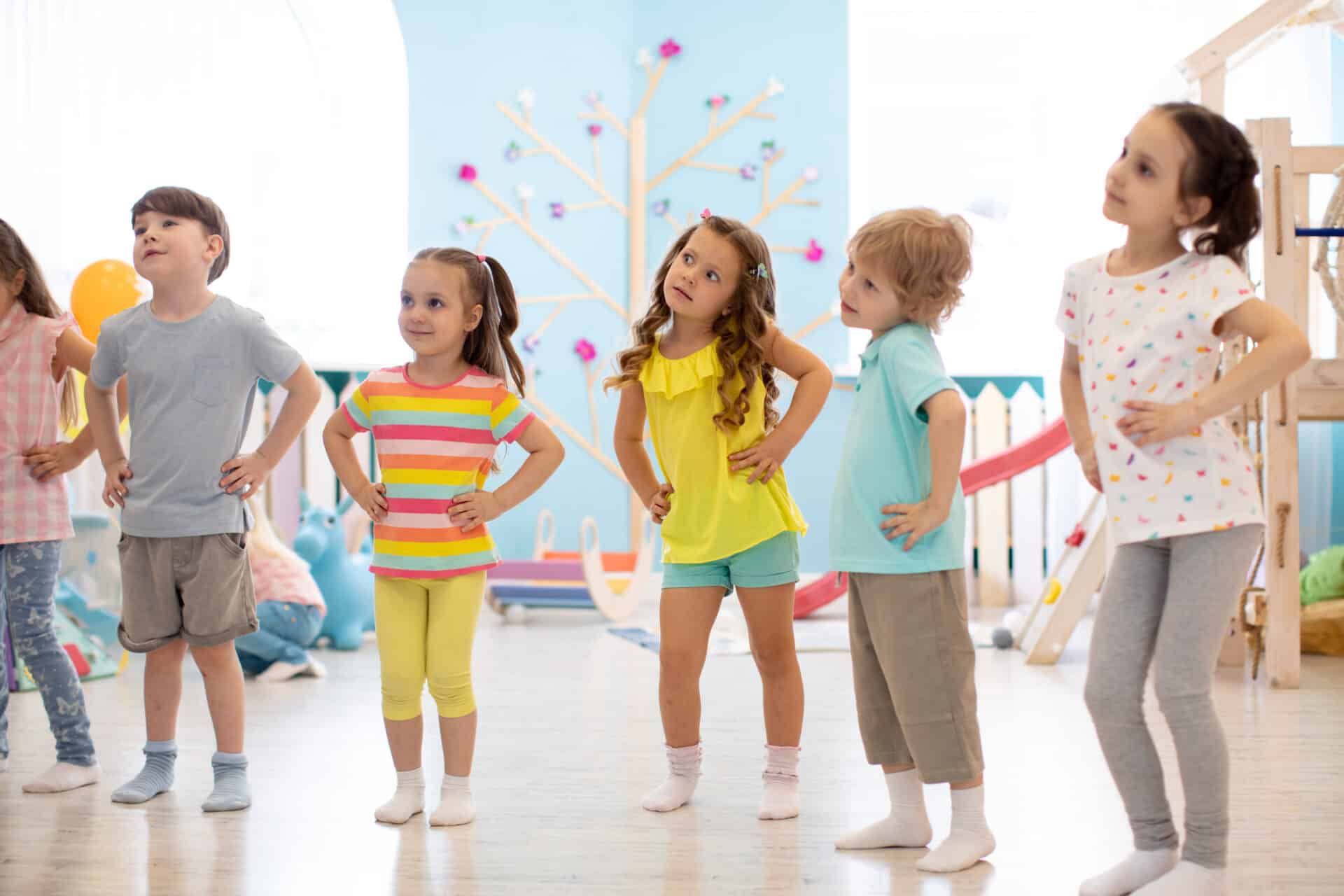
TPR is a teaching method that involves the students responding to commands from the teacher through physical actions¹, like standing up, miming actions or touching various objects. TPR is a dynamic method that pairs movement and thought, where students are encouraged to use physical responses, alongside spoken responses. It is believed that in doing so, students interpret meaning through different parts of the brain, which pairs the physical and intellectual.
TPR makes language learning more engaging and interactive. It helps students develop listening skills, improve their comprehension of the language, and also provides a kinaesthetic element to language learning.
In order to successfully implement TPR, teachers provide clear, concise commands in the target language, using gestures and physical cues to support meaning.
What are examples of TPR activities in the classroom?
- The teacher creates an action for certain words and the students mimic the action while saying the word or phrase.
- Classic games such as Simon Says, Stand Up, Sit Down and Follow the Leader are popular and effective.
- Skill-building drills like The Command Chain, Body Part Tag and storytelling are compelling choices.
- Music can be introduced with songs that combine singing with actions.
Is TPR suitable for adult EFL learners?
Yes, TPR is suitable for adults. Although it was originally designed for children, there’s value in using it with adult students.
When you think about it, TPR is designed to stimulate the same natural brain pathways used during early language acquisition. This concept works for both children and adults.
The difference is in the execution. Common TPR methods used with Young Learners need to be adapted to use with adult learners. Not many adults will be thrilled with paying good money to play Simon Says in a classroom!
An example of an adaptation: instead of Head, Shoulders, Knees and Toes, adult students could role-play everyday routines or play out workplace instructions. The high-energy, full-body movements for children can be adjusted to incorporate subtle gestures, hand movements, or using props.
As an added bonus, TPR helps to reduce language anxiety, aids low-literacy learners and enhances memory and engagement² – all useful features with older language learners.
Read more: 6 Differences Between Teaching Adults And Young Learners
How does Total Physical Response reduce language anxiety for Beginners?
The low-stress environment and group games create a safe, playful atmosphere in the classroom.
Beginners don’t have to speak or produce language until they feel naturally ready. By removing the focus from ‘getting it right’ to simply moving, performance anxiety and stress are lowered significantly. Because of the mirrored natural acquisition, students show their understanding through gestures and non-verbal participation.
What are the main advantages and disadvantages of using TPR?
Advantages
- Fun and easy
- Not much preparation is required
- Great tool for learning vocabulary
- Improves retention
- Reduces anxiety by lowering the affective filter
- Engages senses
Disadvantages
- Not very creative, with little scope for spontaneous production
- Easy to overuse, and can become repetitive
- Quite limited – not everything can be explained, and often must be used in conjunction with other approaches
- Better for Beginners³ – not as useful with Intermediate or Advanced level instruction
Can TPR be used to teach English grammar?
TPR can be used to teach certain grammar points.
Imperatives and direct commands are at the core of how TPR works: Stand up, Open the book etc. This immediately teaches sentence structure without any explicit rule explanations.
Verb tenses can be taught using movements to show the sequence of time, and therefore tenses: I drank my juice. I am sitting. I will eat my lunch.
Prepositions of place can be taught successfully: Put your book on the desk. Sit between your friends.
However, it has limits with more abstract grammar.
What is the silent period in TPR?
We’ve all had students in our classroom who are attentive, seem to be soaking everything in, but don’t say a word. As teachers, our first instinct is to ‘fix it’. However, the silence is not necessarily a void, but rather one of the most active phases of language acquisition.
The silent period refers to the early stage of language learning when language learners are absorbing new language, but aren’t yet ready to speak. Although this could look like a lack of motivation or concentration, it is not. Rather it’s a developmental phase where listening and comprehension come before speaking.
The silent period can last from a few days to several months, depending on the student’s age, language background, prior exposure to English and personal confidence in the classroom. The silent period is actually a very valuable stage as it encourages listening, reduces language anxiety and provides comprehension before speech.
There are various techniques that can address the needs of learners during this stage and TPR is one of the most useful.
How do you assess student progress when using TPR?
Assessing a student’s progress involves observing their ability to follow commands, use vocabulary in context and employ grammar structures correctly. Specifically, TPR relies on non-verbal observation and gradual performance checks, rather than traditional written tests.
Daily formative checks, like Entry and Exit Tickets, are useful ways to test comprehension. Using hand signals, mini whiteboards and the stoplight method with coloured cards are also effective ways to gauge progress, for instant feedback.
How can TPR be integrated into online or remote EFL teaching?
Speech and body movement are innately linked. By using TPR in online teaching, language is delivered in the best way that Young Learners understand. In a virtual classroom, teachers are confined to a small screen. Using movement when teaching new material can help visual, auditory and kinaesthetic students without the space and resources of a traditional classroom.
It helps to keep the focus and attention of Young Learners by incorporating gesture, movements, dancing and even acting. Students are more likely to be entertained and keen to learn.
Read more: Adapting To Different Learning Styles In Online Lessons
Integrating Total Physical Response (TPR) into your language lessons bridges the gap between active listening and natural language acquisition. By pairing body movement with physical concepts, you create a dynamic, stress-free environment where students absorb vocabulary faster and retain it longer. Whether you are introducing Beginner-level commands or adapting the method for older learners, starting with just a few kinaesthetic activities can completely transform your classroom energy. Take a few strategies from this guide, adapt them to your curriculum, and watch your students’ comprehension and confidence soar.
| References |
| 1. Asher, J. J. (1969). The Total Physical Response approach to second language learning. The Modern Language Journal, 53(1), 3–17. [Accessed 16 October 2026 online] |
| 2. Tabassum, A. H. A. (2026). Total Physical Response (TPR) in young learners’ English: A thematic review. ResearchGate. [Accessed 16 October 2026] |
| 3. Yang, L. (2024). A comprehensive review of Total Physical Response. Frontiers in Sustainable Development, 4(7), 90–98. [Accessed 16 October 2026] |
Author Bio

Accreditation & Quality Assurance
The TEFL Academy was the world’s first TEFL course provider to receive official recognition from government regulated awarding bodies in both the USA and UK. This means when you graduate you’ll hold a globally recognised Level 3 (120hr) Certificate or Level 5 (168hr) Diploma, meaning you can find work anywhere and apply for jobs immediately.