 United States
US
United States
US






Why Portugal Is The Top 2026 Hub For Digital Nomad TEFL Teachers
Join a global community of over 200,000 TEFL teachers working throughout the world! Enrol me!


 January 27, 2026
Have you ever thought about becoming a digital nomad and teaching English online in a small European country on the Atlantic coast?
We were thrilled to spend three weeks in Portugal as online TEFL teachers and digital nomads.
Here’s our take on why you should make Portugal your next destination.
Read more: Teach English in Portugal
Why has Portugal become a digital nomad hotspot?
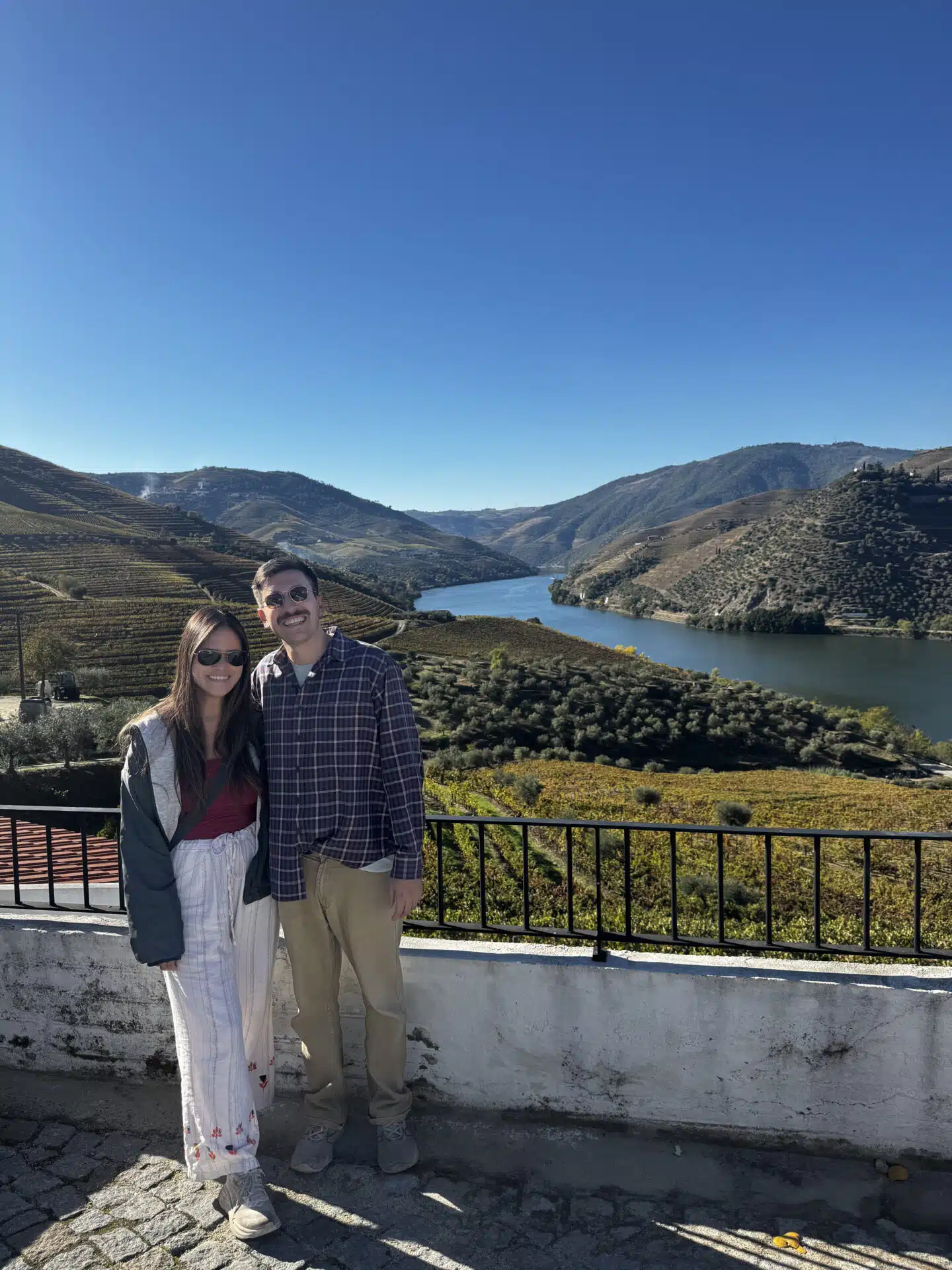
For three weeks, we called Porto, Portugal’s second-largest city, home. Once immersed in this beautiful city, we soon realised we weren’t the only digital nomads trying to make it our home base.
Several factors have contributed to Portugal’s popularity among digital nomads.
From personal experience (and conversations with others), we found that Portugal offers a high quality of life at a seriously affordable rate.
Portugal is small compared to many other European nations, but it has a really diverse landscape: lush wine country in the north, golden farmlands at the centre, and a sun-soaked south. There’s a lot on offer.
The country also has a massive coastline — check your map!
On top of that, you’ll find many affordable long-term Airbnb options and well-priced groceries.
Many people immediately think of Spain as the preferred Iberian home base, but Portugal is actually more affordable and far less crowded with tourists – an issue that has plagued its Spanish neighbour.
Much like other Southern European countries, the Portuguese are extremely friendly and hospitable, making Portugal an ideal digital nomad destination.
Read more: How To Work In Portugal As A Foreigner
The D8 Digital Nomad Visa: A clear path for online TEFL professionals
While we arrived in Portugal as American tourists working remotely, we wanted to find out about the Portuguese Digital Nomad Visa (D8 Visa), as we’d love to return to and live in Portugal legally.
Disclaimer: Under Portuguese law (as in most countries), any form of work, including remote work, is not permitted on a standard tourist visa. Although many digital nomads do work while visiting Portugal, this practice is not legally compliant and can carry risks, including fines or deportation. For longer stays, applying for an appropriate visa, such as the D8 Digital Nomad Visa, is the safest and most compliant option.
The D8 Visa is designed for remote workers earning income from outside the country.
If you’re a freelancer, online TEFL teacher, contractor, or remote employee with non-Portuguese clients or employers, this visa allows you to legally live in Portugal without needing a local job sponsor.
D8 Visa requirements:
- Consistent remote income (around €3,480 or $4,130 a month)
- A valid passport
- Background check
- Health insurance
- Proof of accommodation (long-term Airbnbs are commonly accepted)
Editor’s note: You’ll also need €10,440 ($12,380) in savings to qualify.
Applications are made through a Portuguese consulate in your home country, with residency finalised after arrival in Portugal.
The D8 Visa typically grants one year of residency, with the option to renew for two-year periods and eventually apply for permanent residency or citizenship after five years.
The D8 works well for non-EU remote workers (e.g., those teaching online), while those hoping to teach locally usually need a Portuguese employer-sponsored visa (or D2 Entrepreneur Visa). EU passport holders can teach freely without visas.
[Editor’s note: Portugal’s old NHR 10-year exemption no longer applies to newcomers. Remote income becomes taxable in Portugal once you qualify as a tax resident, typically after living there for more than 183 days in a year. Remote income is then taxed at Portugal’s standard progressive rates — 13–48% as of 2026.]
Compared to other EU countries, Portugal stands out for its relatively simple visa process, lower cost of living, strong remote-work infrastructure, and a lifestyle that makes long-term living not just possible, but genuinely enjoyable.
Read more: The Digital Nomad Visa: A Ticket To Your Best Life
The 2026 cost of living breakdown: Balancing a TEFL salary
We found Porto extremely affordable and a little less expensive than Lisbon.
Porto was our home base. We rented an Airbnb out in the country for about €843 ($1,000) a month — a one-bedroom apartment with a living room. This might seem pricey, but it was perfect for two people. However, there are cheaper options if you’re looking for a studio apartment.
When planning to make Portugal your home base, the time of year can make all the difference.
💡Tip: We recommend visiting just before or after the summer period (June, July and August), as prices nearly double during peak season.
Plus, in May and September (the shoulder months), there are fewer tourists, better prices, and the weather is slightly cooler.
As for groceries, we found everything to be a fraction of the price in other European countries. We are huge seafood eaters and fell in love with the affordable seafood market prices. We ate seafood every night, just because we could!
Compared to other Western European countries we’ve visited and lived in, Portugal tops the list for affordability.
As an online TEFL teacher with a full-time digital nomad salary, living comfortably in Porto is easy.


Read more: 8 Simple Money-Saving Hacks All Travelling Teachers Should Know
Infrastructure and connectivity for remote work
Portugal is 100% built for remote workers, with co-working spaces throughout major cities like Porto and Lisbon.
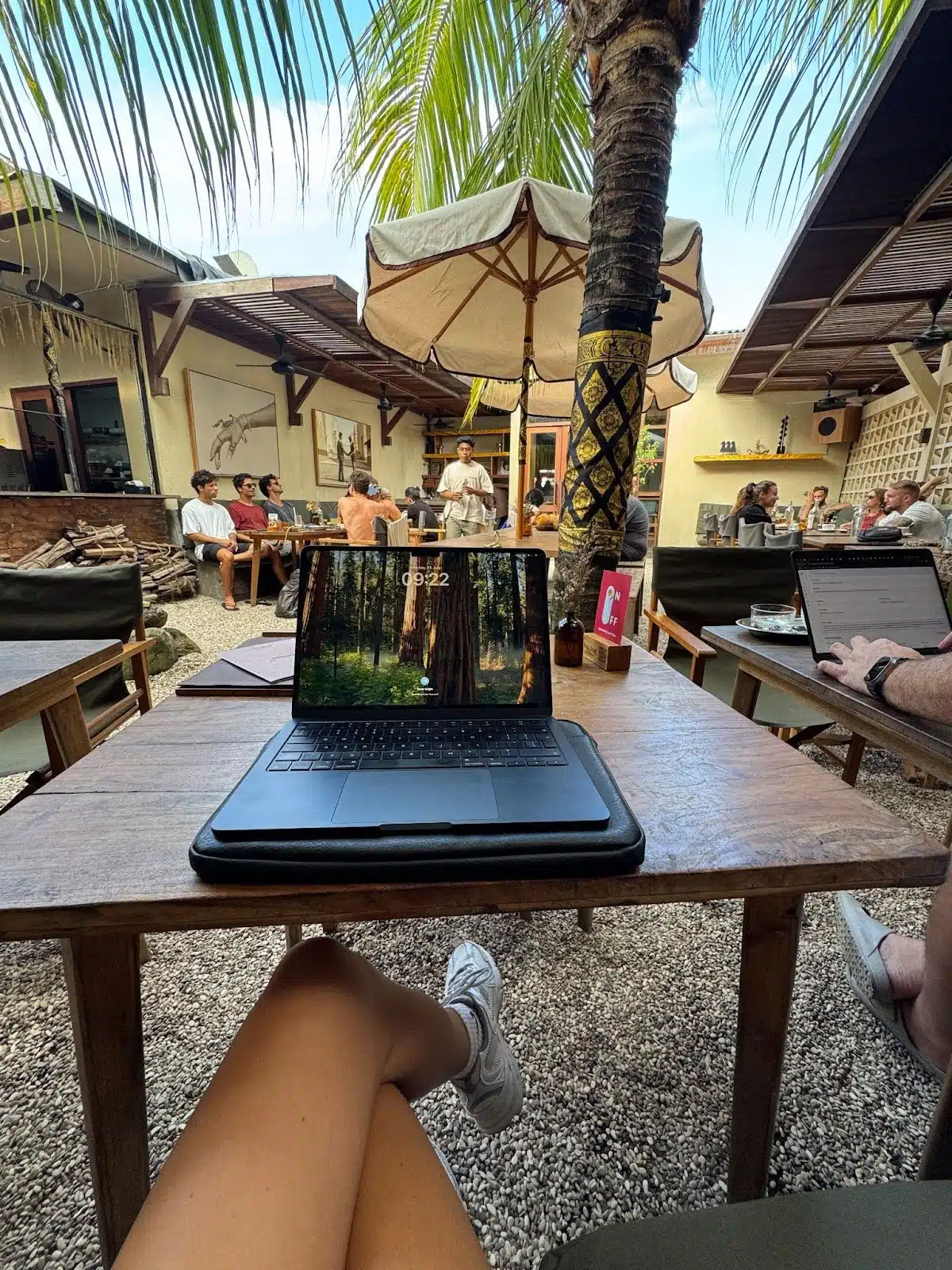
Since my partner and I teach online and don’t want to distract others, we tend to stay clear of co-working spaces. Instead, we like to plan lessons at cafes and teach from our Airbnb.
💡Tip: Check the wifi quality before you go.
We always verify wifi speeds when booking Airbnbs to avoid surprises. In Porto, we found many properties that offer reliable wifi, helping us decide where to stay.
Read more: How To Overcome Online Teaching Challenges While Travelling
We think that Portugal is a great location for teaching online. It’s only one hour behind Central European Time, so we had little difficulty scheduling our Polish students, which allowed us to have a steady routine and full schedule throughout the day. We also teach American students.
If your students are located in Asia, scheduling lessons from Portugal might be trickier than with students in the Americas. It all depends on what kind of routine you want.
Read more: How To Stay Productive With Irregular Schedules (For Online English Teachers)
[Editor’s note: North America is 5–8 hrs behind Portugal, and South America is 3–6 hrs behind. The exact difference depends on the student’s location. For example, someone in Brazil might be 3 hrs behind, while a student in Peru is about 5 hrs behind.
Asia is much further ahead: South Korean students are 9 hrs ahead of Portugal, and Chinese students are 7–8 hrs ahead.
If timezone differences are tripping you up, check out LatinHire’s A Guide for Online Teachers Scheduling Across Various Time Zones.]
The digital nomad community in Portugal
Upon arriving in Porto, we quickly realised that Portugal has a strong and well-established expat and digital nomad community, especially in the major cities.
Remote workers are everywhere, working from cafés, co-working spaces, and community hubs where conversations about visas, wifi, and favourite neighbourhoods happen naturally.
Co-working spaces double as social spaces, making it easy to see familiar faces and build connections without forcing it.
Connecting with other TEFL teachers and online educators is also fairly easy, as there’s considerable overlap between education-focused nomads and the wider remote-work crowd. We were able to connect with teachers through Facebook and WhatsApp groups, and never felt alone.
We highly recommend putting yourself out there to meet like-minded individuals. Based on our time in Porto, we found connecting with others was easy.
Read more: How To Find Your Community As A TEFL Teacher
Beyond Lisbon: Affordable nomad hubs in Portugal
We can’t recommend Porto enough — it’s less chaotic than Lisbon and more affordable.
We also loved the location, not far from the ocean and on the beautiful Douro River. It’s still pretty touristy, but definitely not as much as Lisbon.
I had previously taught English in the Galician region of Spain. Since Porto is only about an hour and a half from the Spanish border, it offered the perfect opportunity to visit — a quick road trip is super easy.
Read more: 7 Things You Didn’t Know About Teaching English In Spain
Porto is at the foothills of wine country, which is another activity you have to do while in Portugal — Portuguese wine is famous for a reason!
Recommendations:
- Those looking for a beach vibe should head south towards the Algarve.
- Want to ditch the big city but still have all the amenities of a metropolis? Take a look at Braga and Coimbra.
- Nature lovers should head to the stunning islands of the Azores, which offer more tranquillity and isolation, being many hours from the mainland.
All in all, Portugal is a unique destination with something to offer every digital nomad — just be clear about what you want.
Read more: A Digital Nomad Story: My Life-Changing Experience with TEFL
What’s next for digital nomads in Portugal?
We think the secret is out: Portugal is an incredibly attractive digital nomad destination. The fact that Portugal has a specific visa for digital nomads shows just how popular the country has become.
I first went to Porto back in 2020 and definitely saw an overall increase in prices compared to our recent stay in the country. But to be fair, you can say the same for anywhere in the world.
We believe Portugal is sustainable as a long-term base for online TEFL teachers because it clearly embraces and encourages digital nomads.
Porto seems to be headed toward overtourism. On social media, I see so many people visiting the northern city because it has so much to offer.
With that in mind, prospective online TEFL teachers might want to consider less-touristy cities like Braga and Coimbra.
Overall, Portugal’s high quality of life, strong internet, rich culture, and welcoming attitude toward remote workers make it a top choice for long-term living and working.

Author Bio

Accreditation & Quality Assurance
The TEFL Academy was the world’s first TEFL course provider to receive official recognition from government regulated awarding bodies in both the USA and UK. This means when you graduate you’ll hold a globally recognised Level 3 (120hr) Certificate or Level 5 (168hr) Diploma, meaning you can find work anywhere and apply for jobs immediately.