 United States
US
United States
US









Stirrers And Settlers: The Secret To Perfect Classroom Energy Management
Join a global community of over 200,000 TEFL teachers working throughout the world! Enrol me!



Last Updated
February 23, 2026If managing a large group of energetic children feels overwhelming, then the right classroom strategies can make all the difference. Teaching Young Learners can be exhausting, yes, but it is also incredibly rewarding. So, knowing how to energise learners when needed and calm them at the right moments, is key.
This is where stirrers and settlers come in.
What are stirrers?
Stirrers are tasks that keep your learners moving and feeling energised. They might involve standing, jumping, acting, walking or running – basically anything that gets bodies and brains active.
Just like us, Young Learners can get tired, distracted, or a bit sluggish at times, so stirrers are a perfect way to shake off that lethargy and get everyone back on track.
Stirrer activities work to help students relax and feel comfortable in the classroom. This lowers the affective filter, which is an important step in creating an effective learning environment. Plus, stirrers have the added bonus of appealing to kinaesthetic learners.
Editor’s note: Studies show stirrers, which act as brain breaks, can improve student engagement. Plus, they can be really useful for tired teachers, too!
Read more: Brain Breaks For Young Learners
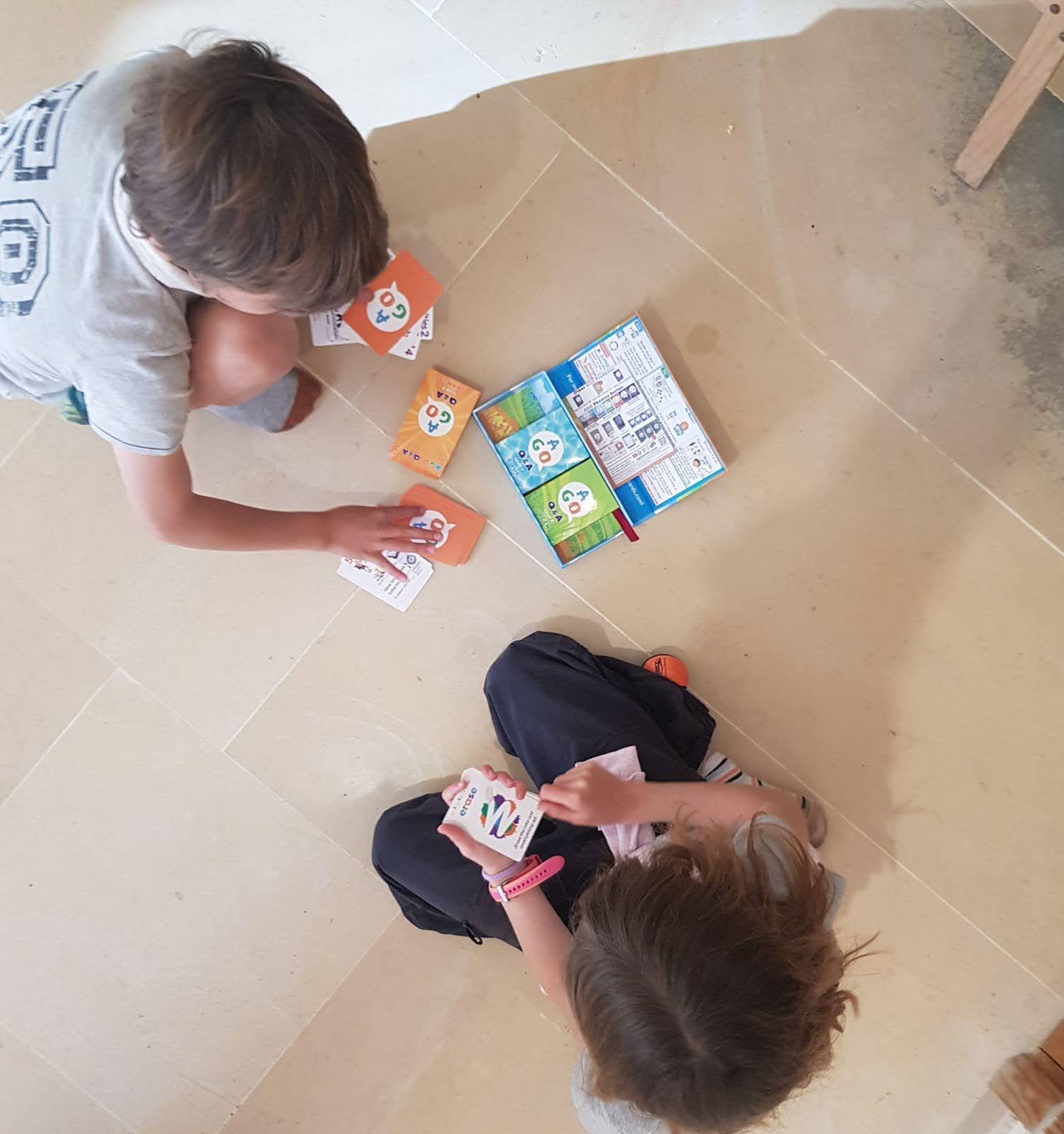
Typical stirrers include songs, role plays, ball games, whole-class games and mingling activities that allow learners to move and interact with each other.
Energy up: Top stirrers to engage your students
- Action songs eg, ‘Head, shoulders, knees and toes’. Learners sing while performing actions that relate to the language in the song. This helps to reinforce meaning.
- Stand up/ sit down vocabulary games. This active game allows learners to show you what they’ve learnt by sitting or standing to choose their answers.
- Mime games. Students act out words or phrases to show understanding of test each other. This activity could easily work with pairs or groups.
- Flash card races or board slaps. A rather fun and physical task where students compete to identify the correct word or image. From my experience it can get loud, and chaotic- but in a good way!
- Ball toss questions. A student throws a ball and asks or answers a question when it is caught. This game encourages speaking in a fun, low-stress way.
- Mini scavenger hunts around the classroom. Learners move around to find items or information. This activity is super easy to link to the target language of the lesson.
- Hot potato. The students pass an object around while music plays. When the music stops, the person holding the object must produce the target language.
- Freeze dance. Leaners dance and freeze when the music stops. They then say or respond to the target language. My advice is to allow them to choose the song!
- Charades. Students act out the target language while the others have a go at guessing the answers. This game encourages collaboration and is relatively easy to set up.
- Total Physical Response (TPR) games, such as Simon Says. In this task students listen to commands and respond with the appropriate actions. This shows their understanding of new language through the actions they perform.
TPR doesn’t have to be used only as a game.
To energise learners and get them moving, consider using it to get feedback on a task. For example, instead of having them shout out “A, B, C” in response to a multiple-choice task, they could stand if they think the answer is A, jump up and down if the answer is B, or stretch to the sky if they’ve chosen C. This way they demonstrate their understanding, while also getting some movement at the same time.
Stirrers should be short, fun, and linked to the language where possible.
Read more: Our 5 Favourite Vocabulary Games

What are settlers?
Now we all know, what goes up, must come down! Settlers are the calm after the storm, and give learners a chance to sit, focus, and catch their breath (which is great for the teacher too!)
These activities help bring order to the classroom chaos and give young minds and bodies a moment to recharge. For the teacher, this sort of task gives the space to put the next step into motion, or a quiet moment to anchor.
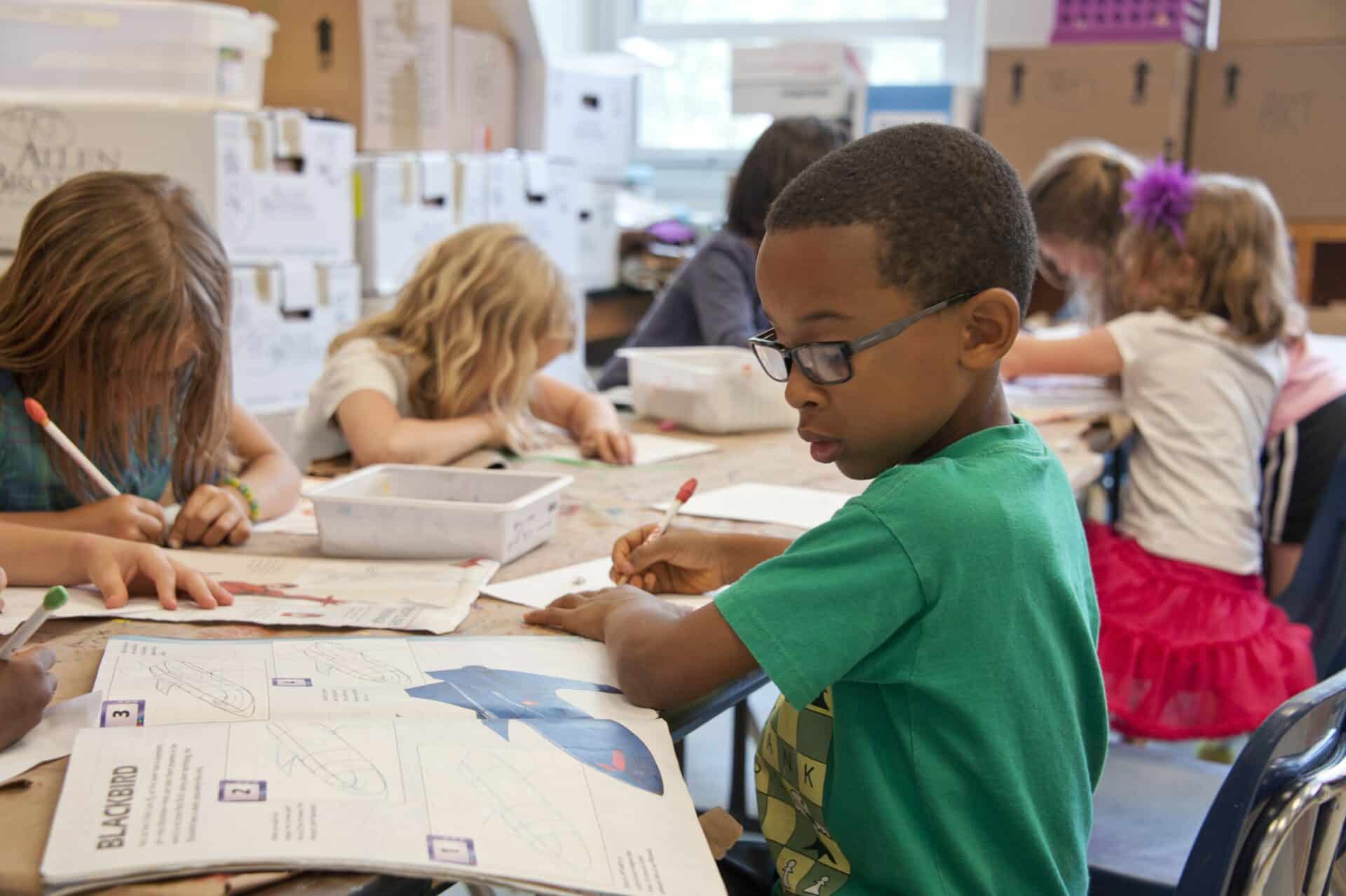
Think drawing, story-time, word games, or arts and crafts – quiet, creative moments that balance all the jumping, singing, and running around.
Energy down: Calming settlers to restore focus
- Silent drawing. This is a very quiet task and quite introspective. The idea is to get learners to respond to instructions by drawing pictures. The pictures also form a great talking point for upcoming speaking tasks.
- Copying down board work. This activity requires quiet and draws attention to accuracy and detail eg, spelling, form, etc.
- Breathing or stretching. Yes, it’s that simple. Similar to Simon Says, but for relaxation purposes this time! Students follow your instructions to breathe, stress and focus. This game practises imperative language and vocabulary.
- Story time. Students listen to a story or audio input to develop their listening skills in a low-stress context.
- Simple puzzles or matching games. Learners work quietly to match words and meanings to recycle vocabulary in a focused, reflective way.
- A quiet reading task. This one requires a bit of planning. Provide them with a text, and set a simple task eg, they need to retell the story to a classmate, or quietly rewrite the story so that it relates to their own lives or situations. A really introspective, reflective task that yields significant benefits.
- Listening to a calm song and drawing what they hear. Students listen for meaning and respond by drawing. Their drawings then become talking points in upcoming speaking tasks. This is the task that keeps on giving.
Settlers should feel safe and predictable, not rushed or competitive.
Teaching tips
- Different types of activities for practising various skills, or required various levels of energy, should be carefully balanced in a lesson. Children have much shorter attention spans than adults, which will influence how many activities can realistically be included in one lesson.
- Time and pace are important. Consider short, engaging tasks as these are often more effective in sustaining attention.
- Varying interaction patterns is a relatively small tweak with huge benefits. Consider alternating between individual, pair, group and whole-class interaction patterns.
- Monitor your students’ learning preferences and make sure you incorporate tasks that speak to the range of styles in your classroom. Take the time to reflect, to get to know your students and then to plan how you can accommodate them all. It sounds like a lot, but it’s possible to incorporate most of these styles into one lesson! This includes visual, auditory, reading/writing and kinaesthetic (VARK) as well as social (interpersonal) and solitary (intrapersonal) learning styles.
- Have gestures to signal the start and the ending of a task. Examples here could include holding up your hand when you want silence, ringing a little bell when you want them to finish a task, touching your ear when you want them to listen, or clapping your hands when you want them to switch partners. Getting them familiar with non-verbal gestures also adds a rhythm to a classroom and gives learners a sense of security.
In the end, classroom management with Young Learners is about finding a rhythm that works for both you and your class. By balancing stirrers and settlers, you can create a lesson that feels lively yet calm, purposeful yet manageable. Don’t worry about getting it perfect every time.
Teaching is a process of noticing, adjusting, and most of all, learning alongside your students.
With practice, you’ll develop a natural sense of when to lift the energy and when to slow things down – creating a classroom where everyone feels comfortable, focused and ready to learn.

Author Bio

Accreditation & Quality Assurance
The TEFL Academy was the world’s first TEFL course provider to receive official recognition from government regulated awarding bodies in both the USA and UK. This means when you graduate you’ll hold a globally recognised Level 3 (120hr) Certificate or Level 5 (168hr) Diploma, meaning you can find work anywhere and apply for jobs immediately.