If you’re eyeing up China for your 2026 TEFL adventure, the bright lights of Shanghai or the historic sprawl of Beijing are usually the first to call your name. But while the Big Four Tier 1 cities offer a ready-made expat lifestyle, a growing number of savvy teachers and digital nomads are heading to Tier 2 and Tier 3 cities.
Why?
Because that authentic traditional China experience is often found in the Tier 2 and Tier 3 cities. These regional powerhouses offer a perfect Goldilocks zone: modern enough to have a high-speed rail and 5G, but local enough that your salary stretches twice as far and your cultural experience is 100% authentic.
Read more: Life In A Tier 1 City In China: Beijing
What is a Tier 2 or Tier 3 city?
While the Chinese government doesn’t have an official list, the country’s 600+ cities are usually ranked by their economic power, population size, and infrastructure in a five-tier system. Here is the easiest way to tell them apart:
- Tier 1 cities: Shanghai, Beijing, Guangzhou, and Shenzhen are the “Big Four.” These are world-class metropolises that are the primary gateways into China, where English is most widely spoken and Western comforts are the norm. While they offer the highest salaries, they also come with a co-called “Tier 1 Tax”: high rent, long commutes, and a competitive lifestyle.
- Tier 2 cities (The Modern Hubs): These are massive regional capitals like Chengdu, Hangzhou, or Nanjing. You’ll find international airports, Western shopping malls, and a decent expat community, but the pace is slightly slower and the rent is significantly cheaper than in the Tier 1 giants.
- Tier 3 cities (The Cultural Heartlands): These are smaller cities (by Chinese standards, though they still have millions of people!), like Yangzhou, Guilin, or Foshan. These cities offer the deepest cultural immersion. You’ll be one of the few foreigners in town, meaning you’ll be treated like a local celebrity, and your cost of living will be so low that you can save the majority of your paycheque.
So the question is, would you like to live and teach in a Tier 2 or Tier 3 city? TEFL teacher Lauren currently lives in Beijing but she previously lived in a small town. Here she tells us what it’s like living in a Tier 3 city.
Read more: Life In A Tier 1 City In China: Beijing

I’m Lauren, and when I first moved to China 10 years ago, I lived in smaller cities.
In 2015, I lived in Hengyang, a Tier 3 city in Hunan Province, where I taught university English for two years.
I was drawn to the more traditional and authentic experience of smaller cities, and it just happened to be the first job offer I received.
First impressions of living in a Tier 3 city in China
What surprised me most when I first arrived was the logistics of living in a lower-tier city.
Even in a lower-tier Chinese city, I was surrounded by over 3 million people. Simple daily tasks like walking, taking the bus, or grocery shopping were challenging at first – being surrounded by unfamiliar sounds, smells, and crowds everywhere was extremely overwhelming.
I grew up in the suburbs of Washington, DC, and attended college in a small town, so I had never lived without a car. My sense of personal space shrank dramatically once I had to rely completely on public transportation and walking.
Challenges of living in a Tier 2 or Tier 3 city in China
Looking back, the slower pace of life was difficult for me to adjust to at first. It was a mix of culture shock and suddenly having a lot of free time as a university ESL teacher.
I later learned that many Chinese households shop for groceries daily or every few days compared to the weekly or biweekly shopping I was used to in the US. I initially tried to maintain my weekly shopping routine, which meant carrying heavy groceries the long distance from the store to my apartment.
I eventually discovered many small neighbourhood shops selling fresh produce and essentials, which made daily shopping make more sense.
Read more: How To Deal With Culture Shock
I should also mention that at the time, I didn’t use apps that could have made daily life easier. I didn’t use food delivery services, and I didn’t realise foreigners could use Taobao.
Taobao is China’s largest online shopping platform.
It took time to learn how to navigate city living. Living in China also made me realise I’m more of a homebody and introverted than I expected.
Work culture in a Tier 2 or Tier 3 city
In my experience, work expectations can feel clearer and work is more relaxed in Tier 2 and Tier 3 cities.
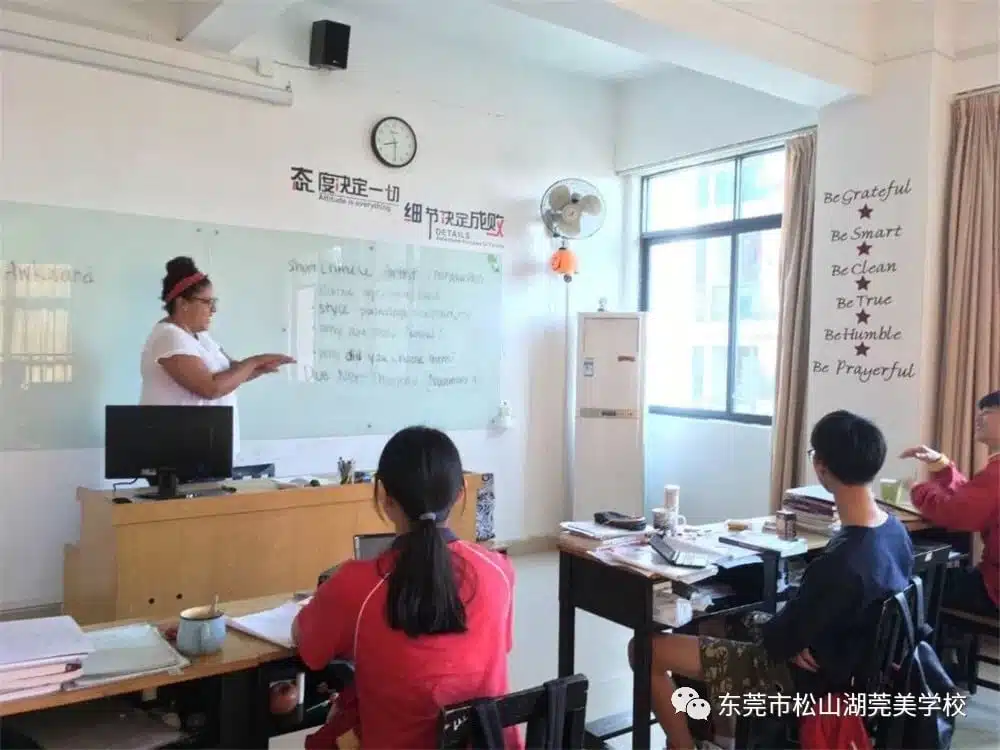
The TEFL job market tends to be less competitive in smaller cities, though this varies from job to job. As a university TEFL teacher, it was the most relaxed workload and administrative duties I’ve ever had at any job.
My class sizes were considerably larger because in smaller cities, there are usually fewer foreign teachers. It can be common to combine student classes so they can have access to native teacher instruction.
But because of the simplistic style of TEFL speaking classes I was teaching and the older ages of the students, it wasn’t a problem.
Read more: 6 Differences Between Teaching Adults And Young Learners
Cost of living in a Tier 2 or Tier 3 city
The cost of living is one of the biggest differences between Tier 1 and Tier 2 or Tier 3 cities.
Tier 2 and Tier 3 cities are significantly cheaper across most categories. But when it comes to grocery, dining, and entertainment, they can vary in access as well as cost.
In Tier 1 cities, you’ll have more access to imported groceries and foreign dining options, but that also comes with an increased price tag. Entertainment options, like foreign bars or activities, are usually more expensive in Tier 1 cities.
When I was living in Hengyang for 2 years, there was only a handful of western fast-food restaurants and one Western-style night club in the entire town. And when I moved to Dongguan (a new Tier 1 city), there were more options, but unfortunately, I lived almost an hour away from the local pubs and the city’s Mexican food restaurant.
In both cities at that time there wasn’t a subway system, so I had to rely on buses or taxi rides which could add up over time.
Were you able to save money while teaching in a Tier 3 city?
When I first moved to China, I didn’t realise the earning potential and was unfortunately scammed at my first job where I only made ¥5,000 ($725) a month.
Read more: TEFL Scams And How To Avoid Them
I later learned comparable salaries were closer to ¥11,000 ($1,600) a month.
But even on that salary, I lived comfortably. My apartment and utilities were free, so my only expense was food, transportation, and entertainment. I walked to work every day and food prices were extremely low. I was still able to travel domestically and internationally during Chinese New Year holidays – my job provided a travel stipend in addition to my full monthly salary. That job covered a yearly round-trip ticket back home to the US each summer.
Starting in 2017 in Dongguan, I made ¥18,000 ($2,600) a month, and my expenses were about the same. My apartment and utilities were free, but I spent more money on taxis and foreign foods than I did previously.
At this job, I was able to start saving significant money. I usually saved at least half of my salary each month and was able to travel comfortably.
My biggest advice is to plan how you’ll use your salary before receiving it. It’s common to get paid once a month, so if your goal is to save money and send money back home to pay debt, budget for it and do it right away.
Other TEFL teachers and I have made the mistake of keeping it in their Chinese account for sending at a later date, and then it gets spent one way or the other without ever leaving the country.
Read more: The Cost Of Living In China For TEFL Teachers
Housing in a Tier 2 or Tier 3 city
I lived in a provided apartment that was next to my university campus. It was a large three-bedroom, two-bath apartment, but it was outdated even in 2015. In the area of the city I lived in, most of the buildings were at least 15-20 years old which were designed differently from what I was used to in the US. I had one Western-style bathroom with a seated toilet, bathtub, and shower, plus one wet bathroom with a squat toilet and shower. I think the whole time I lived there, I used that wet bathroom once.
It wasn’t until I started visiting friends and colleagues’ apartments that were newly built or renovated that I realised how outdated my apartment was.
In a Tier 2 or Tier 3 city, apartments vary depending on which part of the city you live in. Smaller cities could be divided into old and new districts, and apartments may not be renovated, depending on the owner/landlord. If you want to live in a modern apartment, you may live outside the city centre or in a separate district away from your job or social scene.
This may not always be the case, but it’s a possibility to consider compared to Tier 1 cities.
How did you find the expat community in a Tier 3 city?
Overall, the expat community in Tier 2 or Tier 3 cities are smaller than in Tier 1 cities, which has a higher concentration of foreigners living there.
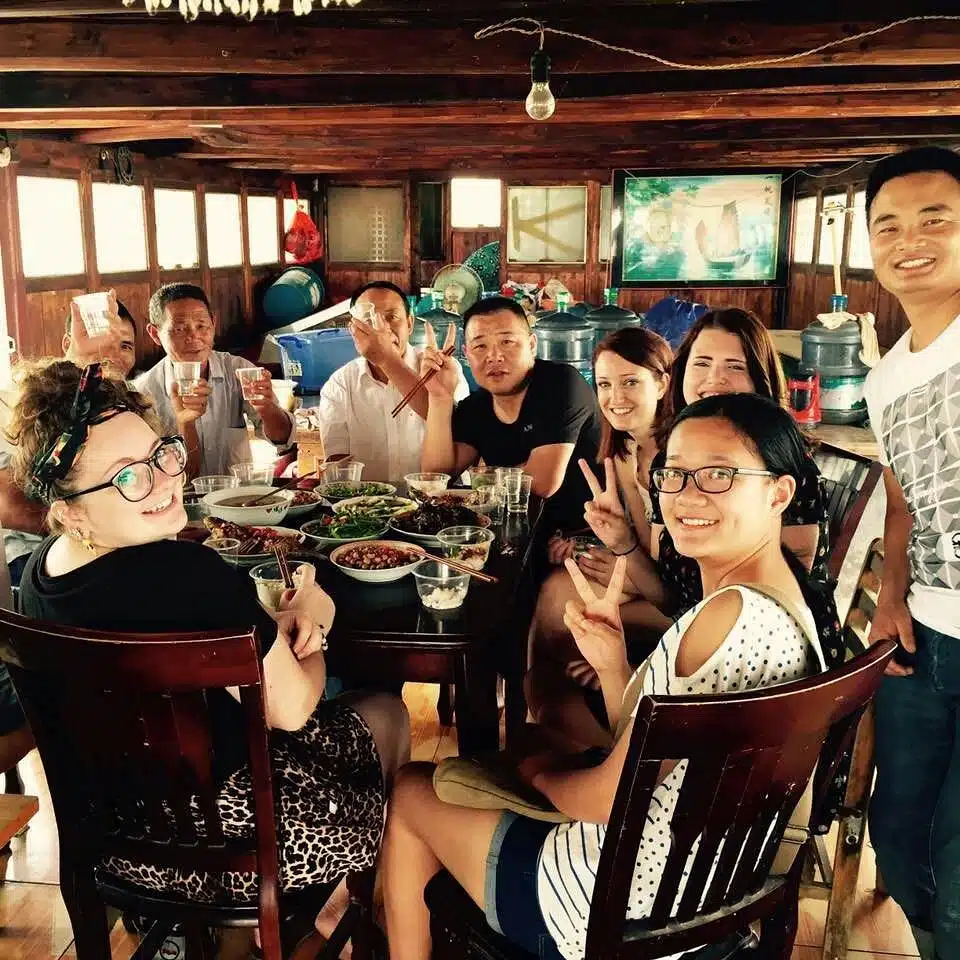
However, I found smaller cities made it easier to meet people. Because expats are less common, it felt easier to strike up conversations when you did meet one.
There were WeChat groups for other expats in both Hengyang and Dongguan, but I found that they were significantly smaller and less active than the WeChat groups I’ve been a part of while living in Beijing.
Travel opportunities within China from a Tier 2 or Tier 3 city
One advantage of living anywhere in China is access to extensive transportation networks. In a Tier 2 or Tier 3 city, city buses and modern subway systems are widely available and affordable.
Almost every major city that you would be working at in China now has a high-speed railway station that can easily get to anywhere within Mainland China.
For quick getaways, Tier 2 and tier 3 cities sometimes have accessible airports within city limits.
For weekend trips, you can hop on a high-speed rail Friday evening and arrive at your destination that night or early the next morning, so you enjoy more of your time off.
When I lived In Dongguan, I was a 15-minute high-speed train away from Tier 1 cities like Guangzhou and 45 minutes from Shenzhen. And in Shenzhen I could easily cross the border into Hong Kong.
I love the slower pace of a Tier 3 city, but I also enjoyed the easy access to familiar Western things just a quick train ride away.
Tips for new TEFL teachers in China
Do research beforehand. Living anywhere in China is a big culture shock, and in a Tier 2 or Tier 3 city, that can be magnified.
Do your research into where exactly you’ll be located in your city. Will you be able to walk to the grocery store, or will you be farther out? Do you want full cultural immersion or would you prefer to have established expat communities and easy access to familiar foods and social activities? Search social media for the city you’re looking to move to, see if you can find anyone sharing their experience, reach out, and hear about what their life is really like.
A mistake I made before living in Hengyang was my lack of research. I moved without much research, which made the transition rough, to say the least. But luckily, I came to love that “small town” experience as my introduction to China. That may or may not be the same experience for you, so be sure to know what you’re getting yourself into, whichever city you choose.
My final advice is to begin learning Chinese before moving and continue studying after arrival.
Language barriers are much higher in smaller cities, and a basic knowledge of the language is truly necessary to make your life easier and smoother on a day-to-day basis.
Translation apps will always be necessary as a backup, but it will be more common than not that the local people you are interacting with will not speak English.
Read more: Can You Teach English In China Without Speaking Chinese?
Would you recommend moving to a Tier 2 or Tier 3 city in China as an English teacher?
100% yes!
In my opinion, Tier 2 and Tier 3 cities offer the most authentic Chinese cultural experience. It was the easiest way to meet new people and experience a new culture.
But there are important factors to consider before deciding if this experience is right for you. For me, it was difficult at first, but it was the reason I fell in love with China, the Chinese people, and Chinese food. These experiences became part of my daily life naturally, and after I moved to the Tier 1 city of Beijing, I found that having those authentic experiences became more difficult and I really had to make an effort.
If having a luxurious expat Western experience while abroad with a big expat community and familiar things easily accessible to you, Tier 2 and Tier 3 cities may not be for you. If you want a deeply immersive cross-cultural experience and the opportunity to experience everyday life in China, Tier 2 and Tier 3 cities offer exactly that.
Author Bio
Lauren, a Beijing-based ESL teacher from the USA, has been working in China since 2015. She has worked in almost every kind of TEFL job you can imagine — from small city public schools to private international schools to her current job teaching at a university.
Read
Lauren Hamilton's story →
 United States
US
United States
US










 March 5, 2026