 United States
US
United States
US









Can You Save Money Teaching English in Thailand? A Real Teacher Explains


Last Updated
January 26, 2026


Table of Contents
- Introduction
- Why teachers choose Thailand
- English teacher salaries in Thailand
- Average cost of living
- Lifestyle choices
- How much can you save?
Images of Thailand’s world-famous beaches and popular street foods make moving there as close to living the dream as you can get. But when it comes to teaching English in Thailand, is it worthwhile for those big on saving?
Brendan is a 27-year-old TEFL teacher from South Africa who is studying towards his Bachelor’s degree in TESOL at Siam Technology University in Bangkok. He moved to Thailand to join his wife (also a TEFL teacher) and now has roughly one year of teaching experience.
Read more: Teach English in Thailand
Brendan fills us in on the savings potential of a teacher’s salary in Thailand and offers budgeting tips to help make it happen.
Why teachers choose to teach English in Thailand
Thailand draws teachers from all over the world, not only for its relatively low cost of living, but also for the promise of adventure, cultural immersion, and better work-life balance.
Beyond the classroom, there are stunning beaches, vibrant city life, and plenty of holidays — far more than back home for many of us.

For me, coming to Thailand was part personal and part practical. Limited job opportunities in South Africa made it hard to secure decent work.
Also, living costs in Thailand are significantly lower, and the teaching lifestyle offers flexibility and breathing room.
I decided to move here to join my wife — who was my girlfriend back then — to start a new chapter, enjoy a better quality of life, and get ahead financially.
Recently, we committed to a savings plan, and we’ve been able to save around ฿100,000 (baht)($3,000) a month. That’s thanks to a clear budget, side income, and choosing a lifestyle that supports our financial goals.
It all depends on what you spend your money on. It’s easy to splurge in Thailand because there are so many temptations, but if you stick to your plan, saving is absolutely achievable.
English teacher salaries in Thailand: How much can you earn?
Salaries vary widely depending on qualifications, location, and the type of institution.
Public school programmes, private schools, international schools, and tutoring each offer different pay structures.
I currently earn ฿38,000 ($1,159) a month as a teacher without a degree. My wife earns ฿62,000 ($1,890) a month after deductions. She has a degree, but not in education.
Read more: Teaching Without A Degree
At her private school, teachers with a teaching degree or PGCE earn ฿75,000 ($2,286) and up. Each year, they receive a ฿3,000 ($90) increase. She also gets an end-of-contract bonus.
One of her friends used to work at Denla International Kindergarten and earned around ฿120,000 ($3,660) a month. She had a PGCE and got free housing — a huge financial perk.
So yes, qualifications make a big difference. That’s why I’m currently studying for a BA TESOL degree to expand my opportunities.
If you’re working at a language academy or doing part-time work, expect to earn between ฿300 ($9) and ฿600($18) an hour, with no paid holidays or benefits. Full-time positions offer more financial stability and, in many cases, include health insurance, holiday pay, and other perks.
What’s the average cost of living for TEFL teachers in Thailand?
Your cost of living depends heavily on where you live, your lifestyle, and how you manage your budget. Here’s a snapshot of our actual monthly budget:
Combined income:
-
- Salary: ฿38,000 (me) + ฿62,000 (wife) = ฿100,000 ($3,050)
- Private tutoring: ฿15,000 (me) + ฿35,000 (wife) = ฿50,000 ($1,525)
- Total: ฿150,000 ($4,575) a month
Monthly expenses:
- Condo (incl. water and electricity): ฿15,000 ($457)
- Groceries, meat, supplements, protein: ฿12,000 ($366)
- Car repayment (in South Africa): ฿8,000 ($244)
- Gas, taxis, train fare (BTS/MRT): ฿1,000 ($30)
- Subscriptions (Spotify, cloud storage, WiFi): ฿1,000 ($30)
- Miscellaneous (casual spending, massages, outings): ฿4,000 ($122)
- Beauty (lashes, nails, skincare, personal items): ฿4,000 ($122)
Total expenses: ฿45,000 ($1,372)
Total savings: ฿100,000 ($3,050)
Leftover: ฿5,000 ($152)
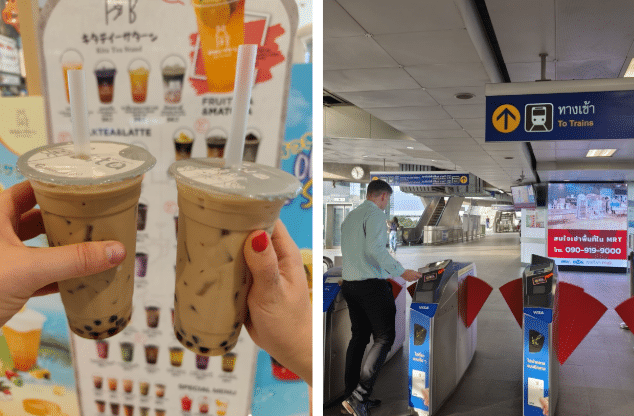
In Central Bangkok, things can get expensive fast, especially rent, dining, and transport. In smaller towns or outer districts, costs drop significantly, but so might your earning potential.
We live in Bang Wa, a more affordable part of Bangkok. Our rent is reasonable, and the area is quieter. We’re planning to move closer to school in November to save time on commuting.
Read more: What Is The Cost Of Living In Thailand? We Asked Our Teachers
How much of your income goes toward rent?
We spend ฿15,000 ($457) a month on a fully furnished condo in Bang Wa. This includes electricity and water. Compared to many friends and fellow teachers in Central Bangkok, we pay a lot less.
Rent can vary hugely depending on the area and type of housing — from as low as ฿3,000 ($91) for a basic room in a rural area, to over ฿100,000 ($3,050) for luxury condos in downtown Bangkok.
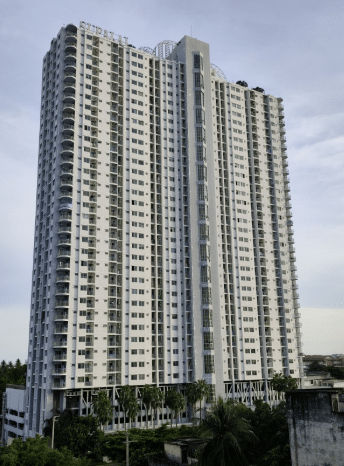
Many teachers prefer condos because they’re move-in-ready and come with amenities like pools, gyms, and security.
Thai-style houses are often unfurnished and may require extra spending on furniture and appliances.
Shared accommodation is an option, though not super common among couples or long-term teachers. For singles, it can be a great way to cut costs.
Some schools provide free housing or a housing allowance, which can reduce your rent expenses significantly.
What budgeting strategies help teachers stretch their salary?
We follow a few key strategies to make our money go further:
Transfer savings first
We immediately move our full-time salaries to a savings account and cover daily expenses with tutoring income.
Order meal plans
We subscribe to a meal plan — 42 meals for ฿4,200 ($128). It’s affordable and convenient.
Buy meat in bulk
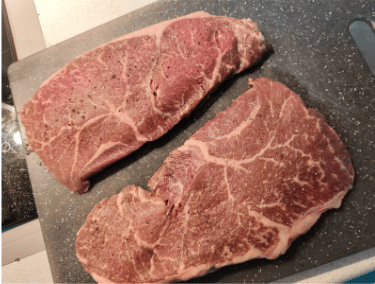
We get our meat from a restaurant that buys directly from the butcher. It’s fresher and cheaper.
Use local markets
Fresh fruit and vegetables are much cheaper than in supermarkets.
Transportation
We bought a scooter to avoid costly taxis and Grab rides.
Phone savings
We purchase annual mobile data packages, which work out cheaper than monthly plans.
Budgeting spreadsheet
We keep track of our expenses using a shared spreadsheet that we update weekly. It helps us spot any unnecessary spending.
Read more: 8 Simple Money-Saving Hacks All Travelling Teachers Should Know
What other factors influence your ability to save?
Several things affect how much you can save:
- Type and size of accommodation
- Location — Central Bangkok vs the suburbs or rural areas
- Mode of transportation — owning a motorbike saves thousands per month
- Food choices — Western food is significantly more expensive than local meals
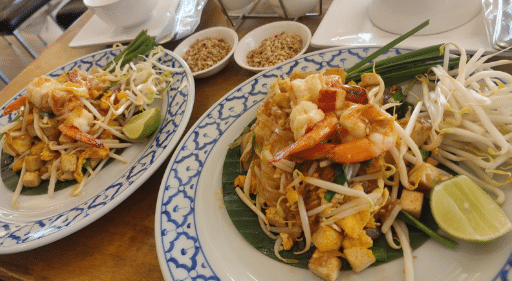
- Lifestyle — beauty treatments, online shopping, and eating out can add up. We use apps like GoWabi to get discounts on beauty treatments like nails and lashes. (My wife loves this app because it helps her find great deals and book appointments easily.)
- Eating out – for eating out, Hungry Hub is an app we use to find good-value buffet or menu deals.
- Hobbies – our hobbies are mostly local travel, exploring new places, and relaxing at home. Bangkok has endless cheap or free options for entertainment.

Read more: How To Live & Work In Thailand As A Foreigner
Can private tutoring or side gigs significantly boost your income?
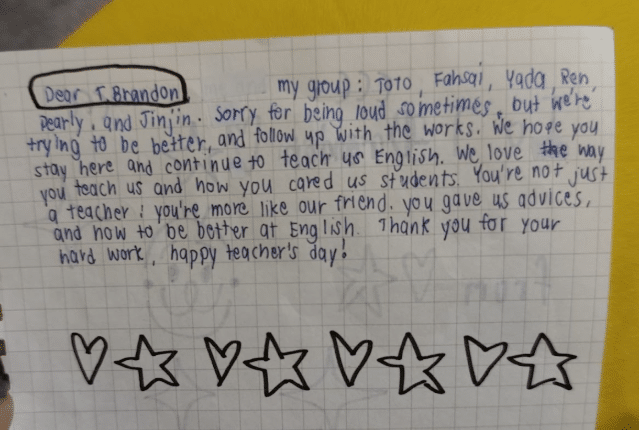
Yes — tutoring has been the biggest financial boost for us. We both tutor after school and on weekends.
I charge ฿1,000 ($30) an hour, and my wife charges ฿1,200 ($35) an hour. We prefer working with one student at a time to focus on quality over quantity.
Most of our students come through word-of-mouth.
My wife teaches Grade 1 at an all-boys school where some parents ask for a male tutor. She refers them to me. She also tutors online on Saturdays for two hours and has another student who comes to our condo for two hours on Sundays.
Between the two of us, we bring in an extra ฿50,000 ($1,525) a month just from tutoring.
Read more: The Best Side Hustles For Teachers
Do some teaching jobs offer better financial stability than others?
Definitely.
My first job in Thailand was as a part-time substitute teacher at a learning centre where I was paid hourly ฿500 ($15) an hour. While it was good in the short term, it wasn’t financially sustainable.
Learning centres can pay anywhere from ฿300–฿600 ($9-$18) an hour and often don’t offer holiday pay or benefits.
Monthly salaried positions at schools are more stable and often come with perks like health insurance, paid leave, annual bonuses, and raises.
At my current school, we don’t get paid during the school holidays. My wife’s school pays her throughout the holidays, plus she gets a contract completion bonus and a ฿3,000 ($90) annual raise.
These factors definitely make a difference when it comes to financial planning.
What lifestyle choices can impact savings while living in Thailand?
A lot of expats get caught up in the fun and forget about their budget. Thailand can be incredibly cheap or very expensive — it all depends on your choices.
Travel
We love to travel, but we do it smartly. Taking an overnight bus instead of flying and staying in mid-range accommodation saves us thousands.

Socialising
If you drink and party, expect to spend ฿2,000+ ($60+) in a single night. My wife and I don’t drink or go clubbing, which saves us a lot.
Food delivery
Ordering from Grab regularly adds up fast. Cooking at home and meal planning help us cut back.
Transportation
Taxis and Grab rides in Bangkok can cost a lot. That’s why we invested in a motorbike — a one-time purchase that saves us money daily.
How much can you save teaching English in Thailand? (real example)
We are living proof that you can save A LOT — ฿100,000 ($3,050) a month in our case — even while sending money back home to cover a car payment.
My wife’s sister uses the car while we’re away, and we use it when we return for the holidays. Having a car in South Africa is essential for visits, and we have peace of mind knowing that we’re still contributing to our future back home.
Yes, it’s possible to save and live well, but only if you make conscious financial decisions.
Top tips for saving money while teaching in Thailand
✅ Work out a budget and stick to it.
✅ Avoid the nightlife scene unless you’ve budgeted for it.
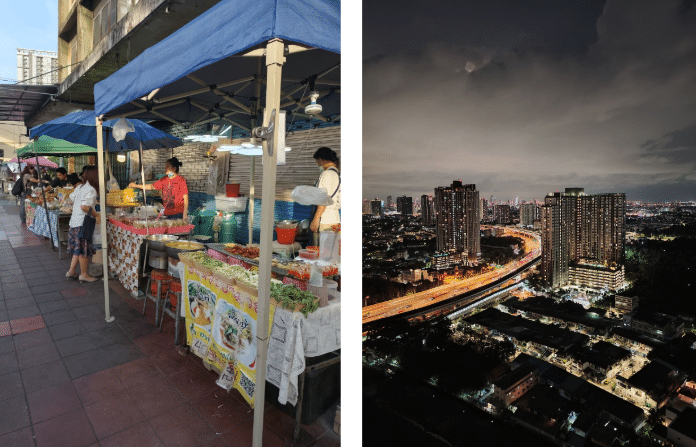
✅ Eat local and shop at street markets — it’s cheaper and often fresher.
✅ Skip malls for clothing — try Lazada, Shopee, Shein, or market stalls.
✅ Use meal plans and apps like GoWabi and Hungry Hub to save.
✅ Pick affordable, convenient housing — you don’t need to break the bank.
✅ Try tutoring to maximise your income. Don’t be afraid to promote yourself.
It’s not about how much you earn, but how you spend, save, and plan.
With smart habits, you can save a significant amount, enjoy life in Thailand, and even take care of financial responsibilities back home.
Brendan’s story shows us that if you balance living like a local with some tutoring and a decent budgeting strategy, you can live your best life while still saving. All it takes is a few smart choices to keep your bank account smiling.
Don’t forget: your first smart choice is to do a TEFL course! Sign up today and save your baht tomorrow.
Author Bio
Table of Contents
- Introduction
- Why teachers choose Thailand
- English teacher salaries in Thailand
- Average cost of living
- Lifestyle choices
- How much can you save?
Images of Thailand’s world-famous beaches and popular street foods make moving there as close to living the dream as you can get. But when it comes to teaching English in Thailand, is it worthwhile for those big on saving?
Brendan is a 27-year-old TEFL teacher from South Africa who is studying towards his Bachelor’s degree in TESOL at Siam Technology University in Bangkok. He moved to Thailand to join his wife (also a TEFL teacher) and now has roughly one year of teaching experience.
Read more: Teach English in Thailand
Brendan fills us in on the savings potential of a teacher’s salary in Thailand and offers budgeting tips to help make it happen.
Why teachers choose to teach English in Thailand
Thailand draws teachers from all over the world, not only for its relatively low cost of living, but also for the promise of adventure, cultural immersion, and better work-life balance.
Beyond the classroom, there are stunning beaches, vibrant city life, and plenty of holidays — far more than back home for many of us.
For me, coming to Thailand was part personal and part practical. Limited job opportunities in South Africa made it hard to secure decent work.
Also, living costs in Thailand are significantly lower, and the teaching lifestyle offers flexibility and breathing room.
I decided to move here to join my wife — who was my girlfriend back then — to start a new chapter, enjoy a better quality of life, and get ahead financially.
Recently, we committed to a savings plan, and we’ve been able to save around ฿100,000 (baht)($3,000) a month. That’s thanks to a clear budget, side income, and choosing a lifestyle that supports our financial goals.
It all depends on what you spend your money on. It’s easy to splurge in Thailand because there are so many temptations, but if you stick to your plan, saving is absolutely achievable.
English teacher salaries in Thailand: How much can you earn?
Salaries vary widely depending on qualifications, location, and the type of institution.
Public school programmes, private schools, international schools, and tutoring each offer different pay structures.
I currently earn ฿38,000 ($1,159) a month as a teacher without a degree. My wife earns ฿62,000 ($1,890) a month after deductions. She has a degree, but not in education.
Read more: Teaching Without A Degree
At her private school, teachers with a teaching degree or PGCE earn ฿75,000 ($2,286) and up. Each year, they receive a ฿3,000 ($90) increase. She also gets an end-of-contract bonus.
One of her friends used to work at Denla International Kindergarten and earned around ฿120,000 ($3,660) a month. She had a PGCE and got free housing — a huge financial perk.
So yes, qualifications make a big difference. That’s why I’m currently studying for a BA TESOL degree to expand my opportunities.
If you’re working at a language academy or doing part-time work, expect to earn between ฿300 ($9) and ฿600($18) an hour, with no paid holidays or benefits. Full-time positions offer more financial stability and, in many cases, include health insurance, holiday pay, and other perks.
What’s the average cost of living for TEFL teachers in Thailand?
Your cost of living depends heavily on where you live, your lifestyle, and how you manage your budget. Here’s a snapshot of our actual monthly budget:
Combined income:
-
- Salary: ฿38,000 (me) + ฿62,000 (wife) = ฿100,000 ($3,050)
- Private tutoring: ฿15,000 (me) + ฿35,000 (wife) = ฿50,000 ($1,525)
- Total: ฿150,000 ($4,575) a month
Monthly expenses:
- Condo (incl. water and electricity): ฿15,000 ($457)
- Groceries, meat, supplements, protein: ฿12,000 ($366)
- Car repayment (in South Africa): ฿8,000 ($244)
- Gas, taxis, train fare (BTS/MRT): ฿1,000 ($30)
- Subscriptions (Spotify, cloud storage, WiFi): ฿1,000 ($30)
- Miscellaneous (casual spending, massages, outings): ฿4,000 ($122)
- Beauty (lashes, nails, skincare, personal items): ฿4,000 ($122)
Total expenses: ฿45,000 ($1,372)
Total savings: ฿100,000 ($3,050)
Leftover: ฿5,000 ($152)
In Central Bangkok, things can get expensive fast, especially rent, dining, and transport. In smaller towns or outer districts, costs drop significantly, but so might your earning potential.
We live in Bang Wa, a more affordable part of Bangkok. Our rent is reasonable, and the area is quieter. We’re planning to move closer to school in November to save time on commuting.
Read more: What Is The Cost Of Living In Thailand? We Asked Our Teachers
How much of your income goes toward rent?
We spend ฿15,000 ($457) a month on a fully furnished condo in Bang Wa. This includes electricity and water. Compared to many friends and fellow teachers in Central Bangkok, we pay a lot less.
Rent can vary hugely depending on the area and type of housing — from as low as ฿3,000 ($91) for a basic room in a rural area, to over ฿100,000 ($3,050) for luxury condos in downtown Bangkok.
Many teachers prefer condos because they’re move-in-ready and come with amenities like pools, gyms, and security.
Thai-style houses are often unfurnished and may require extra spending on furniture and appliances.
Shared accommodation is an option, though not super common among couples or long-term teachers. For singles, it can be a great way to cut costs.
Some schools provide free housing or a housing allowance, which can reduce your rent expenses significantly.
What budgeting strategies help teachers stretch their salary?
We follow a few key strategies to make our money go further:
Transfer savings first
We immediately move our full-time salaries to a savings account and cover daily expenses with tutoring income.
Order meal plans
We subscribe to a meal plan — 42 meals for ฿4,200 ($128). It’s affordable and convenient.
Buy meat in bulk
We get our meat from a restaurant that buys directly from the butcher. It’s fresher and cheaper.
Use local markets
Fresh fruit and vegetables are much cheaper than in supermarkets.
Transportation
We bought a scooter to avoid costly taxis and Grab rides.
Phone savings
We purchase annual mobile data packages, which work out cheaper than monthly plans.
Budgeting spreadsheet
We keep track of our expenses using a shared spreadsheet that we update weekly. It helps us spot any unnecessary spending.
Read more: 8 Simple Money-Saving Hacks All Travelling Teachers Should Know
What other factors influence your ability to save?
Several things affect how much you can save:
- Type and size of accommodation
- Location — Central Bangkok vs the suburbs or rural areas
- Mode of transportation — owning a motorbike saves thousands per month
- Food choices — Western food is significantly more expensive than local meals
- Lifestyle — beauty treatments, online shopping, and eating out can add up. We use apps like GoWabi to get discounts on beauty treatments like nails and lashes. (My wife loves this app because it helps her find great deals and book appointments easily.)
- Eating out – for eating out, Hungry Hub is an app we use to find good-value buffet or menu deals.
- Hobbies – our hobbies are mostly local travel, exploring new places, and relaxing at home. Bangkok has endless cheap or free options for entertainment.
Read more: How To Live & Work In Thailand As A Foreigner
Can private tutoring or side gigs significantly boost your income?
Yes — tutoring has been the biggest financial boost for us. We both tutor after school and on weekends.
I charge ฿1,000 ($30) an hour, and my wife charges ฿1,200 ($35) an hour. We prefer working with one student at a time to focus on quality over quantity.
Most of our students come through word-of-mouth.
My wife teaches Grade 1 at an all-boys school where some parents ask for a male tutor. She refers them to me. She also tutors online on Saturdays for two hours and has another student who comes to our condo for two hours on Sundays.
Between the two of us, we bring in an extra ฿50,000 ($1,525) a month just from tutoring.
Read more: The Best Side Hustles For Teachers
Do some teaching jobs offer better financial stability than others?
Definitely.
My first job in Thailand was as a part-time substitute teacher at a learning centre where I was paid hourly ฿500 ($15) an hour. While it was good in the short term, it wasn’t financially sustainable.
Learning centres can pay anywhere from ฿300–฿600 ($9-$18) an hour and often don’t offer holiday pay or benefits.
Monthly salaried positions at schools are more stable and often come with perks like health insurance, paid leave, annual bonuses, and raises.
At my current school, we don’t get paid during the school holidays. My wife’s school pays her throughout the holidays, plus she gets a contract completion bonus and a ฿3,000 ($90) annual raise.
These factors definitely make a difference when it comes to financial planning.
What lifestyle choices can impact savings while living in Thailand?
A lot of expats get caught up in the fun and forget about their budget. Thailand can be incredibly cheap or very expensive — it all depends on your choices.
Travel
We love to travel, but we do it smartly. Taking an overnight bus instead of flying and staying in mid-range accommodation saves us thousands.
Socialising
If you drink and party, expect to spend ฿2,000+ ($60+) in a single night. My wife and I don’t drink or go clubbing, which saves us a lot.
Food delivery
Ordering from Grab regularly adds up fast. Cooking at home and meal planning help us cut back.
Transportation
Taxis and Grab rides in Bangkok can cost a lot. That’s why we invested in a motorbike — a one-time purchase that saves us money daily.
How much can you save teaching English in Thailand? (real example)
We are living proof that you can save A LOT — ฿100,000 ($3,050) a month in our case — even while sending money back home to cover a car payment.
My wife’s sister uses the car while we’re away, and we use it when we return for the holidays. Having a car in South Africa is essential for visits, and we have peace of mind knowing that we’re still contributing to our future back home.
Yes, it’s possible to save and live well, but only if you make conscious financial decisions.
Top tips for saving money while teaching in Thailand
✅ Work out a budget and stick to it.
✅ Avoid the nightlife scene unless you’ve budgeted for it.
✅ Eat local and shop at street markets — it’s cheaper and often fresher.
✅ Skip malls for clothing — try Lazada, Shopee, Shein, or market stalls.
✅ Use meal plans and apps like GoWabi and Hungry Hub to save.
✅ Pick affordable, convenient housing — you don’t need to break the bank.
✅ Try tutoring to maximise your income. Don’t be afraid to promote yourself.
It’s not about how much you earn, but how you spend, save, and plan.
With smart habits, you can save a significant amount, enjoy life in Thailand, and even take care of financial responsibilities back home.
Brendan’s story shows us that if you balance living like a local with some tutoring and a decent budgeting strategy, you can live your best life while still saving. All it takes is a few smart choices to keep your bank account smiling.
Don’t forget: your first smart choice is to do a TEFL course! Sign up today and save your baht tomorrow.
Author Bio