 United States
US
United States
US







How Much Money Can You Save Teaching In South Korea In 2026?


Last Updated
March 27, 2026


Table of Contents
- Introduction
- Why choose South Korea
- Salaries in South Korea
- Average cost of living
- How much goes toward rent?
- Budgeting strategies
- Other factors
- Financial stability
- Lifestyle choices
- How much can you save
- Tips for saving money
TEFL teachers in South Korea typically save between ₩745,000-₩2.25 million ($500–$1,500) monthly, helped by low tax rates and employer-provided housing. Average salaries range from ₩2.2million to ₩3 million, while essential monthly expenses, excluding rent, generally average around ₩800,000 to ₩1.2 million. Most contracts also include a one-month completion bonus and airfare reimbursement to further increase your yearly savings. Public school roles via the EPIK program to offer the most consistent benefits package.
There’s no question about it: South Korea offers one of the most attractive English-teaching packages around with competitive ESL teacher salaries, free housing, great healthcare, and a lifestyle backed by world-class infrastructure.
But that disposable income is a double-edged sword. There’s so much to see and do, especially in places like Seoul and Busan — temptation is everywhere. Plus, South Korea is a prime location for travel.
How much money you can save depends on your priorities: are you there for your bank account or bucket list?
With that in mind, let’s look at how to save money as an English teacher in Korea.
Read more: Teach English In South Korea
Why teachers choose to teach English in South Korea (and why it’s good for saving money)
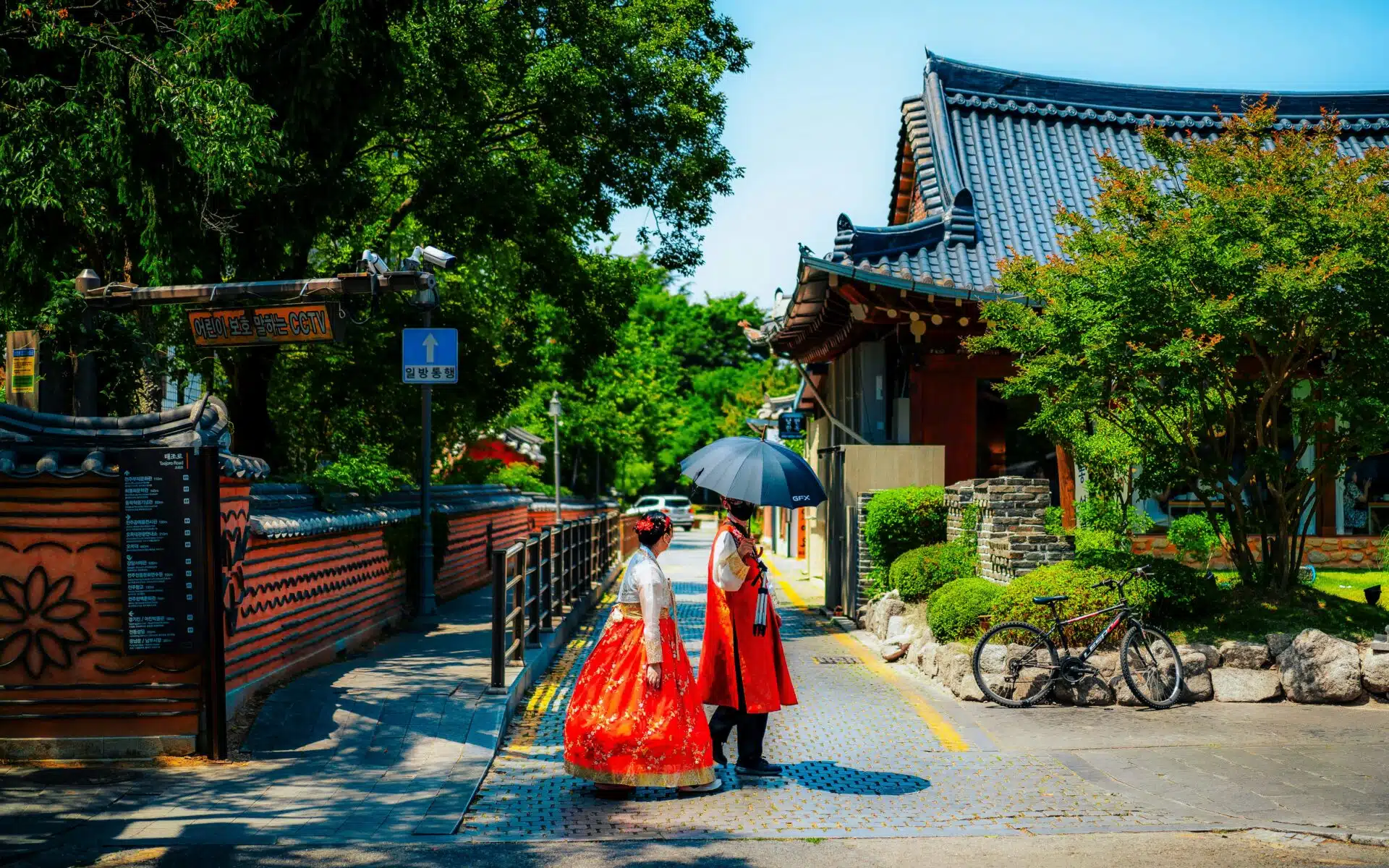
We all know someone who has taught or is currently teaching in South Korea. If you’re an English teacher, it’s very likely on your radar since it’s a top TEFL destination. Apart from K-pop and the yummy food factor (have you noticed all the Korean BBQ places popping up lately?), Korea offers incredible teacher packages that are hard to overlook.
Take EPIK (English Programme in Korea) as an example. EPIK offers:
- Free housing
- Airfare reimbursement
- National health insurance
- Contract completion bonus
- Pension contributions (and refunds for those from countries with a pension treaty)
- Paid vacation (18-21 days), plus national holidays
Who can say no to that?
These benefits, plus a high quality of life and a low crime rate, make Korea one of the best countries to teach English and save money.
Did we mention its location is great for travelling to nearby TEFL gems like Taiwan, Japan and Thailand? South Korea is a winner in our books — hands down!
Read more: Discover The EPIK Programme: Your Gateway To Teaching English In South Korea
English teacher salaries in South Korea: How much can you earn?
Despite rising inflation, teaching English in South Korea remains a reliable choice for TEFL teachers, with salaries, taxes, and benefits stacking up well in 2026.
How much you earn depends on location, qualifications, and experience.
Salary breakdown
Entry-level public school roles are paid on a scale that reflects your qualifications and experience. Hagwons match this closely but with higher starting salaries, while universities and international schools pay the most, but seek experienced teachers with credentials.
Here’s what you can expect to earn at each type of institution:
- Government programmes (EPIK/SMOE/GEPIK/GOE): ₩2.0M–₩2.7M ($1,500-$2,000)
- Hagwons (private academies): ₩2.1M–₩2.5M ($1,575-$1,875)
- International schools: ₩2.5M–₩3M ($1,875-$2,250)
- Universities: ₩2.3M–₩3.5M ($1,725-$2,625)
Taxes and deductions
Taxes in South Korea are refreshingly low. Most English teachers pay around 3-5% income tax, which is automatically deducted from their monthly salary.
National health insurance takes roughly 3.5% and is mandatory, while the pension contribution sits at about 4.5%, though this depends on your nationality. South African teachers are exempt from pension contributions. Teachers from countries with pension agreements, such as the US, Canada, and Australia, can reclaim their pension contributions when leaving Korea.
When you factor in all the perks (like living rent-free) and spend your money wisely, it’s realistic to save $500–$1,500/month.
Read more: Do I Have To Pay Tax When Teaching English Abroad?
What’s the average cost of living for TEFL teachers in South Korea?
When you sign up to teach in Korea, you’ll need to choose between major cities (like Seoul or Busan) or a rural location. Your choice is crucial as it will affect your savings potential.
Big city life offers an international lifestyle, endless entertainment, diverse dining options, world-class nightlife, and well-connected transit points. However, this convenience comes at a cost:
- A higher cost of living: According to Numbeo’s 2025 data, the cost of living in prime locations such as Seoul and Busan is 20%–40% higher than in rural areas.
- Housing difficulty: While teaching contracts include free housing, you can choose a housing allowance, but you’ll be hard-pressed to find spacious accommodation due to the city’s high population density. Market rents can easily exceed the allowance and require large deposits upfront.
- Spending temptations: You’ll be surrounded by trendy cafes, pricey Western restaurants, high-end shopping districts, and a thriving nightlife scene in areas like Itaewon. It requires strong willpower to overcome the constant urge to splurge.
You may wonder why anyone would choose the housing allowance if rent is so costly. Well, there are several reasons:
- A preference for living in a specific neighbourhood
- Moving in with a partner
- The desire for a more spacious or modern place
- Avoiding small or basic employer-provided housing
- Maintaining control over your housing situation
All of these are good reasons, but for the budget-conscious TEFL teacher, employer housing is usually the best choice. In some cases, teachers really luck out and end up in huge apartments — I know, I was one of them. 😀
Rural locations have many benefits if you can overcome the constant need for stimulation and don’t mind being away from the crowds, as in far away — getting there can mean 1.5 hours on the subway, plus a bus, a taxi, or both!
Living in a rural area means:
- A lower cost of living: Transport, food and amenities are generally cheaper outside major cities.
- Fewer temptations: The absence of large malls, fancy restaurants, and nightlife venues significantly reduces the temptation to spend.
- Placement bonus: Government programmes like EPIK include a bonus for rural placements, which boosts your savings.
- Higher savings potential: Teachers in rural areas generally enjoy a lower cost of living, although there are those who travel to major cities at the weekend and make a dent in their wallet!
Read more: Teach English In Seoul
So what do typical monthly expenses look like when teaching in Korea?
Monthly expense breakdown (approx.):
- Unlimited internet: ₩31K ($20)
- Mobile phone plan: ₩53K ($36)
- Basic utilities: ₩250K ($170)
- Restaurant meal: ₩10K ($7)
- Regular-size cappuccino: ₩5K ($3)
- Groceries from markets: ₩156K ($105)
- Gym membership: ₩75K ($50)
- Monthly transport pass: ₩65K ($45)
If you’re a bit of a shopaholic and love clothes, you can expect to pay around ₩78K ($50) for a pair of Levi jeans and ₩63K ($40) for a summer dress in a chain store.
Disclaimer: Prices are approximate and rounded for clarity throughout this article.
The good news is that no matter if you find yourself living in the heart of Seoul or on the outskirts, you can save and reach your financial goals on an ESL teacher’s salary with a well-planned budget.
Read more: Start-Up Costs For TEFL Teachers: How Much To Budget For

How much of your income goes toward rent?
The answer is zero — IF you opt for employer housing.
One of the perks of teaching in Korea is free housing, although there is the option to rent your own apartment by opting for the housing allowance: around ₩400K–₩500K ($300–$375), depending on the region. However, this is not enough to cover rent in Seoul, where rent exceeds ₩800K ($546).
What budgeting strategies help teachers stretch their salary?
The following money-saving tips for teachers will help you manage your money better:
✅ Track your spending
Draw up a budget and note where your money is being spent — a simple spreadsheet works well.
✅ Cut grocery costs
Be mindful of where you shop for food. Steer clear of foreign food markets and stock up on goods at chain stores, like Homeplus and E-Mart. Ramen is cheap if you’re in a pinch, but home-cooked meals or even better for your budget. Try the local markets for fresh produce.
✅ Maximise transport savings
The T-money card is a convenient pay-as-you-go option. Buy and load it with cash at any convenience store or subway vending machine. It works for subway rides, buses, and taxis.
✅ Choose budget phone carriers
Skip major providers and try budget options like LG U+, KT M Mobile, or SK 7mobile. You’ll get similar coverage for far less each month.
💡Tip: Avoid phone contracts; buy second-hand phones.
✅ Make use of student and foreigner discounts
Always have your ARC (Alien Registration Card, often called a Residence Card or RC) handy. Your RC is your foreigner ID and passport to discounts enjoyed by locals. It basically upgrades your status from foreigner to resident. Many palaces, museums and cultural events offer discounts for foreigners.
You can enjoy 20–50% off cultural events and festivals at venues like Seoul Land or the Namsan Cable Car, and a whopping 60–80% off medical bills through the NHI (with co-pays)! It also grants you access to libraries, community centres and public programmes where you can enjoy more freebies! 😃
Read more: 8 Simple Money-Saving Hacks All Travelling Teachers Should Know

What other factors influence savings potential?
There are many reasons why you may not reach your savings goals, from your taste preferences to your style, and everything in between. Here are a few factors to keep in mind when saving money abroad.
Smart food choices
Routinely ordering in food or dining at restaurants is not the best way to grow your savings pot. Korean grocery stores offer high-quality fresh produce at reasonable prices, especially at traditional markets. There are also plenty of budget-friendly options from kimbap to street food stalls and local restaurants.
💡Tip: Avoid trendy cafés and Western restaurants.
Social spending
Join hiking groups, language exchanges, and free cultural events rather than defaulting to expensive Gangnam or Itaewon nightlife, where a single night out can cost ₩145K–₩185K ($100–$200)!
Location matters
Rural locations typically mean more savings. The lower cost of living and lack of flashy bars, shopping districts, nightlife options — plus your rural allowance — make it easier to build up your savings.
Use your network
Connect with other TEFL teachers to split costs on weekend trips and get recommendations for cheaper services. The expat teaching community is super tight-knit, and word of mouth will get you the best deals on everything.
End-of-contract bonus
Most teaching positions offer an end-of-contract bonus equivalent to one month’s salary, adding a boost to your savings.
Read more: 4 Ways To Work & Live In South Korea As A Foreigner
Can private tutoring or side gigs significantly boost your income?
Any paid teaching outside of your employer’s contract violates immigration law — online platforms included. Therefore, private tutoring (and any paid work outside of your employer) is off-limits for E-2 visa holders — it’s illegal and can result in deportation.
📝Always check your visa conditions before pursuing any side income.
But, F-2/F-6 (marriage), F-4 (Korean heritage), and H-1 (working holiday) visa holders can tutor legally after Ministry registration. You can charge around ₩29K/hr ($20) and upward, but this is location-dependent.
Online teaching platforms like Preply and Cambly eliminate travel and safety issues and automatically match teachers and students. The online teaching space is highly competitive, so either choose a platform where you can set your own rates or choose one with a decent hourly rate — at least ₩22K/hr ($15).
Non-teaching side gigs may include freelance writing, modelling, graphic design, and digital marketing.
Read more: The Best Side Hustles For Teachers
Do some teaching jobs offer better financial stability than others?
The EPIK Programme in Korea is popular because it’s trusted and provides stability. Not only is it a one-year contract with regular working hours and pension contributions, but you’re getting paid by the government. That cuts out the risk that can arise from employer issues.
Teachers in private institutions, such as hagwons, can find themselves in a pickle if the company runs into financial difficulties. All it takes is low enrolment rates for the business to go downhill, resulting in sudden closures. Sure, the salaries are generally higher, but with more teaching time, fewer holidays and unstable conditions, which means more headaches!
Public schools vs private academies (hagwons)
Public schools offer a stable salary and regular working hours with plenty of vacation days — 18–26 days plus national holidays, versus 7-14 days, and possibly fewer national holidays.
Salaries may start lower than hagwons, but you enjoy a better work-life balance with 20–22 teaching hours, compared with 30–40.
Hagwons are a business first, so the market dictates their success, making them a less stable choice. Bad business can mean unpaid salaries.
Both hagwons and public schools provide housing.
Read more: What Is A Hagwon? Unpacking The Secrets Of South Korea’s Popular Learning Centres
What lifestyle choices impact savings while living in South Korea?
It all comes back to location. When choosing a rural placement, you’re also choosing a certain type of lifestyle — a quieter, less expensive one. But even in the countryside, you can shop online and dine out with friends (albeit at cheaper restaurants), and costs can still accumulate and eat into your budget.
How you travel, what you eat, and how you spend your free time are all factors that impact your savings.
Keep lavish trips abroad to a minimum and get to know your hometown. Small choices like taking a bus instead of a taxi can help you save over time.
Social spending can kill your budget, so be careful when out with friends who like to splurge.
There are plenty of free entertainment options, such as a walk to your local park, a hike in the mountains, singing karaoke at your local noraebang (singing room), or inviting friends over to your place and checking out each other’s digs!
Read more: The Reality of Teaching English in South Korea: What Nobody Tells You
How much can you save teaching in South Korea? (real example)
Quick answer:
Most teachers save between $500-$1,500 per month. Rural placements and public schools represent the highest savings potential.
Here’s a real breakdown based on a first-year public school teacher in Korea earning ₩2.2M ($1,500)/month — without a side hustle.
Salary and deductions
- Monthly gross pay: ₩2.2M ($1,500)
- Net after deductions: ₩1.95M ($1,330) (₩250–₩300K for income tax, health insurance, and pension)
Monthly expenses
- Utilities: ₩100K–₩150K ($70–$100)
- Phone & data: ₩40K–₩60K ($30–$40) using budget carriers
- Food: ₩350K–₩500K ($240–$340) at local markets and occasional cafés
- Transport: ₩60K–₩90K ($40–$60) using a T-money card
- Lifestyle extras: ₩200K–₩300K ($135–$200) depending on social habits
The following examples illustrate the savings potential in a rural versus an urban location:
- Example 1: A teacher in a rural area like the outskirts of Daegu who spends ₩700K ($480) could save about ₩1.2M ($850)/month.
- Example 2: A teacher in a big city like Seoul spending ₩1M ($680) might save closer to ₩950K ($650)/month.
If you’re frugal and/or in a rural location, you can save up to 50% of your salary.
Most teachers can save around $500–$700/month. In Seoul or when socialising a lot, this number will lower to around $400–$600/month.
Top tips for saving money in South Korea
If you’re seeking simple ways to save money, check out the following tips:
- Eat school lunches — they’re free!
- Travel locally: Opt for T-money buses or subways instead of taxis.
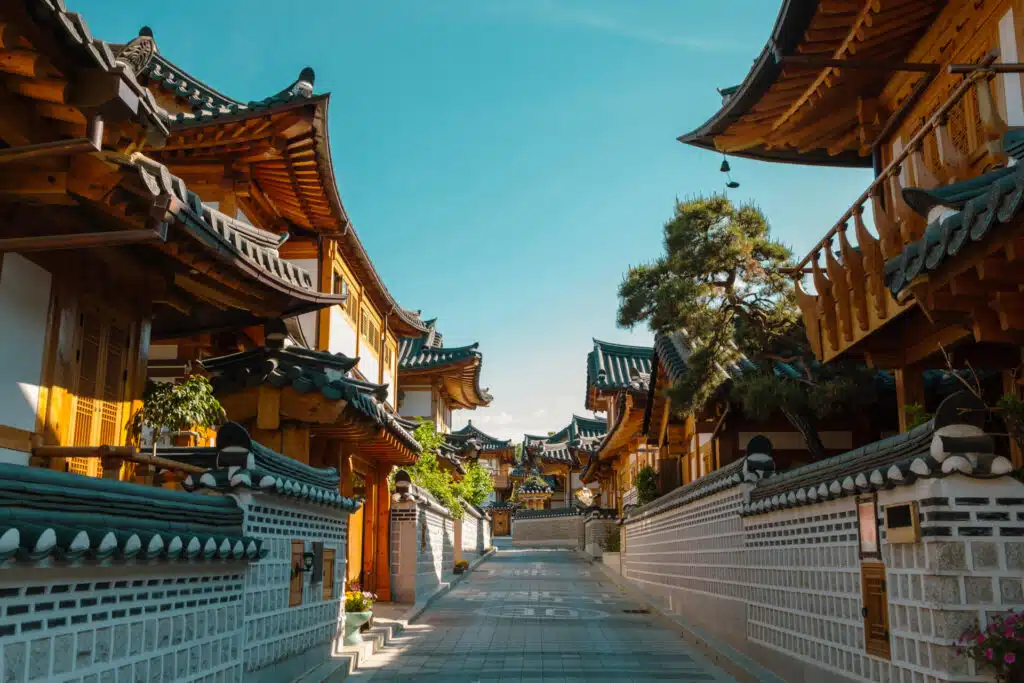
- Attend free events: Explore hanok villages (neighbourhoods made up of traditional Korean houses), temple stays and city walking tours.
- Shop smart: Factory shops and wholesale clothes markets like Dongdaemun offer great deals; haggle politely at smaller stalls.
- Cook at home: Buy groceries at local markets rather than imported Western foods.
- Use coin noreaebangs: ₩500 ($0.30) per song, or buy a full hour for ₩10K ($7) for longer fun — much cheaper than regular noraebangs (₩20–₩30K / $14–$20 per hour).
- Get membership cards: Enjoy 10%+ discounts at grocery stores and cafés.
- Party at home: Convenience store alcohol is cheap — soju costs just ₩1,800 ($1.25) a bottle!
- Culture Day discounts: The last Wednesday of every month sees over 2,000 venues offering free or discounted admission, including big museums, galleries, and cinemas.
- Thursday bar/club deals: Women enter free on Ladies Thursdays at most Itaewon/Hongdae clubs; everyone gets free entry at Thursday Party bars nationwide (₩20K–30K saved)
- Free tourist spots: Enjoy Seoul Forest Park or Olympic Park and others, free year-round.
In 2026, South Korea remains one of the best TEFL destinations out there. You don’t need a financial advisor — simply stick to a budget, follow a few money-saving tips, and you’ll be just fine.
There are plenty of ways for teachers to make extra money, from choosing a rural location to side hustles and smart budgeting strategies. The upside is that while you’re saving, you’ll also discover Korea’s hidden gems. Attending temple festivals, strolling through hanok villages, or visiting museums will enrich your time abroad while making your wallet smile.
Author Bio
Table of Contents
- Introduction
- Why choose South Korea
- Salaries in South Korea
- Average cost of living
- How much goes toward rent?
- Budgeting strategies
- Other factors
- Financial stability
- Lifestyle choices
- How much can you save
- Tips for saving money
TEFL teachers in South Korea typically save between ₩745,000-₩2.25 million ($500–$1,500) monthly, helped by low tax rates and employer-provided housing. Average salaries range from ₩2.2million to ₩3 million, while essential monthly expenses, excluding rent, generally average around ₩800,000 to ₩1.2 million. Most contracts also include a one-month completion bonus and airfare reimbursement to further increase your yearly savings. Public school roles via the EPIK program to offer the most consistent benefits package.
There’s no question about it: South Korea offers one of the most attractive English-teaching packages around with competitive ESL teacher salaries, free housing, great healthcare, and a lifestyle backed by world-class infrastructure.
But that disposable income is a double-edged sword. There’s so much to see and do, especially in places like Seoul and Busan — temptation is everywhere. Plus, South Korea is a prime location for travel.
How much money you can save depends on your priorities: are you there for your bank account or bucket list?
With that in mind, let’s look at how to save money as an English teacher in Korea.
Read more: Teach English In South Korea
Why teachers choose to teach English in South Korea (and why it’s good for saving money)
We all know someone who has taught or is currently teaching in South Korea. If you’re an English teacher, it’s very likely on your radar since it’s a top TEFL destination. Apart from K-pop and the yummy food factor (have you noticed all the Korean BBQ places popping up lately?), Korea offers incredible teacher packages that are hard to overlook.
Take EPIK (English Programme in Korea) as an example. EPIK offers:
- Free housing
- Airfare reimbursement
- National health insurance
- Contract completion bonus
- Pension contributions (and refunds for those from countries with a pension treaty)
- Paid vacation (18-21 days), plus national holidays
Who can say no to that?
These benefits, plus a high quality of life and a low crime rate, make Korea one of the best countries to teach English and save money.
Did we mention its location is great for travelling to nearby TEFL gems like Taiwan, Japan and Thailand? South Korea is a winner in our books — hands down!
Read more: Discover The EPIK Programme: Your Gateway To Teaching English In South Korea
English teacher salaries in South Korea: How much can you earn?
Despite rising inflation, teaching English in South Korea remains a reliable choice for TEFL teachers, with salaries, taxes, and benefits stacking up well in 2026.
How much you earn depends on location, qualifications, and experience.
Salary breakdown
Entry-level public school roles are paid on a scale that reflects your qualifications and experience. Hagwons match this closely but with higher starting salaries, while universities and international schools pay the most, but seek experienced teachers with credentials.
Here’s what you can expect to earn at each type of institution:
- Government programmes (EPIK/SMOE/GEPIK/GOE): ₩2.0M–₩2.7M ($1,500-$2,000)
- Hagwons (private academies): ₩2.1M–₩2.5M ($1,575-$1,875)
- International schools: ₩2.5M–₩3M ($1,875-$2,250)
- Universities: ₩2.3M–₩3.5M ($1,725-$2,625)
Taxes and deductions
Taxes in South Korea are refreshingly low. Most English teachers pay around 3-5% income tax, which is automatically deducted from their monthly salary.
National health insurance takes roughly 3.5% and is mandatory, while the pension contribution sits at about 4.5%, though this depends on your nationality. South African teachers are exempt from pension contributions. Teachers from countries with pension agreements, such as the US, Canada, and Australia, can reclaim their pension contributions when leaving Korea.
When you factor in all the perks (like living rent-free) and spend your money wisely, it’s realistic to save $500–$1,500/month.
Read more: Do I Have To Pay Tax When Teaching English Abroad?
What’s the average cost of living for TEFL teachers in South Korea?
When you sign up to teach in Korea, you’ll need to choose between major cities (like Seoul or Busan) or a rural location. Your choice is crucial as it will affect your savings potential.
Big city life offers an international lifestyle, endless entertainment, diverse dining options, world-class nightlife, and well-connected transit points. However, this convenience comes at a cost:
- A higher cost of living: According to Numbeo’s 2025 data, the cost of living in prime locations such as Seoul and Busan is 20%–40% higher than in rural areas.
- Housing difficulty: While teaching contracts include free housing, you can choose a housing allowance, but you’ll be hard-pressed to find spacious accommodation due to the city’s high population density. Market rents can easily exceed the allowance and require large deposits upfront.
- Spending temptations: You’ll be surrounded by trendy cafes, pricey Western restaurants, high-end shopping districts, and a thriving nightlife scene in areas like Itaewon. It requires strong willpower to overcome the constant urge to splurge.
You may wonder why anyone would choose the housing allowance if rent is so costly. Well, there are several reasons:
- A preference for living in a specific neighbourhood
- Moving in with a partner
- The desire for a more spacious or modern place
- Avoiding small or basic employer-provided housing
- Maintaining control over your housing situation
All of these are good reasons, but for the budget-conscious TEFL teacher, employer housing is usually the best choice. In some cases, teachers really luck out and end up in huge apartments — I know, I was one of them. 😀
Rural locations have many benefits if you can overcome the constant need for stimulation and don’t mind being away from the crowds, as in far away — getting there can mean 1.5 hours on the subway, plus a bus, a taxi, or both!
Living in a rural area means:
- A lower cost of living: Transport, food and amenities are generally cheaper outside major cities.
- Fewer temptations: The absence of large malls, fancy restaurants, and nightlife venues significantly reduces the temptation to spend.
- Placement bonus: Government programmes like EPIK include a bonus for rural placements, which boosts your savings.
- Higher savings potential: Teachers in rural areas generally enjoy a lower cost of living, although there are those who travel to major cities at the weekend and make a dent in their wallet!
Read more: Teach English In Seoul
So what do typical monthly expenses look like when teaching in Korea?
Monthly expense breakdown (approx.):
- Unlimited internet: ₩31K ($20)
- Mobile phone plan: ₩53K ($36)
- Basic utilities: ₩250K ($170)
- Restaurant meal: ₩10K ($7)
- Regular-size cappuccino: ₩5K ($3)
- Groceries from markets: ₩156K ($105)
- Gym membership: ₩75K ($50)
- Monthly transport pass: ₩65K ($45)
If you’re a bit of a shopaholic and love clothes, you can expect to pay around ₩78K ($50) for a pair of Levi jeans and ₩63K ($40) for a summer dress in a chain store.
Disclaimer: Prices are approximate and rounded for clarity throughout this article.
The good news is that no matter if you find yourself living in the heart of Seoul or on the outskirts, you can save and reach your financial goals on an ESL teacher’s salary with a well-planned budget.
Read more: Start-Up Costs For TEFL Teachers: How Much To Budget For
How much of your income goes toward rent?
The answer is zero — IF you opt for employer housing.
One of the perks of teaching in Korea is free housing, although there is the option to rent your own apartment by opting for the housing allowance: around ₩400K–₩500K ($300–$375), depending on the region. However, this is not enough to cover rent in Seoul, where rent exceeds ₩800K ($546).
What budgeting strategies help teachers stretch their salary?
The following money-saving tips for teachers will help you manage your money better:
✅ Track your spending
Draw up a budget and note where your money is being spent — a simple spreadsheet works well.
✅ Cut grocery costs
Be mindful of where you shop for food. Steer clear of foreign food markets and stock up on goods at chain stores, like Homeplus and E-Mart. Ramen is cheap if you’re in a pinch, but home-cooked meals or even better for your budget. Try the local markets for fresh produce.
✅ Maximise transport savings
The T-money card is a convenient pay-as-you-go option. Buy and load it with cash at any convenience store or subway vending machine. It works for subway rides, buses, and taxis.
✅ Choose budget phone carriers
Skip major providers and try budget options like LG U+, KT M Mobile, or SK 7mobile. You’ll get similar coverage for far less each month.
💡Tip: Avoid phone contracts; buy second-hand phones.
✅ Make use of student and foreigner discounts
Always have your ARC (Alien Registration Card, often called a Residence Card or RC) handy. Your RC is your foreigner ID and passport to discounts enjoyed by locals. It basically upgrades your status from foreigner to resident. Many palaces, museums and cultural events offer discounts for foreigners.
You can enjoy 20–50% off cultural events and festivals at venues like Seoul Land or the Namsan Cable Car, and a whopping 60–80% off medical bills through the NHI (with co-pays)! It also grants you access to libraries, community centres and public programmes where you can enjoy more freebies! 😃
Read more: 8 Simple Money-Saving Hacks All Travelling Teachers Should Know
What other factors influence savings potential?
There are many reasons why you may not reach your savings goals, from your taste preferences to your style, and everything in between. Here are a few factors to keep in mind when saving money abroad.
Smart food choices
Routinely ordering in food or dining at restaurants is not the best way to grow your savings pot. Korean grocery stores offer high-quality fresh produce at reasonable prices, especially at traditional markets. There are also plenty of budget-friendly options from kimbap to street food stalls and local restaurants.
💡Tip: Avoid trendy cafés and Western restaurants.
Social spending
Join hiking groups, language exchanges, and free cultural events rather than defaulting to expensive Gangnam or Itaewon nightlife, where a single night out can cost ₩145K–₩185K ($100–$200)!
Location matters
Rural locations typically mean more savings. The lower cost of living and lack of flashy bars, shopping districts, nightlife options — plus your rural allowance — make it easier to build up your savings.
Use your network
Connect with other TEFL teachers to split costs on weekend trips and get recommendations for cheaper services. The expat teaching community is super tight-knit, and word of mouth will get you the best deals on everything.
End-of-contract bonus
Most teaching positions offer an end-of-contract bonus equivalent to one month’s salary, adding a boost to your savings.
Read more: 4 Ways To Work & Live In South Korea As A Foreigner
Can private tutoring or side gigs significantly boost your income?
Any paid teaching outside of your employer’s contract violates immigration law — online platforms included. Therefore, private tutoring (and any paid work outside of your employer) is off-limits for E-2 visa holders — it’s illegal and can result in deportation.
📝Always check your visa conditions before pursuing any side income.
But, F-2/F-6 (marriage), F-4 (Korean heritage), and H-1 (working holiday) visa holders can tutor legally after Ministry registration. You can charge around ₩29K/hr ($20) and upward, but this is location-dependent.
Online teaching platforms like Preply and Cambly eliminate travel and safety issues and automatically match teachers and students. The online teaching space is highly competitive, so either choose a platform where you can set your own rates or choose one with a decent hourly rate — at least ₩22K/hr ($15).
Non-teaching side gigs may include freelance writing, modelling, graphic design, and digital marketing.
Read more: The Best Side Hustles For Teachers
Do some teaching jobs offer better financial stability than others?
The EPIK Programme in Korea is popular because it’s trusted and provides stability. Not only is it a one-year contract with regular working hours and pension contributions, but you’re getting paid by the government. That cuts out the risk that can arise from employer issues.
Teachers in private institutions, such as hagwons, can find themselves in a pickle if the company runs into financial difficulties. All it takes is low enrolment rates for the business to go downhill, resulting in sudden closures. Sure, the salaries are generally higher, but with more teaching time, fewer holidays and unstable conditions, which means more headaches!
Public schools vs private academies (hagwons)
Public schools offer a stable salary and regular working hours with plenty of vacation days — 18–26 days plus national holidays, versus 7-14 days, and possibly fewer national holidays.
Salaries may start lower than hagwons, but you enjoy a better work-life balance with 20–22 teaching hours, compared with 30–40.
Hagwons are a business first, so the market dictates their success, making them a less stable choice. Bad business can mean unpaid salaries.
Both hagwons and public schools provide housing.
Read more: What Is A Hagwon? Unpacking The Secrets Of South Korea’s Popular Learning Centres
What lifestyle choices impact savings while living in South Korea?
It all comes back to location. When choosing a rural placement, you’re also choosing a certain type of lifestyle — a quieter, less expensive one. But even in the countryside, you can shop online and dine out with friends (albeit at cheaper restaurants), and costs can still accumulate and eat into your budget.
How you travel, what you eat, and how you spend your free time are all factors that impact your savings.
Keep lavish trips abroad to a minimum and get to know your hometown. Small choices like taking a bus instead of a taxi can help you save over time.
Social spending can kill your budget, so be careful when out with friends who like to splurge.
There are plenty of free entertainment options, such as a walk to your local park, a hike in the mountains, singing karaoke at your local noraebang (singing room), or inviting friends over to your place and checking out each other’s digs!
Read more: The Reality of Teaching English in South Korea: What Nobody Tells You
How much can you save teaching in South Korea? (real example)
Quick answer:
Most teachers save between $500-$1,500 per month. Rural placements and public schools represent the highest savings potential.
Here’s a real breakdown based on a first-year public school teacher in Korea earning ₩2.2M ($1,500)/month — without a side hustle.
Salary and deductions
- Monthly gross pay: ₩2.2M ($1,500)
- Net after deductions: ₩1.95M ($1,330) (₩250–₩300K for income tax, health insurance, and pension)
Monthly expenses
- Utilities: ₩100K–₩150K ($70–$100)
- Phone & data: ₩40K–₩60K ($30–$40) using budget carriers
- Food: ₩350K–₩500K ($240–$340) at local markets and occasional cafés
- Transport: ₩60K–₩90K ($40–$60) using a T-money card
- Lifestyle extras: ₩200K–₩300K ($135–$200) depending on social habits
The following examples illustrate the savings potential in a rural versus an urban location:
- Example 1: A teacher in a rural area like the outskirts of Daegu who spends ₩700K ($480) could save about ₩1.2M ($850)/month.
- Example 2: A teacher in a big city like Seoul spending ₩1M ($680) might save closer to ₩950K ($650)/month.
If you’re frugal and/or in a rural location, you can save up to 50% of your salary.
Most teachers can save around $500–$700/month. In Seoul or when socialising a lot, this number will lower to around $400–$600/month.
Top tips for saving money in South Korea
If you’re seeking simple ways to save money, check out the following tips:
- Eat school lunches — they’re free!
- Travel locally: Opt for T-money buses or subways instead of taxis.
- Attend free events: Explore hanok villages (neighbourhoods made up of traditional Korean houses), temple stays and city walking tours.
- Shop smart: Factory shops and wholesale clothes markets like Dongdaemun offer great deals; haggle politely at smaller stalls.
- Cook at home: Buy groceries at local markets rather than imported Western foods.
- Use coin noreaebangs: ₩500 ($0.30) per song, or buy a full hour for ₩10K ($7) for longer fun — much cheaper than regular noraebangs (₩20–₩30K / $14–$20 per hour).
- Get membership cards: Enjoy 10%+ discounts at grocery stores and cafés.
- Party at home: Convenience store alcohol is cheap — soju costs just ₩1,800 ($1.25) a bottle!
- Culture Day discounts: The last Wednesday of every month sees over 2,000 venues offering free or discounted admission, including big museums, galleries, and cinemas.
- Thursday bar/club deals: Women enter free on Ladies Thursdays at most Itaewon/Hongdae clubs; everyone gets free entry at Thursday Party bars nationwide (₩20K–30K saved)
- Free tourist spots: Enjoy Seoul Forest Park or Olympic Park and others, free year-round.
In 2026, South Korea remains one of the best TEFL destinations out there. You don’t need a financial advisor — simply stick to a budget, follow a few money-saving tips, and you’ll be just fine.
There are plenty of ways for teachers to make extra money, from choosing a rural location to side hustles and smart budgeting strategies. The upside is that while you’re saving, you’ll also discover Korea’s hidden gems. Attending temple festivals, strolling through hanok villages, or visiting museums will enrich your time abroad while making your wallet smile.
Author Bio