 United States
US
United States
US










What It’s Really Like Living With a Host Family in Spain (Honest Teacher Review)

 December 8, 2025


Table of Contents
- Introduction
- Living with a host family
- Vs living independently
- Vs shared accommodation
- Host family benefits
- Host family challenges
- Tips for a smooth homestay
- Who chooses host families?
TEFL teacher and TTA alumna Lauren is an Assistant Language Teacher in Spain and lived with a host family in Seville.
When I was accepted into a language assistant program in Spain, I had to choose between independent accommodation or staying with a host family, with placements changing every three months to avoid overstaying my welcome.
Read more: What Is NALCAP? Become An English Language Assistant
I considered both options carefully. Being fully immersed in a new culture, building relationships with the locals and studying Spanish were a top priority, so I decided to stay with a host family.
I was excited to be part of a local family’s daily life, sharing their traditions, meals and routines. My host family in Seville had two kids — a boy aged seven and a girl aged four — who both attended the school I was teaching at.
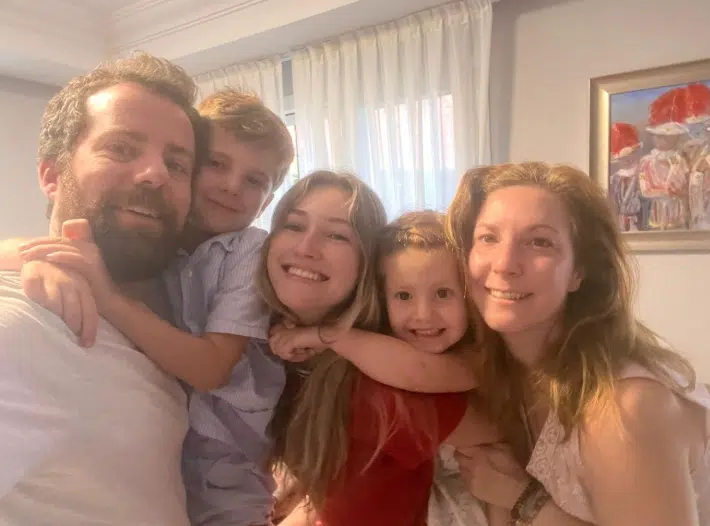
Lauren with her host family
As part of my language assistant program, I was meant to switch families after Christmas, so I didn’t overstay my welcome — but my host family graciously offered to let me stay the rest of the school year.
Later, they even offered to host me for another year, saying I was now part of their family.
I lived with them for 9 months (from October 2024 to June 2025), and I can’t speak highly enough of the experience.
What’s it like living with a host family in Spain?
On weekdays, my routine usually started with riding to school together in the morning.
After school, I’d spend time playing with the kids and chatting with the parents for a while and unwind from the day.
Then, I’d do some online tutoring, but only on certain days, and then we’d have dinner around 7:00 PM before heading to bed.
On weekends, we often spent the mornings playing games or colouring, going to Mass on Sundays, enjoying churros for breakfast, or getting ready to visit one of their relatives.
Read more: How Teaching English Online Lets You Travel The World
✨Fun fact: Churros are thin, fried dough pastries typically served with hot chocolate for dipping. It’s believed to have originated in Spain, where shepherds made it as a substitute for bread.
I was lucky to visit their countryside home often for birthdays, paella-making days, quad biking through the hills, and spending time with their extended family and friends.
We also visited their beach house, where we played games and explored the town, which felt like a privilege.
On Friday and Saturday nights, I’d usually go out with friends. I’d let my host family know I’d be out and use my house key to come and go as I pleased, which made it easy to enjoy my own social life.
I spent time with my host family often, as building a good relationship was important to me. They made it easy by including me in their activities, but also letting me have personal time.
As far as sharing chores and responsibilities in the home, they had a cleaner. But I still offered to help out with chores.
Living with a host family in Spain vs. Living independently (which is better?)
Living with a host family in Spain was a big change for me. As an only child from a single-parent, divorced household, I was used to it being just me and my mom or dad.
With my host family, we’d have dinner together every night. Activities were always centred around the children and keeping them entertained.
Families in Spain seem to have a very good family balance. They make time to see friends and family often and often bring the kids along.
What surprised me the most was how often families spend time together. Most weekends, the kids’ parents, grandparents, aunts and uncles, and cousins were around. It was nice to see such a close-knit family dynamic.
In Spain, it’s common to see families out enjoying dinners and drinks with their kids till 11:00 PM.
It was eye-opening to see parents maintain their social lives after having children.
I hope to bring this balance back home to the US, where keeping relationships strong despite busy schedules is so important.
Living with a host family vs living in shared accommodation
The main difference between staying with a host family and independent living is the level of freedom involved.
Living with a host family means less freedom to come and go as you want, having guests over for as long as you want, and using the home however you want.
Independent accommodation is best for those who:
- prioritise their social life and/or nightlife,
- are familiar with the local language and culture,
- have friends or family around.
Read more: How To Find Affordable Housing As A TEFL Teacher In Spain
Benefits of living with a host family in Spain
The biggest benefit is building relationships within a new culture. Feeling connected to locals and having a second family on the other side of the world is truly special.
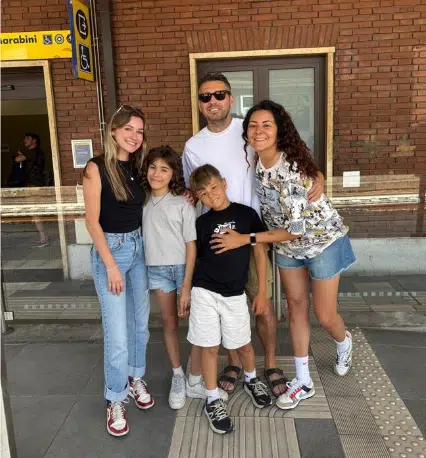
Living with them helped me go from zero Spanish-speaking skills to having daily conversations without the nerves. I also got to see the typical routines and customs of Spaniards in Seville.
Read more: Immersion Learning Explained
I appreciated this most during holidays, including Semana Santa (holy week), La Feria de Seville (The Seville Fair) and Christmas. I borrowed traditional clothes, learnt their history and exchanged Christmas gifts. None of this would have been possible if I’d lived alone.
The family provided emotional support while also meeting my daily needs. Anytime I needed help with things like my documentation, recommendations or transport to the airport, they were there.
Being alone in a foreign country can feel isolating, but my host family supported and cared for me as if I were family, which is priceless.
Challenges of living with a host family (and how to handle them)
Cultural issues
Fortunately, I never had any disagreements or significant cultural clashes with my host family.
Language issues
The only thing I sometimes struggled with was my Spanish.
The most frustrating part was feeling like I wasn’t able to adequately express myself or follow their conversations.
Aside from this, the most important part of living with a host family is knowing and expecting cultural and lifestyle differences. So you must be adaptable to whatever situation you may find yourself in to make the most of it.
Read more: How to Learn the Local Language
Boundaries
There’s definitely a difference (and adjustment) between living in a shared space and sharing your life with a host family.
Mostly, the kids would come knocking on my door wanting to play, which I didn’t mind — it was part of the joy of the experience.
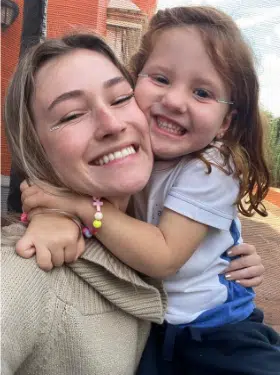
Experiences can vary greatly depending on how much space you have to share. I was lucky to have my own bedroom and bathroom, which made my daily routine very natural, but that’s not always the case.
Most host families understand the need for personal space and respect boundaries. Feeling confident to be honest about your boundaries is really important.
It’s always good to be polite but direct, especially with language barriers. Express your concerns in a way that encourages collaboration, rather than putting the other party on the defensive.
Read more: How To Get Over The Language Barrier Without Learning The Language
Tips for a smooth homestay
When I arrived at my host family’s home, I was extremely nervous. It’s a big risk to live with (and trust) strangers. I tried to go into it with optimism.
When moving abroad, I think it’s best to drop all expectations so you can truly appreciate the experience for what it is.
The biggest challenge of living with a host family is changing your daily life to fit theirs.
I sacrificed personal time and going out with friends to build my relationship with my host family. But even with this change in routine, I adjusted quickly and looked forward to spending time with them because I had the right mindset going in.
My best advice would be to make the conscious decision to make the best of every experience, ensuring it is a positive learning curve that leads to future growth.
Who should choose to live with a host family in Spain?
Living with a host family in Spain helped shape my view of Spaniards, as it was my first experience of the culture.
I could not speak more highly of the Spanish people. Everyone I met was inclusive and welcoming. I often felt they were just as open and eager for cultural exchange as I was, which I didn’t expect.
Living with a host family is best for those who genuinely love connecting with others and accept all types of people.
Anyone debating between a homestay and independent living should honestly consider their goals for going abroad. If you want to step out of your comfort zone, I highly recommend choosing a host family.
If you’re considering teaching English in Spain — or anywhere else around the world — our TEFL courses will help you get there.
Author Bio
Table of Contents
- Introduction
- Living with a host family
- Vs living independently
- Vs shared accommodation
- Host family benefits
- Host family challenges
- Tips for a smooth homestay
- Who chooses host families?
TEFL teacher and TTA alumna Lauren is an Assistant Language Teacher in Spain and lived with a host family in Seville.
When I was accepted into a language assistant program in Spain, I had to choose between independent accommodation or staying with a host family, with placements changing every three months to avoid overstaying my welcome.
Read more: What Is NALCAP? Become An English Language Assistant
I considered both options carefully. Being fully immersed in a new culture, building relationships with the locals and studying Spanish were a top priority, so I decided to stay with a host family.
I was excited to be part of a local family’s daily life, sharing their traditions, meals and routines. My host family in Seville had two kids — a boy aged seven and a girl aged four — who both attended the school I was teaching at.
Lauren with her host family
As part of my language assistant program, I was meant to switch families after Christmas, so I didn’t overstay my welcome — but my host family graciously offered to let me stay the rest of the school year.
Later, they even offered to host me for another year, saying I was now part of their family.
I lived with them for 9 months (from October 2024 to June 2025), and I can’t speak highly enough of the experience.
What’s it like living with a host family in Spain?
On weekdays, my routine usually started with riding to school together in the morning.
After school, I’d spend time playing with the kids and chatting with the parents for a while and unwind from the day.
Then, I’d do some online tutoring, but only on certain days, and then we’d have dinner around 7:00 PM before heading to bed.
On weekends, we often spent the mornings playing games or colouring, going to Mass on Sundays, enjoying churros for breakfast, or getting ready to visit one of their relatives.
Read more: How Teaching English Online Lets You Travel The World
✨Fun fact: Churros are thin, fried dough pastries typically served with hot chocolate for dipping. It’s believed to have originated in Spain, where shepherds made it as a substitute for bread.
I was lucky to visit their countryside home often for birthdays, paella-making days, quad biking through the hills, and spending time with their extended family and friends.
We also visited their beach house, where we played games and explored the town, which felt like a privilege.
On Friday and Saturday nights, I’d usually go out with friends. I’d let my host family know I’d be out and use my house key to come and go as I pleased, which made it easy to enjoy my own social life.
I spent time with my host family often, as building a good relationship was important to me. They made it easy by including me in their activities, but also letting me have personal time.
As far as sharing chores and responsibilities in the home, they had a cleaner. But I still offered to help out with chores.
Living with a host family in Spain vs. Living independently (which is better?)
Living with a host family in Spain was a big change for me. As an only child from a single-parent, divorced household, I was used to it being just me and my mom or dad.
With my host family, we’d have dinner together every night. Activities were always centred around the children and keeping them entertained.
Families in Spain seem to have a very good family balance. They make time to see friends and family often and often bring the kids along.
What surprised me the most was how often families spend time together. Most weekends, the kids’ parents, grandparents, aunts and uncles, and cousins were around. It was nice to see such a close-knit family dynamic.
In Spain, it’s common to see families out enjoying dinners and drinks with their kids till 11:00 PM.
It was eye-opening to see parents maintain their social lives after having children.
I hope to bring this balance back home to the US, where keeping relationships strong despite busy schedules is so important.
Living with a host family vs living in shared accommodation
The main difference between staying with a host family and independent living is the level of freedom involved.
Living with a host family means less freedom to come and go as you want, having guests over for as long as you want, and using the home however you want.
Independent accommodation is best for those who:
- prioritise their social life and/or nightlife,
- are familiar with the local language and culture,
- have friends or family around.
Read more: How To Find Affordable Housing As A TEFL Teacher In Spain
Benefits of living with a host family in Spain
The biggest benefit is building relationships within a new culture. Feeling connected to locals and having a second family on the other side of the world is truly special.
Living with them helped me go from zero Spanish-speaking skills to having daily conversations without the nerves. I also got to see the typical routines and customs of Spaniards in Seville.
Read more: Immersion Learning Explained
I appreciated this most during holidays, including Semana Santa (holy week), La Feria de Seville (The Seville Fair) and Christmas. I borrowed traditional clothes, learnt their history and exchanged Christmas gifts. None of this would have been possible if I’d lived alone.
The family provided emotional support while also meeting my daily needs. Anytime I needed help with things like my documentation, recommendations or transport to the airport, they were there.
Being alone in a foreign country can feel isolating, but my host family supported and cared for me as if I were family, which is priceless.
Challenges of living with a host family (and how to handle them)
Cultural issues
Fortunately, I never had any disagreements or significant cultural clashes with my host family.
Language issues
The only thing I sometimes struggled with was my Spanish.
The most frustrating part was feeling like I wasn’t able to adequately express myself or follow their conversations.
Aside from this, the most important part of living with a host family is knowing and expecting cultural and lifestyle differences. So you must be adaptable to whatever situation you may find yourself in to make the most of it.
Read more: How to Learn the Local Language
Boundaries
There’s definitely a difference (and adjustment) between living in a shared space and sharing your life with a host family.
Mostly, the kids would come knocking on my door wanting to play, which I didn’t mind — it was part of the joy of the experience.
Experiences can vary greatly depending on how much space you have to share. I was lucky to have my own bedroom and bathroom, which made my daily routine very natural, but that’s not always the case.
Most host families understand the need for personal space and respect boundaries. Feeling confident to be honest about your boundaries is really important.
It’s always good to be polite but direct, especially with language barriers. Express your concerns in a way that encourages collaboration, rather than putting the other party on the defensive.
Read more: How To Get Over The Language Barrier Without Learning The Language
Tips for a smooth homestay
When I arrived at my host family’s home, I was extremely nervous. It’s a big risk to live with (and trust) strangers. I tried to go into it with optimism.
When moving abroad, I think it’s best to drop all expectations so you can truly appreciate the experience for what it is.
The biggest challenge of living with a host family is changing your daily life to fit theirs.
I sacrificed personal time and going out with friends to build my relationship with my host family. But even with this change in routine, I adjusted quickly and looked forward to spending time with them because I had the right mindset going in.
My best advice would be to make the conscious decision to make the best of every experience, ensuring it is a positive learning curve that leads to future growth.
Who should choose to live with a host family in Spain?
Living with a host family in Spain helped shape my view of Spaniards, as it was my first experience of the culture.
I could not speak more highly of the Spanish people. Everyone I met was inclusive and welcoming. I often felt they were just as open and eager for cultural exchange as I was, which I didn’t expect.
Living with a host family is best for those who genuinely love connecting with others and accept all types of people.
Anyone debating between a homestay and independent living should honestly consider their goals for going abroad. If you want to step out of your comfort zone, I highly recommend choosing a host family.
If you’re considering teaching English in Spain — or anywhere else around the world — our TEFL courses will help you get there.
Author Bio