 United States
US
United States
US










What’s It Like Teaching English in Bangkok? Salary, Lifestyle & Real Experience



Last Updated
April 24, 2026


Table of Contents
- Introduction
- What’s it like?
- First impressions
- Teaching days
- Thai students
- Challenges in Bangkok
- Work culture
- Free time in Bangkok
- What do you love most?
- What do you find frustrating?
- Would you recommend Bangkok?
- My advice for future teachers
- Quick-fire questions
What is it really like teaching English in Bangkok? From early morning motorbike commutes to chaotic classrooms and surprisingly treasured moments, this firsthand guide to TEFL jobs in Thailand breaks down the realities of working in the capital city – salary, lifestyle, challenges, warts, and all!
Read more: How To Live & Work In Thailand As A Foreigner
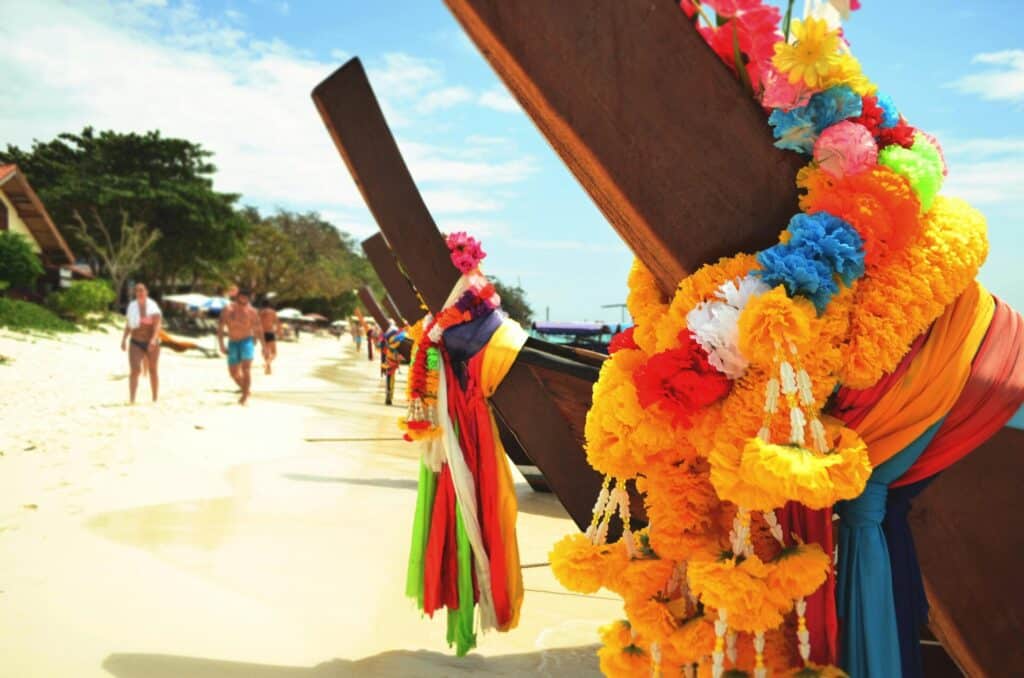
What’s it like teaching English in Bangkok?
Let me start with a moment that sums up my Bangkok teaching experience.
During a recent M2 class, I explained a straightforward writing task. One student proudly announced she was done two minutes later — suspiciously fast. When I checked her work, she had accidentally copied the example sentence word-for-word, punctuation included… and so did three other students who were “finished.”
When I gently pointed out the mistake, they burst into laughter and said, “Oh! Teacher not clear!” (It was very clear.)
That’s teaching in Bangkok: lighthearted, unpredictable, and filled with moments that make you shake your head and laugh at the same time.
Note: Thailand’s primary years of school are known as Prathom (P1 – P6), while the high school years are called Matayom (M1 – M6).
What was your first impression of teaching in Bangkok, and how has that changed?
My first teaching day felt like someone dropped me into a fast-paced movie without the script!
The school was bigger than anything I had ever worked in, the students were more energetic than coffee drinkers at 6 AM, and the heat reminded me that aircons are God’s gift to classrooms.
I wasn’t stressed — just trying not to sweat through my shirt before first period started.
The Thai culture of politeness, the wai greetings, and the hierarchy were all new to me, and at first, I worried about accidentally offending someone just by standing in the wrong place.
Over time, everything settled. I didn’t become best friends with my colleagues, but we work perfectly well together. Most of my communication goes through my agency anyway, and while we’re not personally close, the relationship is smooth and professional.
What once felt overwhelming now feels comfortably familiar.
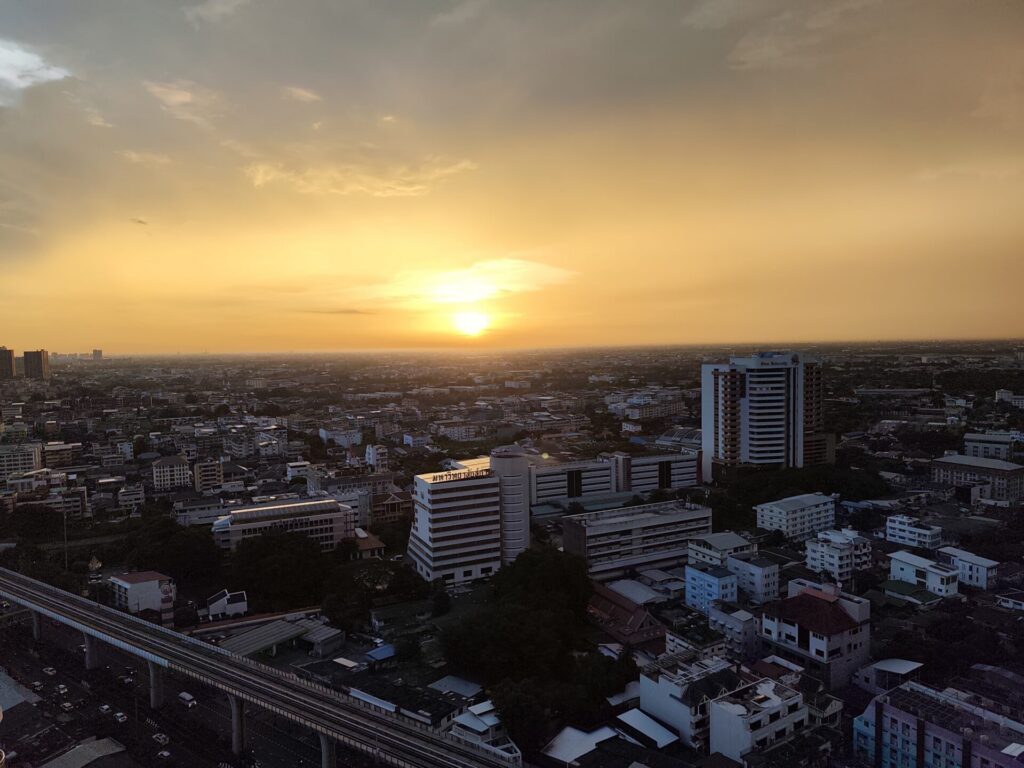
What’s a typical teaching day in Bangkok?
Here’s a realistic breakdown of my daily routine:
- 5:00 AM – The alarm goes off. I try to pretend I didn’t hear it.
- 6:20 AM – My wife and I leave our condo on the motorbike.
- 6:45 AM – Drop her off at her school (1km from my school)
- 7:00 AM – Arrive at school, start preparing lessons, reviewing my schedule, and getting everything ready. I don’t really chit-chat in the mornings; I’m focused on getting organised.
- 8:00 AM – 3:30 PM – Non-stop classes with P5, M1, M2, and M3. I’m fully in teacher mode, explaining, demonstrating, encouraging, redirecting, praising, repeating… and occasionally negotiating with students who are convinced they definitely don’t need to copy anything into their books today.
Every day includes:
- Students shouting “Teacher! Finished!” (they’re not finished)
- Students hiding behind their friends during speaking activities
- The surprise high-level student who says something shockingly advanced out of nowhere
- And the adorable “Teacher, can I go toilet?” request… even during a test
By 4:00 PM, I switch from teacher to tutor. I teach students from my wife’s school every weekday for an hour, helping them prepare for tests or guiding them through tricky topics. Afterwards, we head home together and usually make it back just before 6:00 PM.
Evenings are where the peace happens:
- Dinner from PowerDaily – the meal-prep service that we’ve been using for a while now
- Talking about our day at school
- Quick gym session (or not — let’s be honest)
- Some nights we proudly embrace the “lazy evening” lifestyle—7/11 snacks, Netflix, air-conditioning blasting like we’re trying to recreate Antarctica.
It’s a steady routine that balances work and home life well.
How would you describe Thai students?
Thai students are truly unique. They can be sweet, playful, talkative, shy, dramatic and surprisingly honest. Sometimes they’re all of these at once.
What makes them special is their enthusiasm. They love activities, group work, and anything that feels like a game. They also love joking around — and, honestly, some of them have a comedic talent worthy of TikTok.
Their English levels range from complete beginners to students who casually say, “Teacher, this idiom is not appropriate in this context.” So yes, variety is guaranteed.
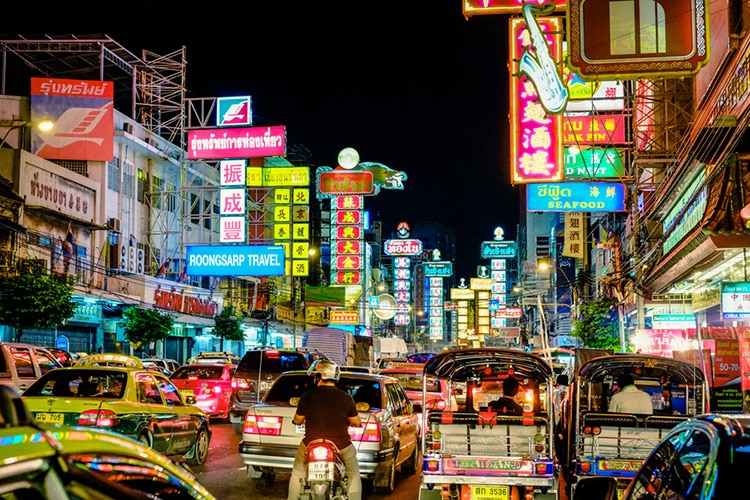
What are the biggest challenges of teaching in Bangkok?
Let’s be real. Teaching in Bangkok is wonderful — but challenging too.
The main challenges include:
- Large class sizes
You quickly learn that 30+ students means you need eyes at the back of your head.
- Noise
At a Thai school, when the bell rings, it sounds like a festival. There’s no escaping it.
You’ll have one student writing paragraphs while another is still figuring out the alphabet.
- Cultural differences
Thai culture is gentle, indirect, and focused on keeping the peace. Feedback must be kind, subtle, and delivered with a smile, even if you’re internally screaming.
- Last-minute changes
Your schedule will change at least once a week without warning. Just breathe.
- The heat
By 9 AM, your shirt might already be regretting its life choices.
None of these challenges ruins the job — they just come with the package.
Read more: Things To Know About Thai Classroom Culture
What’s the work culture like at school?
Thai workplace culture is polite, respectful, and calm, even when the situation is not calm.
Since I work through an agency, I report mainly to my agent. My communication with administrators goes through the agency. My colleagues and I work well together, but we’re not deeply connected.
There’s a clear structure, and foreign teachers mostly follow the system already in place. Once you understand that Thai communication is indirect and gentle, things go much more smoothly.
How do you spend your free time in Bangkok?
Bangkok offers more options than you could ever finish in one lifetime.
My free time usually includes:
- Meeting with our church LifeGroup for fellowship and good conversation
- Renting a car for little getaways (Khaoyai, Chanthaburi, Rayong)
- Attending university classes and trying to stay on top of assignments
- Visiting new attractions around the city
- Workout sessions
- Exploring cafés, malls, parks and markets
- And relaxing at home with my wife after long days
The beauty of Bangkok is that you can have a full social schedule or a quiet home life — both are completely normal.
What do you love most about teaching in Bangkok?
My favourite things:
- The students (they’re the real highlight)
- The sense of safety
- The variety of each teaching day
- The convenience of the city
- The food (pad thai kung is elite)
- The balance between work and life
- The personal growth that comes naturally when you move abroad
There’s something rewarding about knowing you’re helping students who genuinely appreciate the effort.

What do you find frustrating?
- Sudden schedule changes
- High noise levels
- Communication gaps
- The humidity
- Managing many students at once
But the frustrating days still don’t outweigh the good ones.
Would you recommend teaching in Bangkok?
Yes — but only if you’re the right type of teacher.
Bangkok is great for someone who is:
- Flexible
- Patient
- Open-minded
- Calm under pressure
- Comfortable with cultural differences
- Able to laugh things off
It’s not ideal for someone who expects Western-style systems or absolute structure.

My advice for future teachers
- Learn basic Thai (it helps more than you think)
- Prepare for large classes
- Stay flexible
- Don’t compare Thailand to your home country
- Keep your sense of humour
- Give yourself time to adjust
- Find a good routine — it makes a huge difference
Bangkok rewards teachers who embrace the experience with curiosity rather than resistance.
Quick-fire questions
Best Thai dish?
Pad Thai Kung, which is pad thai with shrimp. Simple, delicious, and always reliable, much like Bangkok itself, once you learn how to navigate it.
Best neighbourhood for teachers?
Sathorn — super convenient, but prepare for heavy traffic and busy streets.
If you left Bangkok tomorrow, what would you miss most?
The cheerful “Good morning, teacher!” greetings — each one slightly different, slightly chaotic, and completely heartwarming.
I’m grateful for the chance to be here—riding through the city before sunrise, facing classrooms full of energy, and finding joy in the small routines that make this place feel like home.
Author Bio
Table of Contents
- Introduction
- What’s it like?
- First impressions
- Teaching days
- Thai students
- Challenges in Bangkok
- Work culture
- Free time in Bangkok
- What do you love most?
- What do you find frustrating?
- Would you recommend Bangkok?
- My advice for future teachers
- Quick-fire questions
What is it really like teaching English in Bangkok? From early morning motorbike commutes to chaotic classrooms and surprisingly treasured moments, this firsthand guide to TEFL jobs in Thailand breaks down the realities of working in the capital city – salary, lifestyle, challenges, warts, and all!
Read more: How To Live & Work In Thailand As A Foreigner
What’s it like teaching English in Bangkok?
Let me start with a moment that sums up my Bangkok teaching experience.
During a recent M2 class, I explained a straightforward writing task. One student proudly announced she was done two minutes later — suspiciously fast. When I checked her work, she had accidentally copied the example sentence word-for-word, punctuation included… and so did three other students who were “finished.”
When I gently pointed out the mistake, they burst into laughter and said, “Oh! Teacher not clear!” (It was very clear.)
That’s teaching in Bangkok: lighthearted, unpredictable, and filled with moments that make you shake your head and laugh at the same time.
Note: Thailand’s primary years of school are known as Prathom (P1 – P6), while the high school years are called Matayom (M1 – M6).
What was your first impression of teaching in Bangkok, and how has that changed?
My first teaching day felt like someone dropped me into a fast-paced movie without the script!
The school was bigger than anything I had ever worked in, the students were more energetic than coffee drinkers at 6 AM, and the heat reminded me that aircons are God’s gift to classrooms.
I wasn’t stressed — just trying not to sweat through my shirt before first period started.
The Thai culture of politeness, the wai greetings, and the hierarchy were all new to me, and at first, I worried about accidentally offending someone just by standing in the wrong place.
Over time, everything settled. I didn’t become best friends with my colleagues, but we work perfectly well together. Most of my communication goes through my agency anyway, and while we’re not personally close, the relationship is smooth and professional.
What once felt overwhelming now feels comfortably familiar.
What’s a typical teaching day in Bangkok?
Here’s a realistic breakdown of my daily routine:
- 5:00 AM – The alarm goes off. I try to pretend I didn’t hear it.
- 6:20 AM – My wife and I leave our condo on the motorbike.
- 6:45 AM – Drop her off at her school (1km from my school)
- 7:00 AM – Arrive at school, start preparing lessons, reviewing my schedule, and getting everything ready. I don’t really chit-chat in the mornings; I’m focused on getting organised.
- 8:00 AM – 3:30 PM – Non-stop classes with P5, M1, M2, and M3. I’m fully in teacher mode, explaining, demonstrating, encouraging, redirecting, praising, repeating… and occasionally negotiating with students who are convinced they definitely don’t need to copy anything into their books today.
Every day includes:
- Students shouting “Teacher! Finished!” (they’re not finished)
- Students hiding behind their friends during speaking activities
- The surprise high-level student who says something shockingly advanced out of nowhere
- And the adorable “Teacher, can I go toilet?” request… even during a test
By 4:00 PM, I switch from teacher to tutor. I teach students from my wife’s school every weekday for an hour, helping them prepare for tests or guiding them through tricky topics. Afterwards, we head home together and usually make it back just before 6:00 PM.
Evenings are where the peace happens:
- Dinner from PowerDaily – the meal-prep service that we’ve been using for a while now
- Talking about our day at school
- Quick gym session (or not — let’s be honest)
- Some nights we proudly embrace the “lazy evening” lifestyle—7/11 snacks, Netflix, air-conditioning blasting like we’re trying to recreate Antarctica.
It’s a steady routine that balances work and home life well.
How would you describe Thai students?
Thai students are truly unique. They can be sweet, playful, talkative, shy, dramatic and surprisingly honest. Sometimes they’re all of these at once.
What makes them special is their enthusiasm. They love activities, group work, and anything that feels like a game. They also love joking around — and, honestly, some of them have a comedic talent worthy of TikTok.
Their English levels range from complete beginners to students who casually say, “Teacher, this idiom is not appropriate in this context.” So yes, variety is guaranteed.
What are the biggest challenges of teaching in Bangkok?
Let’s be real. Teaching in Bangkok is wonderful — but challenging too.
The main challenges include:
- Large class sizes
You quickly learn that 30+ students means you need eyes at the back of your head.
- Noise
At a Thai school, when the bell rings, it sounds like a festival. There’s no escaping it.
You’ll have one student writing paragraphs while another is still figuring out the alphabet.
- Cultural differences
Thai culture is gentle, indirect, and focused on keeping the peace. Feedback must be kind, subtle, and delivered with a smile, even if you’re internally screaming.
- Last-minute changes
Your schedule will change at least once a week without warning. Just breathe.
- The heat
By 9 AM, your shirt might already be regretting its life choices.
None of these challenges ruins the job — they just come with the package.
Read more: Things To Know About Thai Classroom Culture
What’s the work culture like at school?
Thai workplace culture is polite, respectful, and calm, even when the situation is not calm.
Since I work through an agency, I report mainly to my agent. My communication with administrators goes through the agency. My colleagues and I work well together, but we’re not deeply connected.
There’s a clear structure, and foreign teachers mostly follow the system already in place. Once you understand that Thai communication is indirect and gentle, things go much more smoothly.
How do you spend your free time in Bangkok?
Bangkok offers more options than you could ever finish in one lifetime.
My free time usually includes:
- Meeting with our church LifeGroup for fellowship and good conversation
- Renting a car for little getaways (Khaoyai, Chanthaburi, Rayong)
- Attending university classes and trying to stay on top of assignments
- Visiting new attractions around the city
- Workout sessions
- Exploring cafés, malls, parks and markets
- And relaxing at home with my wife after long days
The beauty of Bangkok is that you can have a full social schedule or a quiet home life — both are completely normal.
What do you love most about teaching in Bangkok?
My favourite things:
- The students (they’re the real highlight)
- The sense of safety
- The variety of each teaching day
- The convenience of the city
- The food (pad thai kung is elite)
- The balance between work and life
- The personal growth that comes naturally when you move abroad
There’s something rewarding about knowing you’re helping students who genuinely appreciate the effort.
What do you find frustrating?
- Sudden schedule changes
- High noise levels
- Communication gaps
- The humidity
- Managing many students at once
But the frustrating days still don’t outweigh the good ones.
Would you recommend teaching in Bangkok?
Yes — but only if you’re the right type of teacher.
Bangkok is great for someone who is:
- Flexible
- Patient
- Open-minded
- Calm under pressure
- Comfortable with cultural differences
- Able to laugh things off
It’s not ideal for someone who expects Western-style systems or absolute structure.
My advice for future teachers
- Learn basic Thai (it helps more than you think)
- Prepare for large classes
- Stay flexible
- Don’t compare Thailand to your home country
- Keep your sense of humour
- Give yourself time to adjust
- Find a good routine — it makes a huge difference
Bangkok rewards teachers who embrace the experience with curiosity rather than resistance.
Quick-fire questions
Best Thai dish?
Pad Thai Kung, which is pad thai with shrimp. Simple, delicious, and always reliable, much like Bangkok itself, once you learn how to navigate it.
Best neighbourhood for teachers?
Sathorn — super convenient, but prepare for heavy traffic and busy streets.
If you left Bangkok tomorrow, what would you miss most?
The cheerful “Good morning, teacher!” greetings — each one slightly different, slightly chaotic, and completely heartwarming.
I’m grateful for the chance to be here—riding through the city before sunrise, facing classrooms full of energy, and finding joy in the small routines that make this place feel like home.
Author Bio