 United States
US
United States
US





What Is A Digital Nomad? (And How Teaching English Online Can Help You Become One)


 January 29, 2026


Table of Contents
- Introduction
- What is a digital nomad?
- Evolution of the digital nomad
- Why teachers are becoming nomads
- What makes nomadism different?
- How to become a teacher
- Best countries for digital nomad
- Digital nomad challenges
- Is the digital nomad life for you?
- FAQs
Have you ever dreamed of hopping from one country to another, earning a living as you go?
Thanks to the rise of remote work, that dream is more achievable than ever, with more and more people trading in traditional nine-to-five jobs, choosing instead to pursue the digital nomad lifestyle.
There are dozens upon dozens of digital nomad jobs; however, online English teaching remains one of the fastest, most reliable ways of getting going.
But what is a digital nomad, exactly?
In short, a digital nomad is someone who earns a living by working online while exploring the world. They can live wherever they want, as long as they have a laptop and a stable internet connection.
Sounds great, doesn’t it?
So, how do you become a digital nomad?
Well, teaching English online is one of the easiest (and most rewarding) entry points into this lifestyle. So, if you’ve been looking for another reason to get your TEFL qualification — this is it!
Unlike most guides, this post focuses on how English teaching opens the door to digital nomadism — even if you’ve never worked remotely before.
What is a digital nomad? (Definition + lifestyle explained)
Digital nomads choose to work in jobs that are not location-dependent.
They want a life that allows them to live on their own terms — working their own hours and from anywhere.
At their core, digital nomads value freedom, flexibility, and balance — things that typical office jobs can’t provide.
This is why traditional working conditions just don’t cut it.
Whether it’s from a café in Paris or a hotel rooftop overlooking the ocean, digital nomads can earn an income online while travelling the world.
This lifestyle suits professions that allow you to work completely online and set your own hours. For example, many digital nomads work as content creators, developers, writers, designers, virtual assistants, and online English teachers.
To understand how we got here, let’s take a closer look at how digital nomadism has evolved over the years.

The evolution of the digital nomad lifestyle
The digital nomad lifestyle is certainly not a new concept.
The term was coined in the late 1990s when personal computers and wifi were becoming more widely used, particularly in the home. It became clear back then that with the rapid advances in technology, there would soon be a time when it would no longer be necessary to work chained to a specific desk in a particular workspace.
Fast forward to more recent times, when, largely due to the COVID-19 pandemic, we have seen an increase in the opportunities to work remotely. Nowadays, remote work is very normal.
Since gaining popularity, there has been a growth of infrastructure to support remote workers. From building co-working spaces to creating digital nomad visas, more and more accommodations are being made to support this lifestyle – clear signs that this way of life is here to stay and is easier than ever.
As of 2025, over 40 million people have embraced the digital nomad lifestyle around the world. Many of these are TEFL teachers, and there’s no reason you can’t be one of them!
TTA alum Matt is just one example of an online English teacher taking advantage of the digital nomad lifestyle:
Having taught in the classroom for close to 4 years across Spain, South Korea and Türkiye, my girlfriend and I decided we wanted to take the show on the road by becoming digital nomads, teaching online to fund and sustain our travels.
We made this decision in August 2023 and have been on the road ever since, generally spending a month in a different country.
Fast forward to today [December 2025], and we’ve been to 24 countries in that time and have never looked back.
Read more: How To Get TEFL Certified: Everything You Need To Know
Why so many TEFL teachers are becoming digital nomads
You may be wondering why so many TEFL teachers are choosing to live and work as digital nomads.
Presumably, this is due to the overlaps between teaching English online and remote work. Both allow you to work fully online and set your own hours, giving you the freedom to live the digital nomad lifestyle.
Thanks to platforms like iTalki, Preply, and VIPKid, there are now more opportunities to teach online than ever before. Not only do these platforms help connect teachers with students around the world, but they also make it easy to teach on the go. As long as you have a reliable laptop and a stable internet connection, you can make the world your classroom.
Teaching English online also allows you to create your own schedule, giving you total control and flexibility when planning your time. This means that you can book your classes around your travel plans and explore new cities during your free time. Who could say no to that?
It’s no surprise that teaching online is one of the best digital nomad jobs for English teachers.
Aside from being able to travel to your heart’s content, teaching English online provides financial independence.
If you’re a freelance online teacher, you can set your own rate, based on your experience and qualifications. As your confidence and expertise grow, you can increase your rates to build a stable income while working from anywhere in the world.
For many TEFL teachers, this combination of flexibility, travel, and earning potential is exactly what makes the digital nomad lifestyle so appealing.
Read more: Online Teaching Platforms You Need To Know
What makes the digital nomad lifestyle different?
The digital nomad lifestyle is different from traditional remote work.
For starters, traditional remote workers typically work from a fixed home base. They have a dedicated workspace, which they use daily, and may be tied to one city or country if they are required to check in.
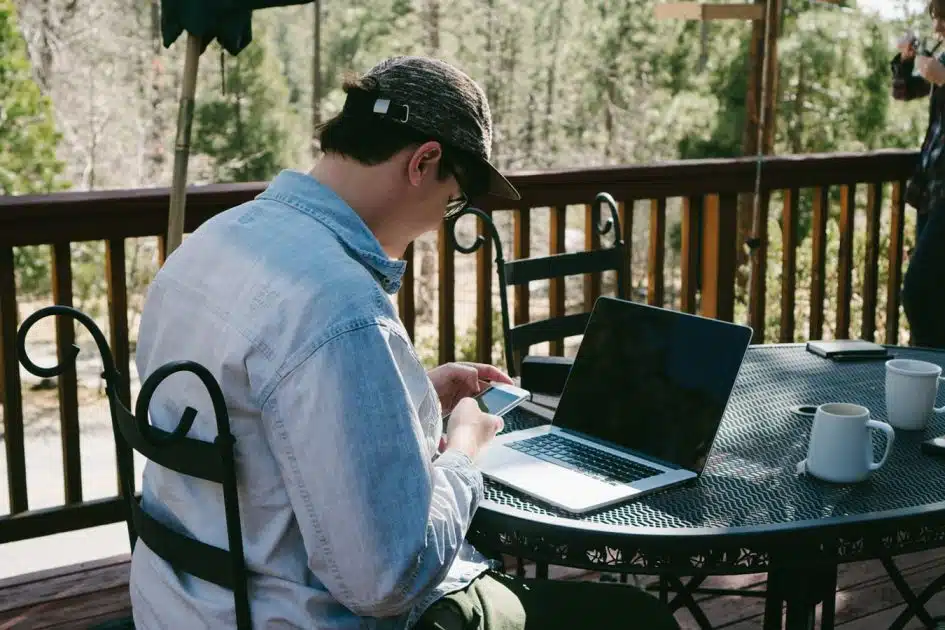
Digital nomads, on the other hand, work from anywhere in the world. Their “office” might look like a beach café in Bali or a co-working space in Barcelona.
Another difference is the schedule. Many remote work jobs involve keeping the same hours you would if you were working in an office, just with the luxury of not having to commute each day.
In contrast, digital nomads have much more control over their time. They can plan their workday around sightseeing, social activities, travelling from place to place, or chilling out on the beach.
Salaries differ between remote workers and digital nomads. Traditional remote workers earn a fixed monthly income determined by their employer.
Meanwhile, digital nomads have more flexibility.
For online English teachers, income is based on the number of lessons taught each month. This means that the more you teach, the more you earn.
Digital nomad TEFL teachers might branch out into other freelance work, such as social media management or course creation. They are usually freelance workers, so they can take on as many (or as few) clients as they like.
Read more: From Classroom To Business: Exploring The Teacherpreneur Movement
A key feature of the digital nomad lifestyle is balance.
Digital nomads know how to meet deadlines while still making time to explore and make new memories.
It’s all about finding the right rhythm for you so that you can experience the best of both worlds.
Beyond work and travel, another important part of the digital nomad lifestyle involves community.
While they may be travelling alone, digital nomads rely on connecting with others.
Whether it’s online with other digital nomads, meeting locals, or sharing co-working or co-living spaces, being a digital nomad means finding a community wherever you go.
Setting off on your own can be lonely at first, but sharing your experiences and opening yourself to meet new people makes it all worthwhile.
How to become a digital nomad English teacher
How do you become a nomadic English teacher?
Here are 5 steps to help you get started:
1. Get TEFL-certified.
A recognised TEFL qualification is a must-have for anyone wanting to teach English online. Without it, most reputable platforms won’t allow you to register as a teacher.
Read more: What Do You Learn On A TEFL Course?
2. Choose a teaching platform.
Once you have completed your TEFL course, you need to sign up with one or more of the online teaching platforms. After creating and completing your teacher profile, you’ll be able to start attracting students and filling up your schedule.
3. Build your digital classroom setup.
Before you start teaching, you need to make sure that you have the right equipment.
As a nomadic English teacher, you have limited space, so carrying around a bulky computer just won’t do. You’ll need a lightweight laptop with a good camera and microphone, as well as a reliable pair of headphones, to create a professional teaching experience for your students.
Don’t forget that you also need a stable internet connection! Many digital nomads carry a portable wifi device or a local SIM card to help them stay connected at all times.
4. Pick a destination with good infrastructure.
As a digital nomad, all of your work is online, so it’s important to choose your destination carefully before planning any trip. Look for places with reliable internet, stable electricity, and easy access to local amenities, such as public transportation and comfortable co-working spaces.
It’s also worth checking whether the country offers digital nomad visas, which make it easier to live and work abroad legally for extended periods.
Read more: How To Overcome Online Teaching Challenges While Travelling
5. Manage income and scheduling while travelling.
When you’re travelling and teaching, time zones can be tricky, so it’s crucial that you’re always on top of your schedule. Always double-check class times and adjust for any differences in local time. The last thing you want is to miss a lesson because of a delayed flight or a mix-up between time zones!
Don’t forget to track your income carefully. Dealing with different currencies and varying living costs can be confusing. To avoid any unwanted stress, use a budgeting app to help you monitor your expenses so you don’t spend more than you earn.
Best countries for digital nomad English teachers

Choosing the right location for your travels can make all the difference.
Let’s take a look at some of the best digital nomad destinations for teachers.
Thailand is a popular choice for many English teachers since it offers affordable living and fast internet in major cities. Not to mention the delicious cuisine and endless opportunities to explore make it even more appealing.
Thailand is becoming a hotspot for anyone looking to work and travel. This means that there is plenty of infrastructure to make working online even easier. From abundant co-working spaces to flexible accommodation options, it’s pretty simple to find a comfortable space to live and work during your stay.
There is a well-established community for digital nomads in certain cities (Bangkok, Chiang Mai and Hua Hin, for example), so you’ll have no problem meeting people who share your love of adventure.
Spain and Portugal are also at the top of the list. Their pleasant climates, modern co-working spaces, and developing TEFL markets make them ideal for nomadic English teachers.
Read more: What Is The Cost Of Living In Spain? We Asked Our Teachers
For those looking for a different experience, South Africa offers a unique blend of city living and outdoor adventure, plus an incredible foodie scene. The cost of living is relatively low, and you’ll bump into people from all over the world.
TTA alum Taylor spends six months of the year teaching online in Bali. This is what a typical morning looks like for her:
The beauty of Bali is that you can blend productivity with a little bit of island magic.
For me, that usually looks like stepping out into my lush garden (which feels more like a mini jungle), hopping on my scooter and heading to my favourite café. I’ll order a fresh smoothie and a matcha latte, then join a group workout at my local gym. By the time I’m back, I’m energised, clear-headed and ready to teach.
These are only a few of your options. Many countries are now embracing digital nomads and offering the infrastructure and visa options to make this lifestyle more accessible than ever.
So, what exactly goes into making a place one of the best digital nomad destinations?
It usually boils down to four things:
- Reliable internet
- Affordable cost of living
- Strong community
- Flexible visa policies
Using these four criteria, you’ll be setting yourself up for a successful stay, no matter where you are.
It’s important that you can continue to work uninterrupted, live comfortably, and stay legally in the country while enjoying your nomadic lifestyle.
Choosing a destination that meets these standards will make your experience more enjoyable and stress-free.
Challenges digital nomads face (and how to overcome them)
While the nomadic life is exciting, there can be hurdles which can trip you up.
Let’s take a look at some of the challenges digital nomads face and how you can prepare for them.
1. Internet connectivity
Reliable internet is a non-negotiable when teaching online.
To avoid disruptions, always make sure your accommodation or workspace has a stable connection.
It’s a good idea to have a backup plan. A local SIM card with mobile data or a portable wifi device can save you in a pinch.
2. Loneliness
Setting off on your own can be challenging, and it’s normal to feel homesick from time to time.
This is why it’s crucial to find a community on your travels. Meeting other digital nomads can help you build a support network that you can lean on when times are hard.
Whether it’s striking up a conversation with someone at a co-working space or joining an online community, you’ll be surprised by how easy it is to meet new people and create lifelong friendships.
Read more: How To Deal With Culture Shock
3. Time zone management
Teaching online often means that you are teaching students all over the world. Juggling the time differences can become tricky, especially if you are travelling fairly frequently.
Using a scheduling app or other calendar tools will help you keep track of lessons and plan your hours around your students’ availability.
4. Work-life balance
As a digital nomad, maintaining a healthy work-life balance can be difficult.
At the start, you’ll want to spend every minute exploring your new home, but as time goes on, you may find yourself working all the time.
Set clear working hours and make time for rest, socialising, and exploration. Creating a routine that helps you balance work and play will help you stay productive and make the most of your travels.
Finally, always think long-term.
Budgeting wisely and prioritising your mental health will help you live this lifestyle to the fullest. By planning ahead and sticking to your routine, you can enjoy the freedom that being a digital nomad offers for years to come without the risks of burnout or financial stress.
Is the digital nomad life for you?
The digital nomad lifestyle does not suit everyone, and that’s okay. It requires you to be disciplined, adaptable, and willing to step outside your comfort zone.
Working while travelling sounds amazing (and it is!), but it also means spending time alone, constantly adjusting to new places, and having to set strict boundaries to ensure that you are able to support yourself in this new lifestyle.
Life as a digital nomad is full of freedom and adventure, but it requires flexibility, independence and self-discipline. Think about how comfortable you are working without supervision, adapting to new environments, and solving problems on the spot.
If you can handle unpredictability and being in charge of yourself, then this lifestyle could be a perfect fit for you.
Redefine how (and where) you work
Being a digital nomad is certainly rewarding and opens you up to countless opportunities and experiences. It allows you to see the world while still making a living by working online.
Who wouldn’t jump at the chance to explore new cities and ways of life while getting paid?
For aspiring digital nomads, a TEFL qualification provides one of the easiest entries into this lifestyle. With the help of a laptop, a reliable internet connection, and a sense of adventure, you can start teaching anywhere in the world.

FAQs
What skills do you need to be a digital nomad?
Digital nomads need to be adaptable, resilient, and disciplined. Good time management and communicative skills are also a must-have. You should be comfortable with technology and well-versed in the technical skills needed to teach English.
How much money do digital nomads make?
Income can vary as a digital nomad. For online English teachers, it’s largely based on the number of classes you teach each month and how much you charge for your time. With proper planning and consistency, you can earn enough each month to comfortably support yourself. For digital nomads in other lines of work, it’ll depend on how many clients you have and how much time you put into your work projects.
What equipment do digital nomads use?
At a minimum, you need a reliable laptop that you can carry around with you. As an online English teacher, you need to make sure that your device has a working microphone and webcam, as your students need to be able to hear and see you clearly in each lesson. Headphones also come in handy, especially for blocking out background noise.
Is being a digital nomad legal?
Yes, working as a digital nomad is legal if you hold the correct visa and abide by the rules.
Most countries now offer a digital nomad visa that allows professionals on the move to work and stay legally in their country. There are specific rules and regulations that you will be required to follow, so it’s important to familiarise yourself with them.
What’s the difference between a freelancer and a digital nomad?
Freelancers and digital nomads are pretty similar; however, the main difference is where they work. While freelancers also typically work online and are self-employed, they may not travel regularly, choosing instead to work from one city.
Digital nomads, on the other hand, travel from city to city and country to country while earning a living online.
Author Bio
Table of Contents
- Introduction
- What is a digital nomad?
- Evolution of the digital nomad
- Why teachers are becoming nomads
- What makes nomadism different?
- How to become a teacher
- Best countries for digital nomad
- Digital nomad challenges
- Is the digital nomad life for you?
- FAQs
Have you ever dreamed of hopping from one country to another, earning a living as you go?
Thanks to the rise of remote work, that dream is more achievable than ever, with more and more people trading in traditional nine-to-five jobs, choosing instead to pursue the digital nomad lifestyle.
There are dozens upon dozens of digital nomad jobs; however, online English teaching remains one of the fastest, most reliable ways of getting going.
But what is a digital nomad, exactly?
In short, a digital nomad is someone who earns a living by working online while exploring the world. They can live wherever they want, as long as they have a laptop and a stable internet connection.
Sounds great, doesn’t it?
So, how do you become a digital nomad?
Well, teaching English online is one of the easiest (and most rewarding) entry points into this lifestyle. So, if you’ve been looking for another reason to get your TEFL qualification — this is it!
Unlike most guides, this post focuses on how English teaching opens the door to digital nomadism — even if you’ve never worked remotely before.
What is a digital nomad? (Definition + lifestyle explained)
Digital nomads choose to work in jobs that are not location-dependent.
They want a life that allows them to live on their own terms — working their own hours and from anywhere.
At their core, digital nomads value freedom, flexibility, and balance — things that typical office jobs can’t provide.
This is why traditional working conditions just don’t cut it.
Whether it’s from a café in Paris or a hotel rooftop overlooking the ocean, digital nomads can earn an income online while travelling the world.
This lifestyle suits professions that allow you to work completely online and set your own hours. For example, many digital nomads work as content creators, developers, writers, designers, virtual assistants, and online English teachers.
To understand how we got here, let’s take a closer look at how digital nomadism has evolved over the years.
The evolution of the digital nomad lifestyle
The digital nomad lifestyle is certainly not a new concept.
The term was coined in the late 1990s when personal computers and wifi were becoming more widely used, particularly in the home. It became clear back then that with the rapid advances in technology, there would soon be a time when it would no longer be necessary to work chained to a specific desk in a particular workspace.
Fast forward to more recent times, when, largely due to the COVID-19 pandemic, we have seen an increase in the opportunities to work remotely. Nowadays, remote work is very normal.
Since gaining popularity, there has been a growth of infrastructure to support remote workers. From building co-working spaces to creating digital nomad visas, more and more accommodations are being made to support this lifestyle – clear signs that this way of life is here to stay and is easier than ever.
As of 2025, over 40 million people have embraced the digital nomad lifestyle around the world. Many of these are TEFL teachers, and there’s no reason you can’t be one of them!
TTA alum Matt is just one example of an online English teacher taking advantage of the digital nomad lifestyle:
Having taught in the classroom for close to 4 years across Spain, South Korea and Türkiye, my girlfriend and I decided we wanted to take the show on the road by becoming digital nomads, teaching online to fund and sustain our travels.
We made this decision in August 2023 and have been on the road ever since, generally spending a month in a different country.
Fast forward to today [December 2025], and we’ve been to 24 countries in that time and have never looked back.
Read more: How To Get TEFL Certified: Everything You Need To Know
Why so many TEFL teachers are becoming digital nomads
You may be wondering why so many TEFL teachers are choosing to live and work as digital nomads.
Presumably, this is due to the overlaps between teaching English online and remote work. Both allow you to work fully online and set your own hours, giving you the freedom to live the digital nomad lifestyle.
Thanks to platforms like iTalki, Preply, and VIPKid, there are now more opportunities to teach online than ever before. Not only do these platforms help connect teachers with students around the world, but they also make it easy to teach on the go. As long as you have a reliable laptop and a stable internet connection, you can make the world your classroom.
Teaching English online also allows you to create your own schedule, giving you total control and flexibility when planning your time. This means that you can book your classes around your travel plans and explore new cities during your free time. Who could say no to that?
It’s no surprise that teaching online is one of the best digital nomad jobs for English teachers.
Aside from being able to travel to your heart’s content, teaching English online provides financial independence.
If you’re a freelance online teacher, you can set your own rate, based on your experience and qualifications. As your confidence and expertise grow, you can increase your rates to build a stable income while working from anywhere in the world.
For many TEFL teachers, this combination of flexibility, travel, and earning potential is exactly what makes the digital nomad lifestyle so appealing.
Read more: Online Teaching Platforms You Need To Know
What makes the digital nomad lifestyle different?
The digital nomad lifestyle is different from traditional remote work.
For starters, traditional remote workers typically work from a fixed home base. They have a dedicated workspace, which they use daily, and may be tied to one city or country if they are required to check in.
Digital nomads, on the other hand, work from anywhere in the world. Their “office” might look like a beach café in Bali or a co-working space in Barcelona.
Another difference is the schedule. Many remote work jobs involve keeping the same hours you would if you were working in an office, just with the luxury of not having to commute each day.
In contrast, digital nomads have much more control over their time. They can plan their workday around sightseeing, social activities, travelling from place to place, or chilling out on the beach.
Salaries differ between remote workers and digital nomads. Traditional remote workers earn a fixed monthly income determined by their employer.
Meanwhile, digital nomads have more flexibility.
For online English teachers, income is based on the number of lessons taught each month. This means that the more you teach, the more you earn.
Digital nomad TEFL teachers might branch out into other freelance work, such as social media management or course creation. They are usually freelance workers, so they can take on as many (or as few) clients as they like.
Read more: From Classroom To Business: Exploring The Teacherpreneur Movement
A key feature of the digital nomad lifestyle is balance.
Digital nomads know how to meet deadlines while still making time to explore and make new memories.
It’s all about finding the right rhythm for you so that you can experience the best of both worlds.
Beyond work and travel, another important part of the digital nomad lifestyle involves community.
While they may be travelling alone, digital nomads rely on connecting with others.
Whether it’s online with other digital nomads, meeting locals, or sharing co-working or co-living spaces, being a digital nomad means finding a community wherever you go.
Setting off on your own can be lonely at first, but sharing your experiences and opening yourself to meet new people makes it all worthwhile.
How to become a digital nomad English teacher
How do you become a nomadic English teacher?
Here are 5 steps to help you get started:
1. Get TEFL-certified.
A recognised TEFL qualification is a must-have for anyone wanting to teach English online. Without it, most reputable platforms won’t allow you to register as a teacher.
Read more: What Do You Learn On A TEFL Course?
2. Choose a teaching platform.
Once you have completed your TEFL course, you need to sign up with one or more of the online teaching platforms. After creating and completing your teacher profile, you’ll be able to start attracting students and filling up your schedule.
3. Build your digital classroom setup.
Before you start teaching, you need to make sure that you have the right equipment.
As a nomadic English teacher, you have limited space, so carrying around a bulky computer just won’t do. You’ll need a lightweight laptop with a good camera and microphone, as well as a reliable pair of headphones, to create a professional teaching experience for your students.
Don’t forget that you also need a stable internet connection! Many digital nomads carry a portable wifi device or a local SIM card to help them stay connected at all times.
4. Pick a destination with good infrastructure.
As a digital nomad, all of your work is online, so it’s important to choose your destination carefully before planning any trip. Look for places with reliable internet, stable electricity, and easy access to local amenities, such as public transportation and comfortable co-working spaces.
It’s also worth checking whether the country offers digital nomad visas, which make it easier to live and work abroad legally for extended periods.
Read more: How To Overcome Online Teaching Challenges While Travelling
5. Manage income and scheduling while travelling.
When you’re travelling and teaching, time zones can be tricky, so it’s crucial that you’re always on top of your schedule. Always double-check class times and adjust for any differences in local time. The last thing you want is to miss a lesson because of a delayed flight or a mix-up between time zones!
Don’t forget to track your income carefully. Dealing with different currencies and varying living costs can be confusing. To avoid any unwanted stress, use a budgeting app to help you monitor your expenses so you don’t spend more than you earn.
Best countries for digital nomad English teachers
Choosing the right location for your travels can make all the difference.
Let’s take a look at some of the best digital nomad destinations for teachers.
Thailand is a popular choice for many English teachers since it offers affordable living and fast internet in major cities. Not to mention the delicious cuisine and endless opportunities to explore make it even more appealing.
Thailand is becoming a hotspot for anyone looking to work and travel. This means that there is plenty of infrastructure to make working online even easier. From abundant co-working spaces to flexible accommodation options, it’s pretty simple to find a comfortable space to live and work during your stay.
There is a well-established community for digital nomads in certain cities (Bangkok, Chiang Mai and Hua Hin, for example), so you’ll have no problem meeting people who share your love of adventure.
Spain and Portugal are also at the top of the list. Their pleasant climates, modern co-working spaces, and developing TEFL markets make them ideal for nomadic English teachers.
Read more: What Is The Cost Of Living In Spain? We Asked Our Teachers
For those looking for a different experience, South Africa offers a unique blend of city living and outdoor adventure, plus an incredible foodie scene. The cost of living is relatively low, and you’ll bump into people from all over the world.
TTA alum Taylor spends six months of the year teaching online in Bali. This is what a typical morning looks like for her:
The beauty of Bali is that you can blend productivity with a little bit of island magic.
For me, that usually looks like stepping out into my lush garden (which feels more like a mini jungle), hopping on my scooter and heading to my favourite café. I’ll order a fresh smoothie and a matcha latte, then join a group workout at my local gym. By the time I’m back, I’m energised, clear-headed and ready to teach.
These are only a few of your options. Many countries are now embracing digital nomads and offering the infrastructure and visa options to make this lifestyle more accessible than ever.
So, what exactly goes into making a place one of the best digital nomad destinations?
It usually boils down to four things:
- Reliable internet
- Affordable cost of living
- Strong community
- Flexible visa policies
Using these four criteria, you’ll be setting yourself up for a successful stay, no matter where you are.
It’s important that you can continue to work uninterrupted, live comfortably, and stay legally in the country while enjoying your nomadic lifestyle.
Choosing a destination that meets these standards will make your experience more enjoyable and stress-free.
Challenges digital nomads face (and how to overcome them)
While the nomadic life is exciting, there can be hurdles which can trip you up.
Let’s take a look at some of the challenges digital nomads face and how you can prepare for them.
1. Internet connectivity
Reliable internet is a non-negotiable when teaching online.
To avoid disruptions, always make sure your accommodation or workspace has a stable connection.
It’s a good idea to have a backup plan. A local SIM card with mobile data or a portable wifi device can save you in a pinch.
2. Loneliness
Setting off on your own can be challenging, and it’s normal to feel homesick from time to time.
This is why it’s crucial to find a community on your travels. Meeting other digital nomads can help you build a support network that you can lean on when times are hard.
Whether it’s striking up a conversation with someone at a co-working space or joining an online community, you’ll be surprised by how easy it is to meet new people and create lifelong friendships.
Read more: How To Deal With Culture Shock
3. Time zone management
Teaching online often means that you are teaching students all over the world. Juggling the time differences can become tricky, especially if you are travelling fairly frequently.
Using a scheduling app or other calendar tools will help you keep track of lessons and plan your hours around your students’ availability.
4. Work-life balance
As a digital nomad, maintaining a healthy work-life balance can be difficult.
At the start, you’ll want to spend every minute exploring your new home, but as time goes on, you may find yourself working all the time.
Set clear working hours and make time for rest, socialising, and exploration. Creating a routine that helps you balance work and play will help you stay productive and make the most of your travels.
Finally, always think long-term.
Budgeting wisely and prioritising your mental health will help you live this lifestyle to the fullest. By planning ahead and sticking to your routine, you can enjoy the freedom that being a digital nomad offers for years to come without the risks of burnout or financial stress.
Is the digital nomad life for you?
The digital nomad lifestyle does not suit everyone, and that’s okay. It requires you to be disciplined, adaptable, and willing to step outside your comfort zone.
Working while travelling sounds amazing (and it is!), but it also means spending time alone, constantly adjusting to new places, and having to set strict boundaries to ensure that you are able to support yourself in this new lifestyle.
Life as a digital nomad is full of freedom and adventure, but it requires flexibility, independence and self-discipline. Think about how comfortable you are working without supervision, adapting to new environments, and solving problems on the spot.
If you can handle unpredictability and being in charge of yourself, then this lifestyle could be a perfect fit for you.
Redefine how (and where) you work
Being a digital nomad is certainly rewarding and opens you up to countless opportunities and experiences. It allows you to see the world while still making a living by working online.
Who wouldn’t jump at the chance to explore new cities and ways of life while getting paid?
For aspiring digital nomads, a TEFL qualification provides one of the easiest entries into this lifestyle. With the help of a laptop, a reliable internet connection, and a sense of adventure, you can start teaching anywhere in the world.
FAQs
What skills do you need to be a digital nomad?
Digital nomads need to be adaptable, resilient, and disciplined. Good time management and communicative skills are also a must-have. You should be comfortable with technology and well-versed in the technical skills needed to teach English.
How much money do digital nomads make?
Income can vary as a digital nomad. For online English teachers, it’s largely based on the number of classes you teach each month and how much you charge for your time. With proper planning and consistency, you can earn enough each month to comfortably support yourself. For digital nomads in other lines of work, it’ll depend on how many clients you have and how much time you put into your work projects.
What equipment do digital nomads use?
At a minimum, you need a reliable laptop that you can carry around with you. As an online English teacher, you need to make sure that your device has a working microphone and webcam, as your students need to be able to hear and see you clearly in each lesson. Headphones also come in handy, especially for blocking out background noise.
Is being a digital nomad legal?
Yes, working as a digital nomad is legal if you hold the correct visa and abide by the rules.
Most countries now offer a digital nomad visa that allows professionals on the move to work and stay legally in their country. There are specific rules and regulations that you will be required to follow, so it’s important to familiarise yourself with them.
What’s the difference between a freelancer and a digital nomad?
Freelancers and digital nomads are pretty similar; however, the main difference is where they work. While freelancers also typically work online and are self-employed, they may not travel regularly, choosing instead to work from one city.
Digital nomads, on the other hand, travel from city to city and country to country while earning a living online.
Author Bio