 United States
US
United States
US









What Do Conversation Classes In South Korea Look Like?
Join a global community of over 200,000 TEFL teachers working throughout the world! Enrol me!

 September 12, 2025
If you’ve been thinking about teaching English in South Korea, you’ll know (from all of your research!) that conversation classes are a staple of the South Korean ESL scene.
These classes are meant to get students talking. Confidence and fluency are key in conversation classes as the focus moves away from textbook knowledge to real-world communication. These classes are all about speaking, listening, and cultural exchange.
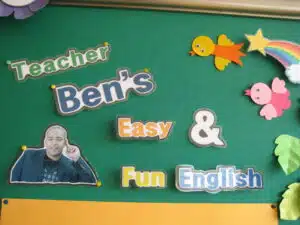
Former EFL teacher Ben fills us in on what conversation classes look like in South Korea.

Ben: After completing my degree and TEFL certificate at 24 years old, I spent three years teaching in South Korea at two different public schools.
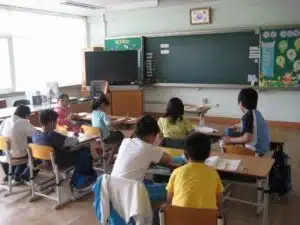
From March 2008 to March 2010, I lived in Joam-Ri, a densely populated region approximately one hour by bus south of Suwon. I was based at Jangil Elementary, a branch of its larger school, which had around 20 teachers and approximately 300 students. My school had six teachers and 35 students, so between 6 and 8 students per class.
The reason for Ben’s small classes was because he was teaching at a branch school, a smaller school which is part of a bigger school (Jangil Elementary, in this case).
I lived in a rural town and the school I taught at served families from countryside communities. I travelled 30 minutes by bus from Joam’s main terminus to school.
Typical conversation classes in South Korea: What to expect
I taught students in Grades 3 to 6, aged 8 to 12.
My lessons were divided into two sections:
- Curriculum-based English classes during the mornings
- Additional conversation classes after lunch from 13:00 to 15:00
These English lessons were conducted in conjunction with the home room teachers during their designated English period.
Classes were 50 minutes long.
We followed a school curriculum or textbook during morning teaching hours, which included writing, reading, speaking, singing and games.
Only a handful of students had access to prior private English lessons and were a little more advanced in the language.
Several students from the main school were allowed to travel to join my after-school classes during my first year.
Discovering how students learn was vital.
Some prefer focusing on grammar lessons, such as crossword puzzles or sentence construction worksheets. Others prefer engaging in discussions and being interactive.
Read more: 5 Ways To Keep Your Classroom Interesting And Engaging

Goals of English conversation classes for Korean students
I was tasked with assisting my co-workers with their English language lessons. The lessons were theme-based, which included:
- asking for directions to cultural landmarks in Seoul,
- learning how to express feelings,
- discussing Korean foods, or
- discussing customs in different countries.
At elementary school level, the idea is to make lessons fun to increase student interest in the target language.
I tried not to be too hard on students if they didn’t learn as quickly or showed little interest. But in general, students want to be involved.
Sometimes, pairing a stronger and weaker learner helps — so the students can talk to one another instead of mainly listening to the teacher.
That’s a great tip!
Diversifying lessons is important.
Movement-based activities helps. For example, reciting the alphabet and having students jump when I omit a few letters.
The aim is to expose students to the English language as often as possible – coaching them, correcting grammar, building confidence, improving familiarity, and encouraging interest in English.
I would lead the lesson, and my co-teacher would translate when needed. I would assist with pronunciation and walk to each student’s table to check whether they are struggling with reading, writing, or speaking exercises.
Read more: Co-Teaching In The EFL Classroom
My co-teachers allowed me to take initiative during their lessons, but especially during after-lunch classes.
During morning English classes, my co-teacher would often use Korean to interact with students, which may make lessons easier but potentially hinders the students’ development. That is why the working relationship between an English teacher and their co-workers must be developed.
Read more: Immersion Learning Explained
How much freedom do teachers have in planning conversation lessons?
During coursework sessions, there were limits on what I could do as we generally followed the textbook, which contained interactive lessons and activities.
Read more: 7 Interactive Classroom Activities
Some space was allowed to offer ideas.
The classroom was small and the general English-speaking level of the students and co-workers was low. However, one teacher had a fair grasp of English and acted as a translator between me and the rest of the school.
In my afternoon classes, I had the option to choose topics. So I had a lot of freedom as to how I conducted the class and the type of content.
In these classes, I was soon left alone with the students without the assistance of a co-teacher. However, teachers would often step in to briefly monitor the class or assist with discipline as needed.
I enjoyed the level of autonomy, which helped me develop my teaching style and skills. And I made it a point to keep searching for new material and teaching ideas.
I maintained my South African accent, which sounds comparatively British. In contrast, some English teachers would aim to speak in a North American accent, even if they weren’t from there.
Changing your accent is not something we recommend! Stay true to yourself. English learners need to be exposed to different accents from around the world. As long as you are clear and intelligible, your natural accent is best.
Best activities and materials for ESL conversation classes
I often encouraged public speaking. I would ask the kids to stand in front of the class and interview them about their lives, hobbies, the weather, dream job, favourite animals. This became routine.
I’d use flashcards to introduce pictures, letters and words and work diligently to help them practice.
As a junior teacher, I had to research and gather material on different teaching methods. Sometimes one has to learn by doing, as expectations at each school will likely differ.
Songs by the Beatles or The Commodores also helped get students more involved, and helped lighten the mood.
Read more: 9 Amazingly Effective Songs To Use In The EFL Classroom
I drew from my experiences on safari and was fond of showcasing African big game and marine animals on the big screen, then starting a conversation around that theme.
I used hand gestures and showed genuine excitement — making it fun helps students feel more at ease.
I tried to focus on everyday situations like:
- reciting the alphabet,
- phonics,
- practising numbers,
- weather or
- telling the time.
Speaking clearly and slowly is a simple yet effective approach with both students and co-workers.
Grading your language is an important tool for any TEFL teacher.
Sometimes, getting Korean students to sing rather than talk can be effective. Nursery rhymes such as “If You’re Happy and You Know It” or “The Wheels on the Bus” are helpful too.
We would try do as much as possible, but the kids would often want to watch English cartoons, such as Sesame Street, SpongeBob SquarePants, or videos from the Super Simple website.
Read more: Three Ways To Teach English With Movies
Common challenges of teaching English in South Korea
Despite their kindness, the language barrier between English and Korean can create confusion (between students and co-workers) and was, at times, overwhelming.
Experience works in one’s favour.
One has to understand that most students may not have regularly interacted with an English speaker or a person of colour.
Each student progresses at a different pace, so it is essential to enter with an open mind and approach learning with flexibility.
The handful of more advanced students would call out the answers, so managing who gets to speak is important.
It’s also important not to force students to like the language and allow them to be themselves in class.
Suspected forms of attention deficit hyperactivity disorder (ADHD) were evident in some of my students. This required empathy and an open-minded approach when teaching. I always celebrated their participation and made my lessons as inclusive as I could.
Generally, the more rural the school, the fewer teaching resources.
This depends on the budget and investment in English education.
For example, in my second year, Jangil Elementary’s main school opened a modern English Lab, which featured interactive touch screens, a library, games, and reading corners, and hired a full-time ESL teacher from the United States.
Often, the more modern the classroom, the easier it is to create enthusiasm among the students, making teaching and learning easier.
How classroom culture shapes English lessons in Korea
Some students are more keen to learn than others.
In my first year of teaching, co-teachers often stepped in to discipline the students. So learning classroom management is essential.
I once stared at my students with my sternest expression for about five minutes, watching as the noise level slowly decreased. Students started quieting down; they could see I was serious.
I held the tension a little longer, and once they settled, I took a deep breath and said, ‘Okay, let’s begin.’
They, too, breathed a sigh of relief. They realised I was just trying to get them to settle down. This worked a few times.
Pronouncing names correctly or demonstrating knowledge of K-pop culture establishes levels of trust.
Later on, I tried to memorise basic Korean — greetings and numbers — so I could act as my own translator when needed.
Check out Lauren’s story of living in South Korea without speaking the language on the blog: What It’s Like Teaching In South Korea Without Speaking Korean
However, during an open lesson observed by the students’ parents, I received feedback that I should stick to speaking English to students and avoid using Korean in class.
So you must find a balance that works for you.
Read more: How To Learn The Local Language
What surprised you about teaching conversation classes in South Korea?
Teaching is your main prerogative, but your interactions with senior school staff (especially the principal and deputy principal), assigned co-worker, and the staff in general, are vital.
This has to be emphasised because cultural clashes may arise and it can influence your general teaching experience, outcome and longevity at the school.
The students will notice the relationship between co-workers and the English teacher, which may influence their behaviour towards you.
Read more: Things To Know About South Korean Classroom Culture
You may need a translator to assist not only with students but also with everyday administration.
Bowing respectfully and being open to participating in school activities was important. Although not directly linked to teaching, it influenced building relationships.
There was also a slight disconnect between me and the other teaching staff, as I couldn’t participate in staff meetings and was ultimately more of a teaching assistant without my own homeroom class.
Nonetheless, I had a wonderfully enriching experience teaching English in South Korea and sincerely miss the students, staff and extended teacher colleagues.
Who’s ready to teach conversation classes in South Korea? We certainly are! If you’re with us, check out our Job Board to see all the latest teaching vacancies in South Korea. Gamsahamnida, Ben!
Author Bio

Accreditation & Quality Assurance
The TEFL Academy was the world’s first TEFL course provider to receive official recognition from government regulated awarding bodies in both the USA and UK. This means when you graduate you’ll hold a globally recognised Level 3 (120hr) Certificate or Level 5 (168hr) Diploma, meaning you can find work anywhere and apply for jobs immediately.