 United States
US
United States
US









Dress Codes In China For Teachers: Inside And Outside The Classroom
Join a global community of over 200,000 TEFL teachers working throughout the world! Enrol me!

 February 3, 2026
The fashion industry in China has been at the forefront of many social media influencers’ clothing hauls. Fashion brands like Shein and Temu have connected China with fast fashion in our heads, but living in China doesn’t mean dressing like a walking advertisement for one of these platforms.
In reality, how you dress — both inside and outside the classroom — depends more on local norms, school expectations, and climate than it does on viral fashion trends.
TTA alumna and experienced teacher Inge moved to one of China’s Tier 1 cities, Shanghai, to teach English.
Many teachers looking to teach in China might be anxious about what clothes to pack, both for work and everyday life.
Whether you’re teaching English or simply shopping for veggies at the local wet market, what you wear can affect how you’re perceived and how comfortable you are.
Your choice of clothing can also help you survive the seasons, respect local norms, show professionalism and feel like you belong.
Read more: Life In A Tier 1 City In China
Understanding dress expectations for teachers in China
As a secular country, dress expectations in China can be less stringent than in other parts of the world. However, what teachers wear can still play a big role in how they are perceived by students, parents, and colleagues.
In China, there’s often a strong emphasis on being tidy, presentable, and respectful, especially in formal settings like schools.
Dressing appropriately helps build trust and credibility.
Understanding cultural norms around dress also makes it easier to integrate into the local community, avoid awkward moments, and feel confident in unfamiliar surroundings.
Read more: How To Live & Work In China As A Foreigner


Inside the classroom
Appropriate and professional dress in typical Chinese schools
From my experience, neatness and modesty are appreciated at all Chinese schools.
That said, how you are expected to dress can differ quite a bit depending on the type of school or even the specific school you work at.
Aiming for comfortable smart-casual is a good choice, especially if you’re not yet familiar with the customs and expectations of your school.
Anything resembling pyjamas should probably be avoided!
Dress codes in public, private, and international schools
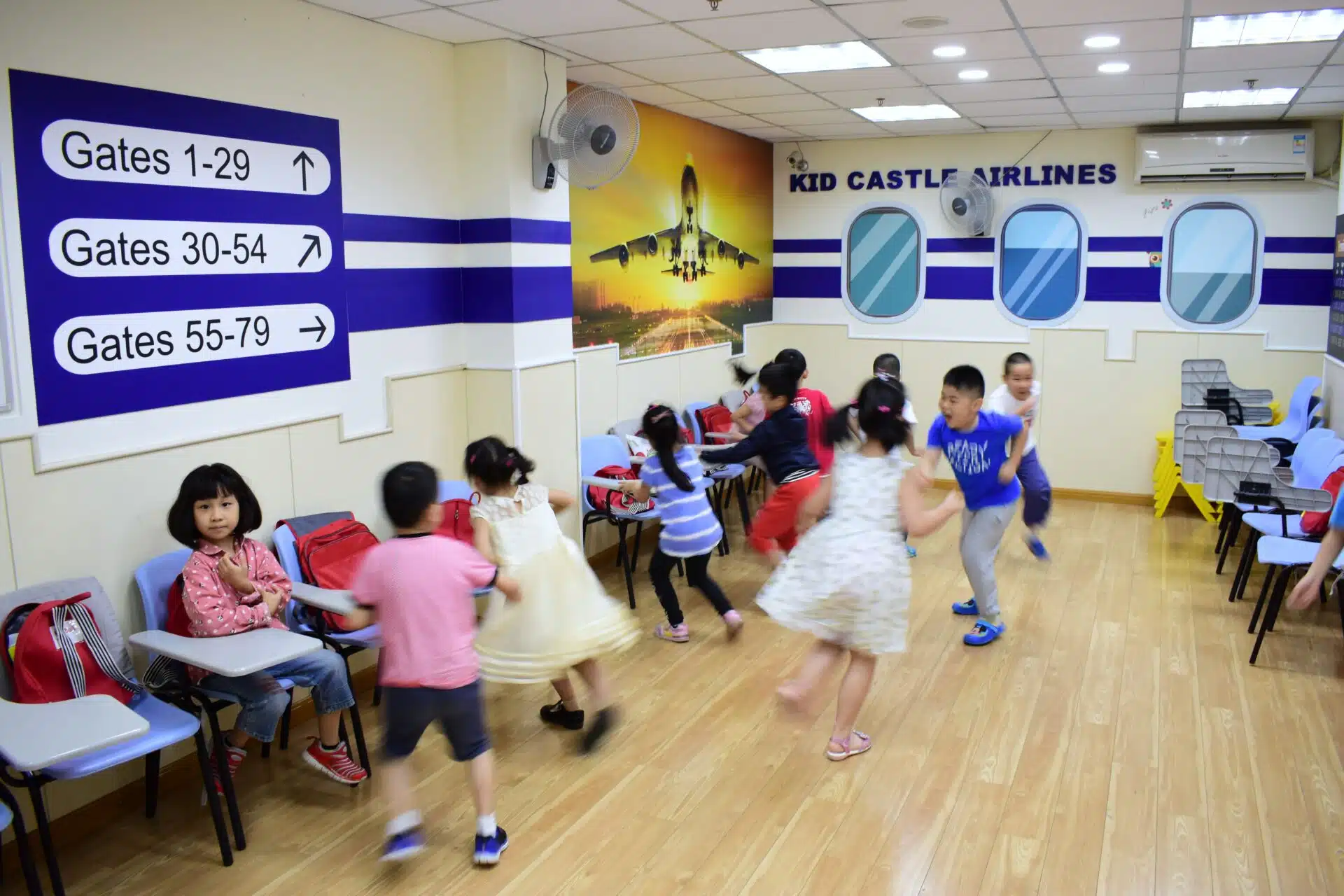
Training centres usually issue teachers with a branded polo shirt while on duty.
In my experience, casual bottoms were acceptable, and even encouraged, with jeans being the norm. Even shorts — not too short! — may be acceptable, especially during summer.
In private or international schools, which are generally more formal, teachers are often expected to dress much more professionally. They may wear uniforms with collared shirts and trousers.
Whether teachers need to wear matching colours depends on the school.
💡Tip: It’s a good idea to follow the example set by your colleagues.
Practical tips to stay comfortable
Wear comfortable shoes.
As a teacher, you’ll spend long hours on your feet — especially if you’re working with Young Learners — so make sure your shoes fit well and feel good. I wore sneakers every day.
Even if your school requires shoes or heels, comfort is a must. Ill-fitting shoes are a sure-fire way to ruin your day.
Layering is essential.
Shanghai’s weather can be challenging. Summers are sweltering and humid, while winters are icy and damp.
Thankfully, most buildings and classrooms are properly air-conditioned and can be used for both cooling and heating. Even so, unpredictable weather can be challenging when you’re working from morning/afternoon to evening.
Whether you throw on a jacket or cardigan over your shirt, layering can massively help you adapt as temperatures shift throughout the day.
Choose innerwear on colder days.
Wearing a warm top under your school-issued polo shirt can make all the difference.
Wear light fabrics in warm weather.
Light, breathable fabrics are very helpful in summer, as you’ll likely sweat a lot.
Outside the classroom
Common casual dress norms for expats
In my experience, there are no universal dress norms in China. How people dress can depend on their generation, location, preferences and style.
In Shanghai, fashion is part of everyday life. Young people, in particular, dress in trendy and expressive ways.
You’ll see a wide range of outfits, including streetwear, athleisure, grunge, and classic formal, worn by locals and expats alike.
There is no strong pressure to dress a certain way, especially in big cities, so expats can enjoy plenty of freedom in how they present themselves.
Foreigners in China come from all backgrounds, cultures and walks of life, but they all share one important thing: the choice to face the unknown and take the leap of moving to an unfamiliar country.
This shared experience creates a sort of culture of radical acceptance amongst expats in Shanghai, where the athlete might bond with the artist, and the bookworm can become best friends with the party animal.
In short, outside of school, you should dress however you like.
China is an accepting, friendly country. You’ll find your tribe, no matter your style.
Read more: How To Find Your Community As A TEFL Teacher
The effect of climate on everyday clothing choices
China is a vast country with many different climates, so it’s best to check the weather patterns of the city you will be living in.
Summer
Shanghai summers are blistering and humid, while winters can be bitterly cold, especially outdoors, which means your wardrobe must be versatile.
Breathable fabrics like cotton and linen are ideal.
Have an umbrella handy to avoid getting soaked, as summer brings unexpected downpours
Winter
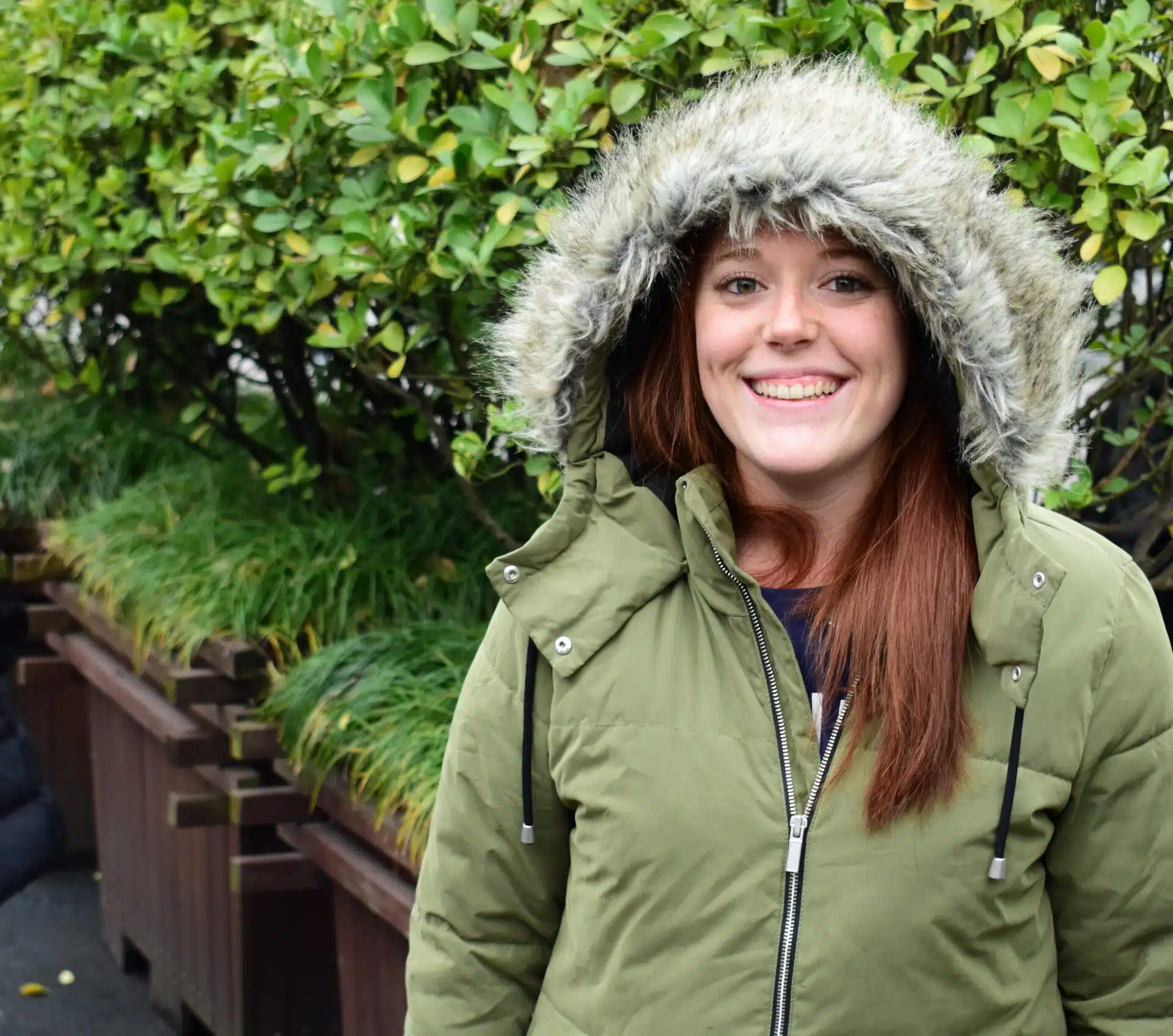
From December to February, I wore thermal layers and a thick winter coat when commuting or spending time outside. Proper shoes or boots are also essential.
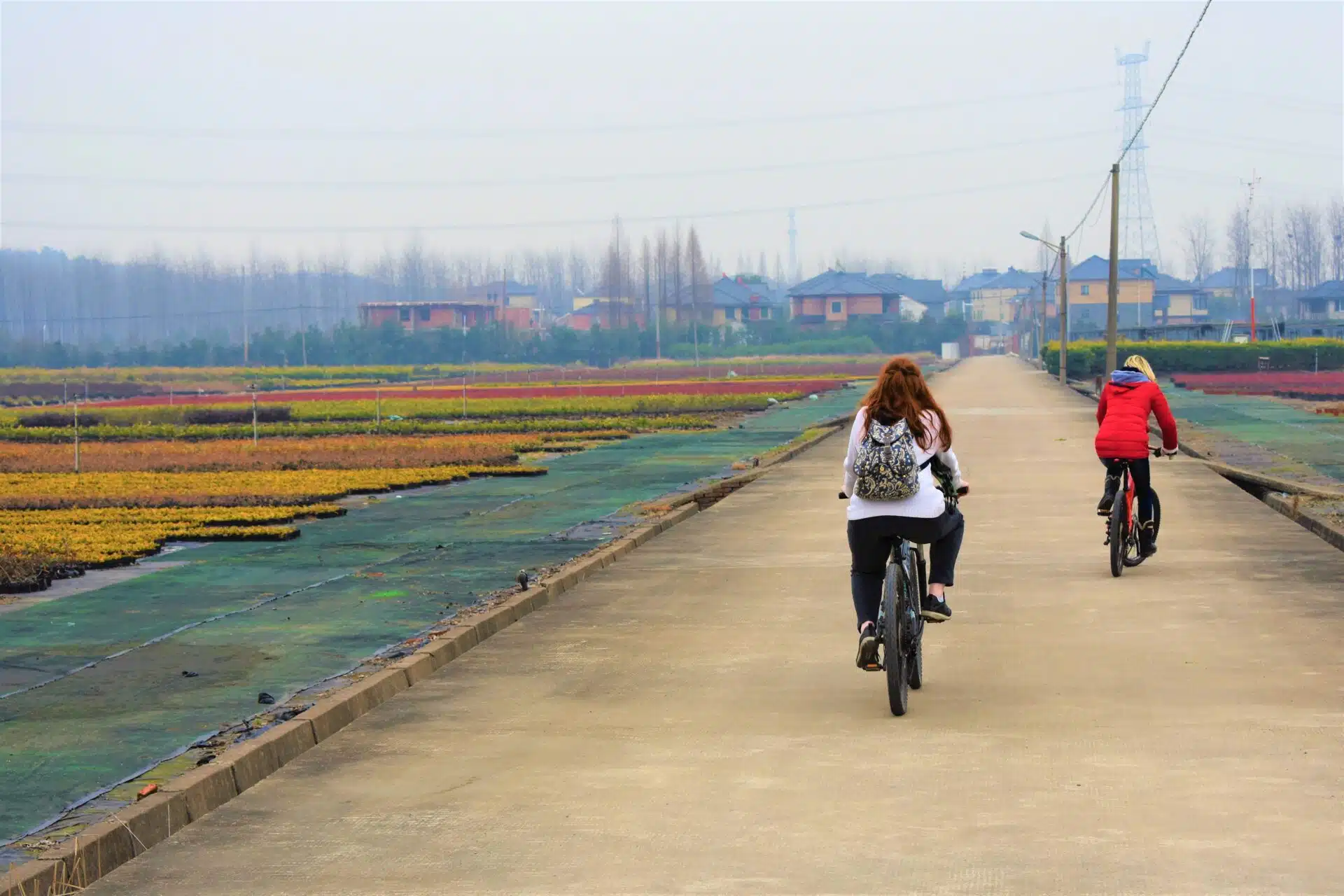
Cycling around the city meant bundling up with gloves, a scarf, and a thick winter coat.
Face masks were commonly worn due to the high air pollution, especially in winter, though mostly by locals. I wasn’t consistent about wearing mine (even when my weather app reported poor air quality) and paid the price by developing respiratory issues.
However, I’ve heard from friends still living in Shanghai that the air quality has increased massively since the pandemic.
Balancing personal style with cultural expectations
In a cosmopolitan city like Shanghai, people are used to a wide range of styles and self-expression.
Outside of school, I hardly ever thought about “fitting in” when it came to how I dressed.
You’re free to express yourself as you please, and there’s no pressure to follow any particular trend or style.
However, at work or formal events, it’s still best to dress neatly and professionally to show respect and maintain credibility.
Common mistakes and tips
Common dress code mistakes
You may be used to the idea of dressing formally for an interview or think that donning a suit and tie on your first day will make a good impression. However, many schools prefer a more comfortable look, especially those that accommodate Young Learners.
Case in point: In my second year, I interviewed for a job at a private primary school. The recruiter (who’d met me at home to escort me to the school) took one look at me and instructed me to change. I was wearing a blouse, a pencil skirt and heels, but they didn’t want the “corporate” look. Instead, they wanted someone who looked lively and ready to engage with young children.
Read more: Things To Know About Chinese Classroom Culture
So it’s best to try and strike a balance between looking smart and ready to launch into an active lesson.
Other mistakes include underestimating just how humid the summers are or how bitterly cold the winters can be. I definitely wasn’t prepared!
Cultural dress taboos
It’s common for foreign teachers to become a point of pride for the school they work at, especially since many parents want their children to learn from first-language English speakers.
Schools often want foreign teachers to be seen by parents and guardians, so naturally, they want to feel proud of how you present yourself.
If you’re wondering, “Can I show cleavage in China?”, the short answer is no. Avoid low-cut tops. Revealing clothing is inappropriate, and schools typically expect modest attire.
Where I worked, tattoos had to be covered.
Show respect by removing hats indoors.
Good grooming is seen as a reflection of character by many locals. It goes a long way in gaining and keeping the respect of colleagues and parents.

Packing tips for teachers travelling to China
Pack a few pairs of comfortable shoes.
If you have large feet (like me!), shoe shopping can be tricky. Chinese sizes tend to run small. Sometimes you’ll find Western sizes at stores like Uniqlo or Old Navy. Most other clothing items are easy to buy locally or online once you’ve arrived.
Many hygiene and healthcare items are hard to find or limited in variety.
I wish I’d known how difficult it would be to find hygiene and healthcare products. Things like deodorant and certain feminine hygiene products are rarely stocked, or come in very limited varieties at specialty stores.
Pharmacies may hesitate to sell common over-the-counter medicines. Pack a supply of medicine, painkillers and flu remedies, as well as your preferred toiletries and beauty products.
Avoid overpacking.
Make sure you bring a few key items like breathable clothes for summer, warm layers for winter, and any specific items that support your daily routine.
Once you arrive, you’ll want to find your feet and settle in without having to worry about where or how to shop for necessities that you could have packed.
Read more: Long-term Travel Essentials For TEFL Teachers: The Ultimate Packing Guide For Teaching Abroad
Rapid-fire questions
-
Fave local Chinese shop or market for clothes?
Uniqlo and Old Navy were my go-tos for affordable and reliable basics.
Taobao (China’s massive online marketplace) is also a great option for finding cheap clothes and accessories, but sizes can be inconsistent.
Underground/street markets always have bargains.
-
Most memorable outfit you’ve seen?
Incredible streetwear, although I didn’t see anything too wild.
Fashion that looked straight from the runway. In the centre of Puxi, especially around the fashionable districts, people wore stylish and carefully coordinated outfits.
-
Clothing item you never thought you’d need until moving to China?
A heavy puffer coat. I didn’t expect the intense cold outdoor winter weather, especially on windy days. In South Africa, where I’m from, extreme weather is rare.
Umbrellas. I didn’t expect to buy so many, but lost quite a few to the strong winds during stormy season.

Author Bio

Accreditation & Quality Assurance
The TEFL Academy was the world’s first TEFL course provider to receive official recognition from government regulated awarding bodies in both the USA and UK. This means when you graduate you’ll hold a globally recognised Level 3 (120hr) Certificate or Level 5 (168hr) Diploma, meaning you can find work anywhere and apply for jobs immediately.