 United States
US
United States
US









Specialised TEFL: Teaching English In A Buddhist Monastery
Join a global community of over 200,000 TEFL teachers working throughout the world! Enrol me!


Last Updated
April 23, 2026Most TEFL teachers find themselves in schools or language centres, but some choose a very different classroom.
Imagine a classroom where the usual chaos is replaced by a serene atmosphere, with students focused and tranquil. Sounds like a dream, doesn’t it?
Only, it’s real!
If money isn’t your main concern but making a difference is, then volunteering at a Buddhist monastery may be the teaching adventure you never knew you needed.
Read more: 11 Best Volunteer Programs [2025]
To give you a deeper sense of what life in a Buddhist monastery is like, we’re sharing insights from two TTA alumni and TEFL teachers who have taught in this unique setting — Sophie and Supriya.
Sophie taught in a monastery in Nepal among temples set against a breathtaking Himalayan backdrop, while Supriya found herself surrounded by the glow of Thailand’s golden temples.
I took a gap year after finishing my A-levels to travel and teach English abroad. I decided to take a TEFL course because I knew I wanted to travel, and I love teaching. I spent a month living and teaching English to young monks in a Buddhist monastery on the outskirts of Kathmandu. It was incredible! – Sophie
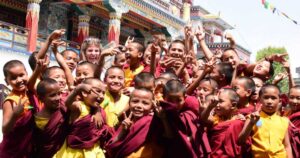
I taught English as an additional language to foreign students in Birmingham. During my TEFL course, I saw an advertisement for TEFL volunteer placements to teach English to young monks in Thailand. I left my permanent job and applied — my dream was about to become a reality. – Supriya

Read more: Teach English in Nepal OR Teach English in Thailand
Among the many ways to teach English abroad, teaching in a monastery stands out.
Why teach English to monks?
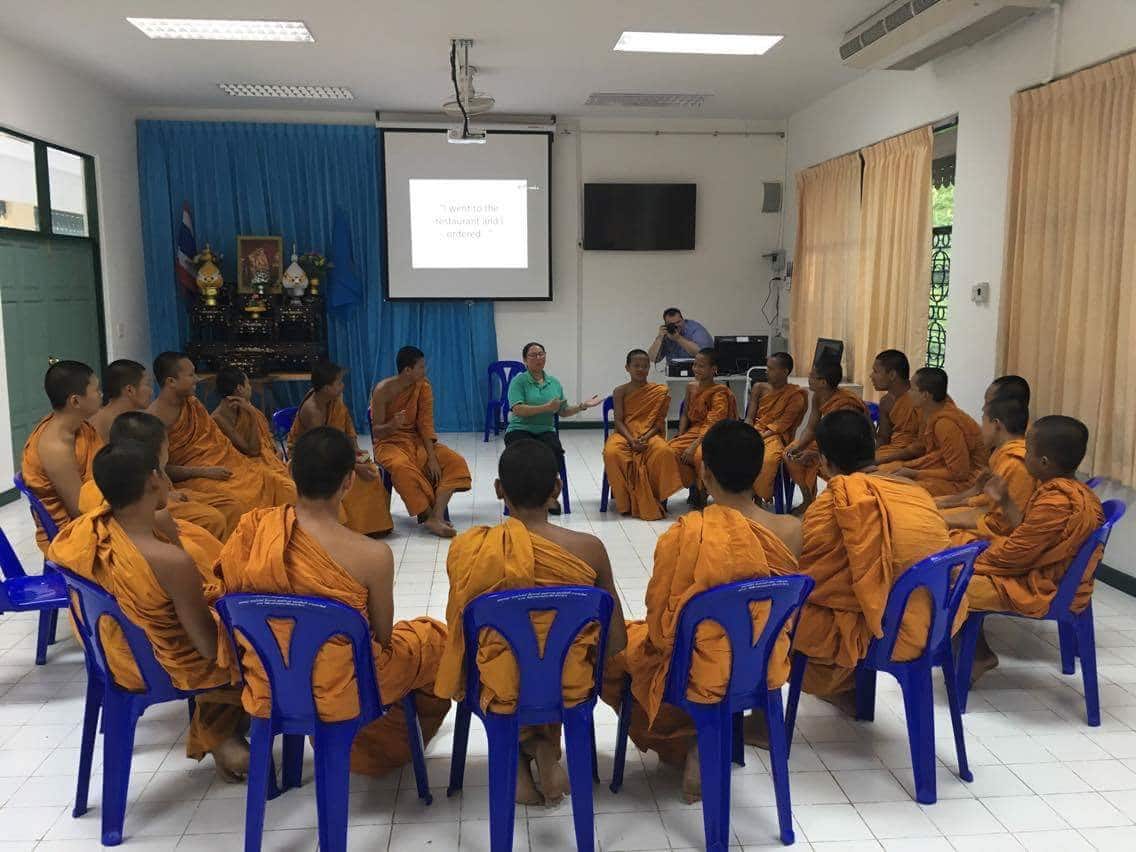
Volunteering to teach English to monks gives you the chance to step inside a world few outsiders ever experience — life in a Buddhist monastery. Instead of just visiting, you have the chance to live within the temple grounds, immersed in an atmosphere of chanting, meditation and daily rituals, surrounded by natural beauty.
The monastery was beautiful and so peaceful, with views of the whole of the Kathmandu Valley. – Sophie
For teachers curious about Buddhism, it’s a remarkable, culturally immersive experience offering insight into what a lifestyle centred on spirituality and mindfulness looks like.
It offers the chance to detach from worldly things and temporarily remove yourself from the rat race. You can put those social media notifications on pause, resist the urge to pick up your phone, and enjoy a digital detox.
Many young boys from poor families join monasteries as a route to education and to alleviate financial stress at home, while bringing pride to their families.
You’ll be their connection to the outside world, teaching them the international language of English, while piquing their curiosity about life beyond the temple grounds.
English is a global language that opens doors to knowledge, communication, and cultural exchange.
For monks, learning English helps with:
- accessing religious texts and teachings translated into English.
- communicating with international visitors and scholars.
- sharing their traditions and philosophies with a wider audience.
- expanding educational opportunities beyond the monastery.
And don’t be surprised if you encounter nuns and other local children while in the monastery. Some programmes include disadvantaged local youth either because educational opportunities are severely limited or unavailable in the region.
The more the merrier!
So how does life in a monastery differ from your regular one?


The rhythm of daily life in a monastery
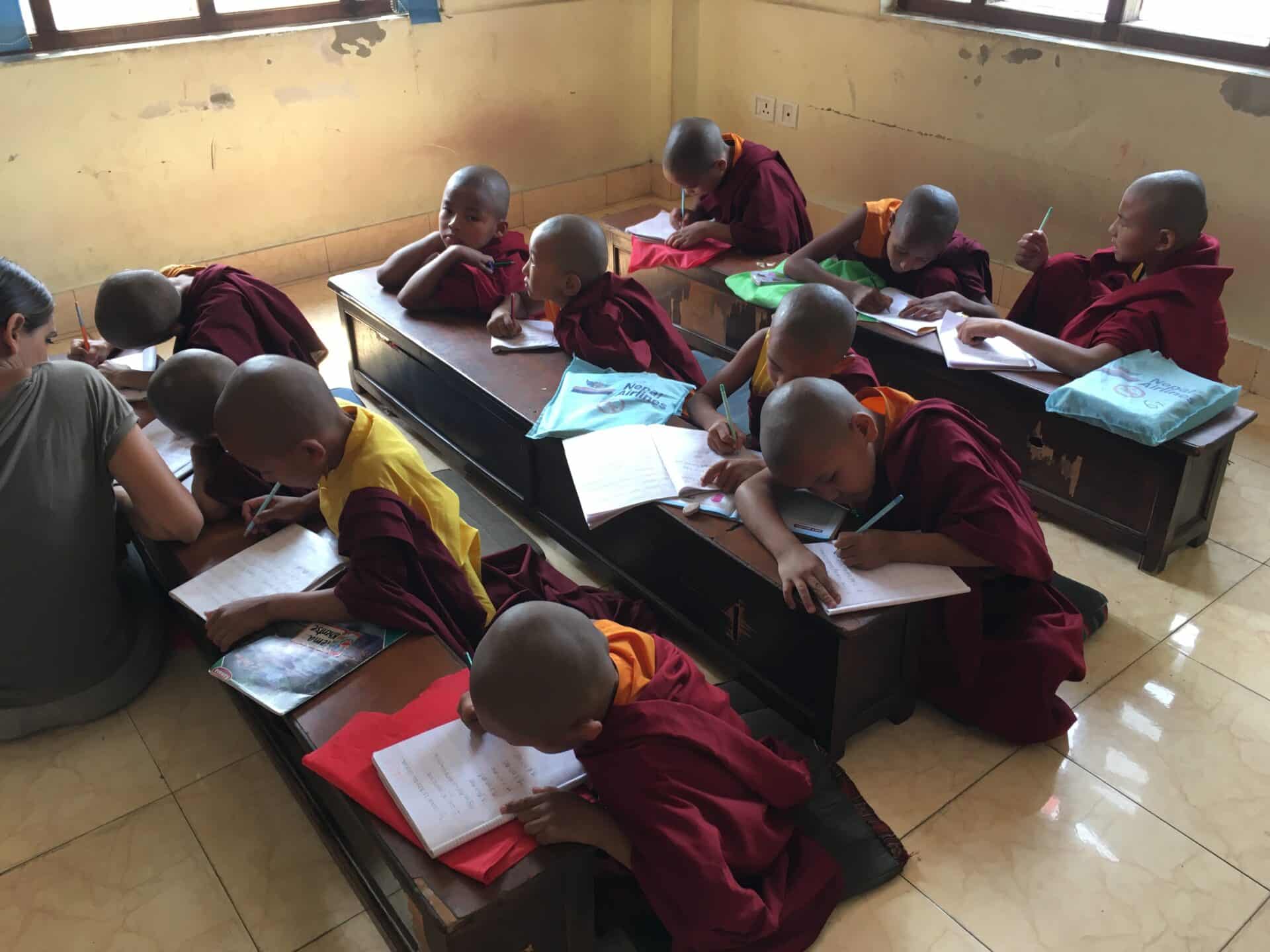
Life in a monastery is characterised by structure. Students balance their studies with daily rituals, meditation and community responsibilities.
Here’s what a day in a monastery for monks might look like:
- Early rise and shine (anywhere from 3:00 AM to 4:30 AM)
- Meditation, chanting or prayers
- Almsgiving (around 6:00 AM to 7:30 AM)
- Chores: cleaning, gardening, cooking
- Breakfast before noon
- Work/study/reading/learning activities
- Meditation/chanting
As a volunteer, your schedule will differ. Some monasteries limit their studies to the first half of the day. For example, in Sri Lanka, you may begin classes around 8:30 AM with a break for breakfast before continuing teaching until around 12:30 PM.
Breakfast is usually the main (and only) meal of the day. In most monastic traditions, one meal before midday is the norm, although a few include a light dinner. However, volunteers eat regularly, so don’t worry about missing meals!
For monks, the day opens and closes with meditation, but more meditative practices can occur throughout the day. Such periods of reflection may inspire TEFL teachers to adopt a similar approach to life.
If peace doesn’t come in a monastery, it’s probably not showing up at the office. So if you’ve been searching for your inner peace, now’s the time to find it.
One of the biggest questions associated with teaching in a monastery is how it contrasts with the traditional TEFL classroom.
Inside the classroom in a monastery
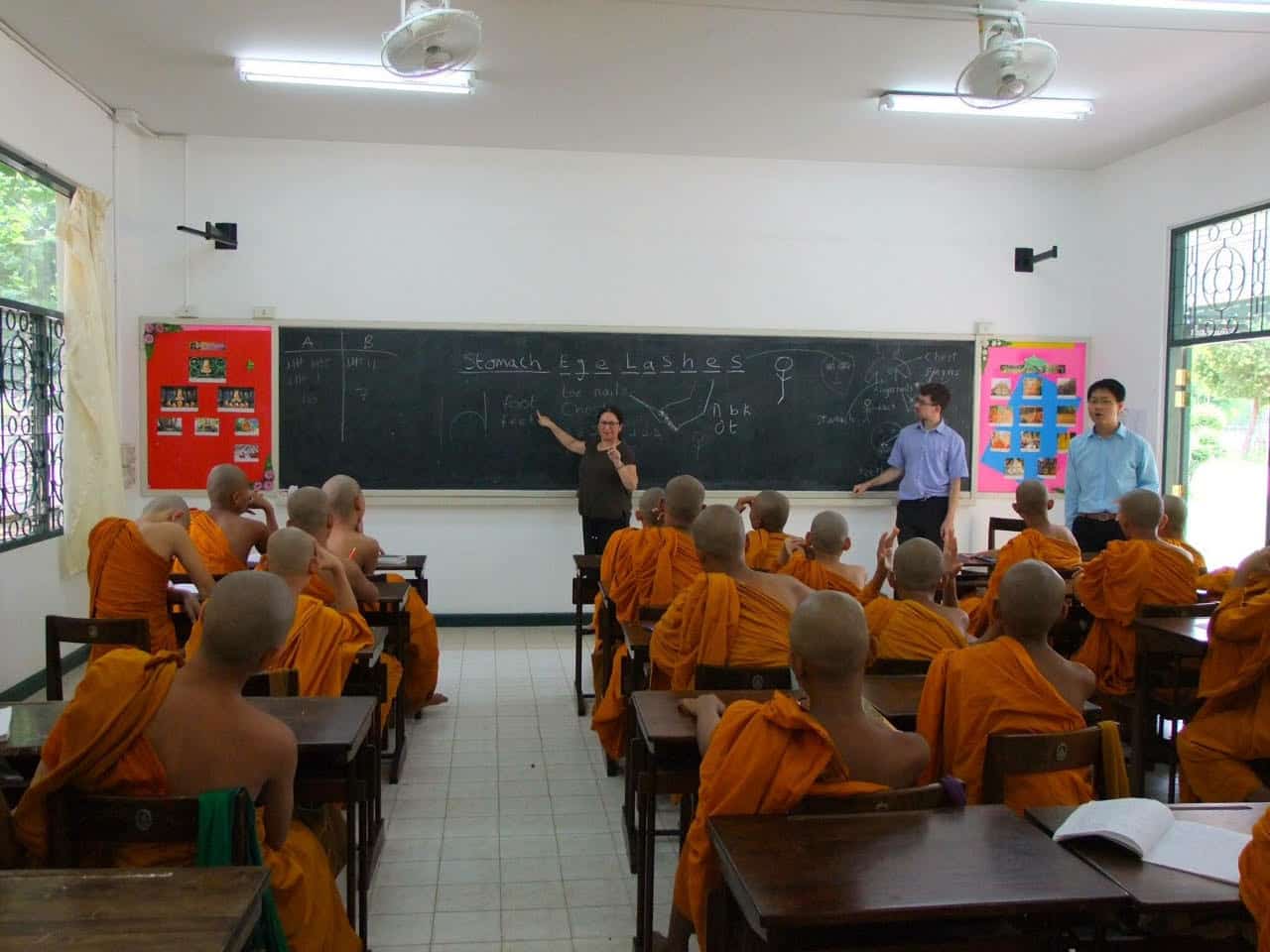
Monasteries are often located in peaceful, remote areas surrounded by nature. Unlike traditional classrooms, monasteries create an ideal environment for focused learning deeply connected to mindfulness, discipline and community.
This serene setting offers both teachers and students an opportunity to grow beyond language skills, fostering mutual understanding and respect.
Every lesson, the monks would greet you by saying “Hello Teacher” and “Thank you, Teacher” at the end. Truly wonderful to hear! – Supriya
If the benefits of teaching in a monastery aren’t obvious yet, let’s take a closer look.
Benefits
- Respectful learners: Monks greet teachers warmly and are highly disciplined.
- Tranquil environment: A monastery provides a low-pressure teaching environment — every teacher’s dream!
- Smaller class sizes: Usually around 10 to 15 students, although this can vary.
- Creative teaching opportunities: Design lessons inspired by daily monastery life and routines.
- Teacher skills development: Develop adaptability, cultural awareness and resourcefulness.
- Cultural immersion: Extensive exposure to the monk’s way of living.
- Personal fulfilment: Volunteering provides a sense of purpose and connection to others, which increases overall happiness.
- Adventure: Monasteries are often located in breathtaking locations.
Read more: Mindfulness Activities In The EFL Classroom
While rewarding, teaching in a monastery also comes with its own set of challenges.
Challenges
- Limited resources: You may have to rely on simple materials and teaching techniques, like chalkboards and physical gestures, when modern tech and resources are in short supply.
- Language barriers: This is amplified in the early stages of learning.
- Lesson disruptions: Monks must balance lessons with spiritual commitments, which makes assigning homework a challenge.
- Cultural barriers: Younger monks might hesitate to speak to elders, and older monks might avoid certain questions, so maintaining cultural awareness is essential to avoid misunderstandings and frustration.
- Lack of structured curriculum: You will have to be creative and resourceful and adapt your lessons to the monk’s context.
Class sizes vary but are generally limited to small groups, creating an intimate setting, which is great for establishing rapport.

Read more: 5 Tips For Building Rapport In The EFL Classroom
Of course, small is relative and depends on your teaching experiences.
I was teaching 6 classes, totalling over 100 novice monks. – Supriya
Still, compared to a packed public school classroom, these numbers make the teaching environment feel more personal and manageable.
Even seasoned teachers may feel slightly daunted by the unique shift teaching in a monastery brings. That’s why we’ve rounded up some practical tips to ease any concerns.
Tips for teaching English in a Buddhist monastery
- Make lessons memorable. Use storytelling, visuals, and real-life examples to make lessons engaging.
- Use interactive teaching. Once students feel comfortable, role-playing, singing, dancing and games can liven up lessons. (Note: Acting is fun and effective, but be mindful that singing and dancing may not be allowed unless students are very young.)
- Include debates and dialogue. These are traditional teaching methods in monastic education, especially in Tibet, and support deep understanding.
- Be creative. Try using creative tools like drawing, painting, or exploring pictures from magazines and books to make lessons more engaging.
- Embrace patience and flexibility in teaching methods.
- Learn basic phrases in the local language to build rapport.
- Add fun memory exercises — monks are excellent at memorisation.
- Respect the monastery’s customs, rituals, and way of life.
- Approach teaching as a two-way exchange of knowledge and culture.
Ultimately, teaching in a monastery is about patience, creativity, and connection. As Sophie reflects:
… the challenge and perseverance I needed when teaching the monks felt like nothing compared to the reward of seeing them improve, the effort they put in, and their keenness to learn … – Sophie
Her experience shows how much this kind of teaching can transform both teacher and student.
Cultural insights and considerations
Teaching English in a monastery is a special job that needs a good understanding of the monks’ way of life, backed by centuries of tradition.
The thing that struck me most about living there was how simple local and resident life was… they were so content in living with what little they had. – Supriya
You may find yourself living in very different conditions than you’re used to, so a period of adjustment is to be expected.
My new home was located in a market square, which operated from 1:00 AM to 9:00 AM. My bed for the month was a couple of mattresses on the floor; there was no flushing toilet, and the shower only ran cold water. – Supriya
Read more: How To Deal With Culture Shock
That’s quite the adjustment! However, monasteries in more developed areas offer more comfortable accommodations. You may even have your own en-suite.
The experience you have will depend on the monastery, location and programme you choose.
The simplicity of life in a monastery is balanced by the warmth of the community.
The respect and hospitality from the homeowner and locals were enough to make you forget the new lifestyle. – Supriya
This warmth reaches into the classrooms. Teaching monks can be really rewarding because they really respect teachers and show a lot of appreciation.
Both staff and students make you feel so welcome and are genuinely appreciative of any voluntary input. – Supriya
Teachers should reciprocate that respect by remaining aware of their actions and how they affect the monks. They can set a good example by doing the right things and avoiding the wrong ones.
A further consideration relates to dietary restrictions, which may mean giving up meat for the duration of your stay, depending on your chosen monastery.
If you’re a meat lover, you may want to avoid East Asia, where vegetarianism and veganism are widely practised by monks.
Read more: Three Cultural Considerations For TEFL Teachers
Where can you teach in a monastery?
If you’ve ever dreamed of becoming a volunteer at a Buddhist monastery, you’ll find opportunities all over Asia.
These volunteer programmes are generally short, lasting from as little as 2 weeks to 12 weeks, although Nepal has programmes lasting up to 5 months.
Thailand
You can lend a hand in temple schools through projects like Love Volunteers in Chiang Mai or Volunteer Thailand’s placements, where your students might be novice monks or local kids from disadvantaged backgrounds.
Nepal
Programmes like Volunteer Society Nepal place volunteers in the Kathmandu Valley and Pokhara.
Read more: Interesting Facts About Cambodia You Probably Didn’t Know
Sri Lanka
Sign up with Projects Abroad to teach in a coastal town. Here, you can teach additional subjects like music, IT, and more. Alternatively, try Travel Roots to teach English in Pirivena (monastic colleges).
Bhutan
Monasteries like Phajoding and Nalanda Buddhist Institute have woven English lessons into their daily life, giving you the chance to share skills while experiencing the rhythms of monastic living.
Disclaimer: The TEFL Academy doesn’t have any relationship with these volunteer programmes or placement organisations.
Now that you know how to join a Buddhist monastery, you can shift focus to preparation. This includes familiarising yourself with the practical aspects of being a monastery resident.

Essential tips for life in Buddhist monasteries
If the idea of teaching in a monastery leaves you wondering, and perhaps a little confused, about cultural taboos and invisible boundaries, use these tips as a guide.
🙏 Keep noise to a minimum and respect the peaceful atmosphere. Avoid bringing people to your accommodation who aren’t part of the monastery, especially late at night.
🙏 Use your right hand or both hands when giving or receiving something. The right side is seen as more respectful — never offer just your left.
🙏 Go clockwise when walking around temples or holy places.
🙏 If you’re with someone important, walk to their left and avoid standing directly in front of or behind them.
🙏 Dress neatly and modestly. Simple, respectful clothing goes a long way. That means loose clothing and covered knees and arms. Men should avoid shorts and stick to long-sleeved shirts. Some monasteries require women to wear a head covering like a scarf or shawl.
🙏 Always ask monks before taking photos — obtaining consent shows respect.
🙏 Do not point. This includes pointing your feet at people or sacred objects, which is disrespectful. If you need to indicate something, use your whole hand and ensure that your palm faces upward. An open palm symbolises humility.
🙏 Respect prayer times — allow monks space and silence to focus.
🙏 Avoid gossip — this disrupts harmony, disrespects the monks and doesn’t align with Buddhist teachings.
Teaching English in a monastery is a whole different world defined by vows of chastity, cleanliness, detachment from material things and mental peace.
To get to the temple school, you cross the Chao Phraya River using a cable car… The teaching experience was like no other. – Supriya
It offers a chance to share knowledge while learning from a way of life rooted in mindfulness and simplicity.
And best of all, you get to live with monks!
If cultural exchange and altruism speak to you, then pack away your creature comforts and embrace a simpler lifestyle — Eat, Pray, Love-style.
I really formed a bond with all the monks in the school … I couldn’t have asked for a better experience. – Sophie
For those seeking a meaningful teaching experience, a monastery classroom provides lessons that extend far beyond language. The first step? Getting a TEFL qualification!
Author Bio
Accreditation & Quality Assurance
The TEFL Academy was the world’s first TEFL course provider to receive official recognition from government regulated awarding bodies in both the USA and UK. This means when you graduate you’ll hold a globally recognised Level 3 (120hr) Certificate or Level 5 (168hr) Diploma, meaning you can find work anywhere and apply for jobs immediately.