 United States
US
United States
US










Why I Quit Teaching In Thailand To Teach Online Full-Time
Join a global community of over 200,000 TEFL teachers working throughout the world! Enrol me!


 December 4, 2025
Schalk is a South African who taught English in Thailand but now teaches online from South Africa.
When I first started teaching in Thailand back in May 2022, I thought I had finally found my rhythm as a foreign English teacher. Like many others starting out abroad, I was filled with excitement — new students, new colleagues, a new country, and the thrill of doing something meaningful.
Read more: How To Live & Work In Thailand As A Foreigner
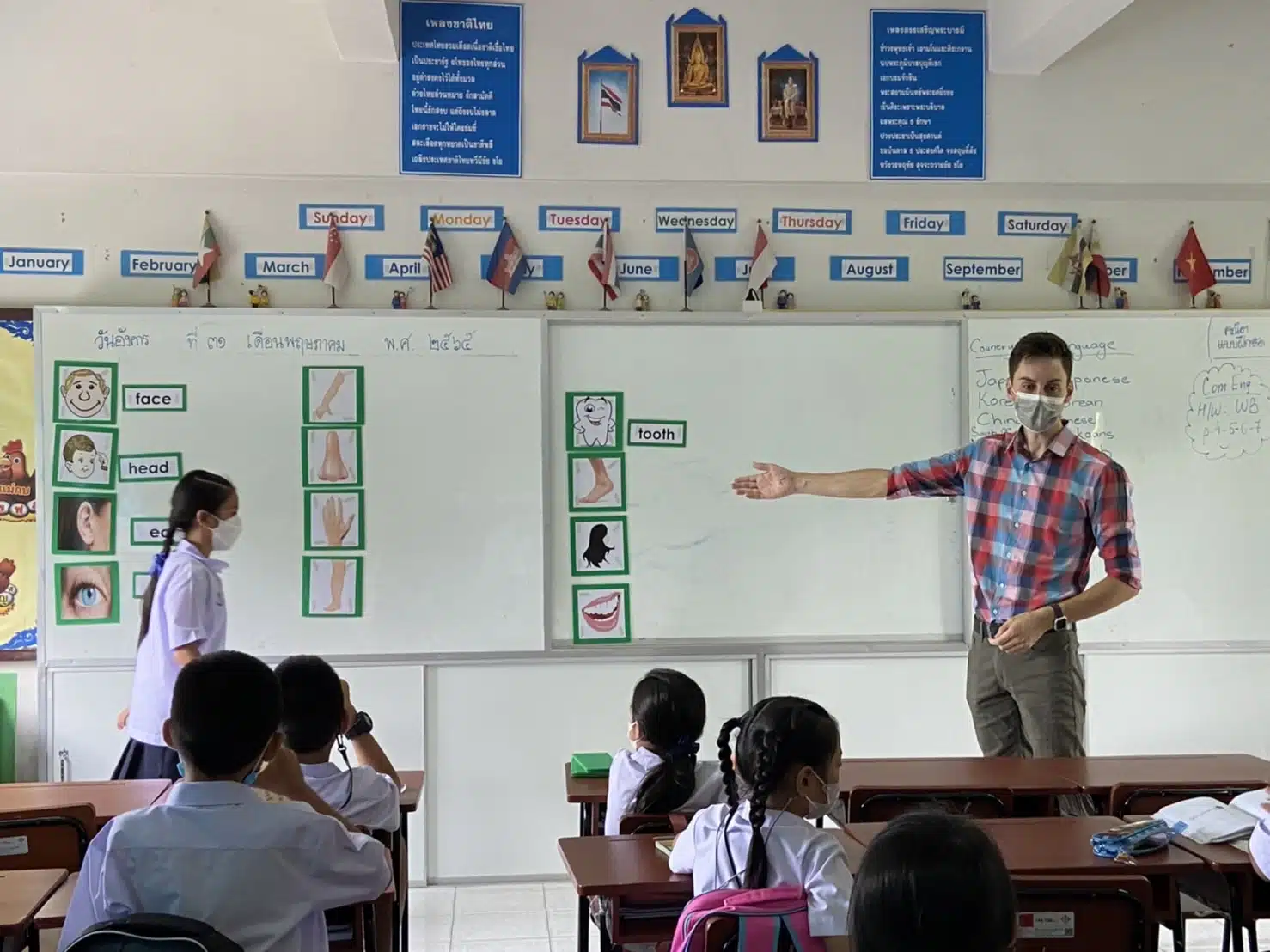
I began working at a government school, and for a while, it felt like I was exactly where I was meant to be. But as time went on, the reality of being a foreign English teacher in Thailand started to unfold, and it wasn’t always what I expected.
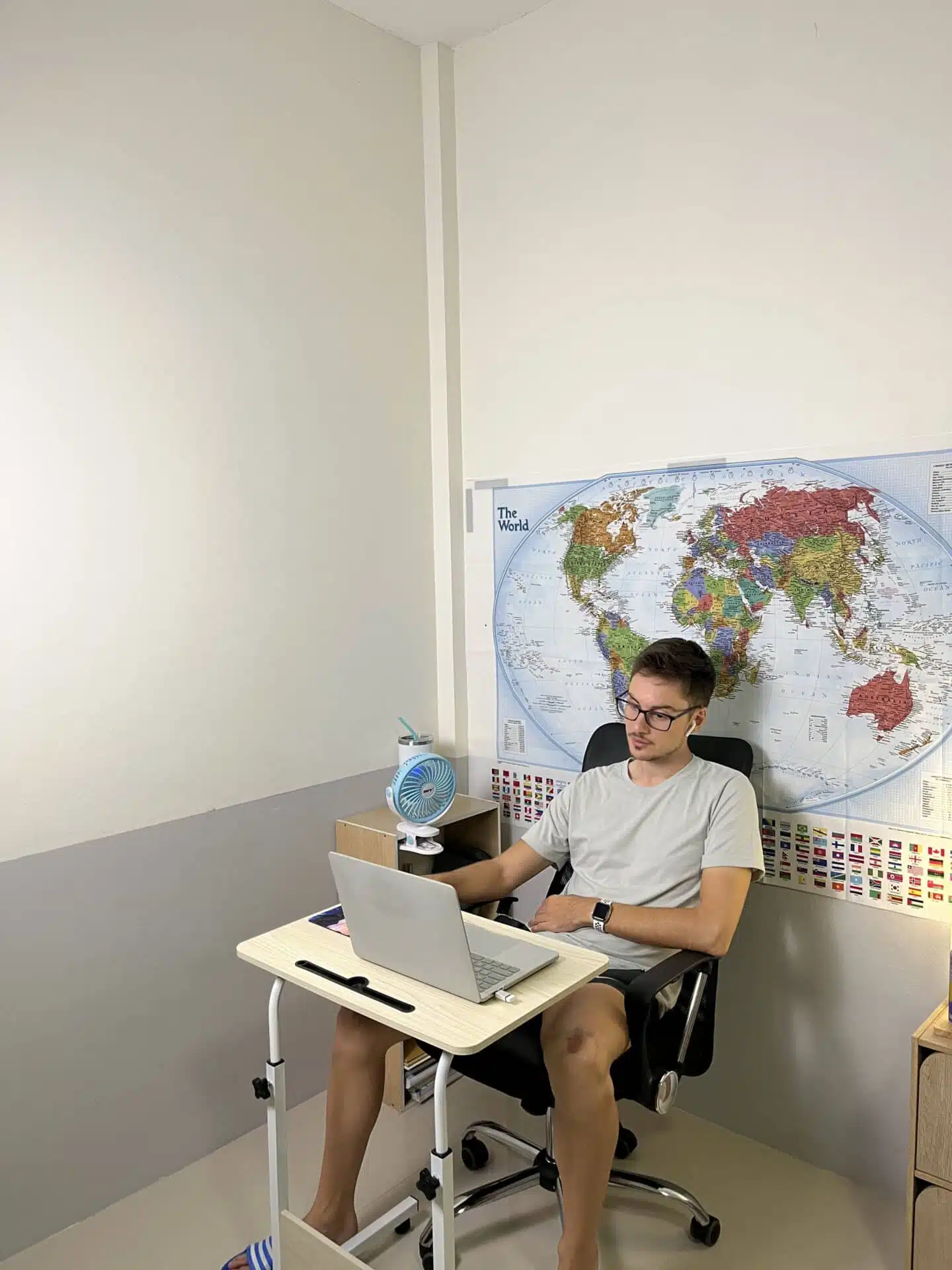
A year later, I found myself sitting at my desk one evening, laptop open, ring light glowing, and a student from halfway across the world smiling at me through the screen. That’s when I realised I had made the right decision to leave traditional teaching behind.
My first job teaching English in Thailand
Getting your first teaching job in Thailand as a foreigner isn’t always straightforward. I didn’t get hired directly by my school. I was placed by a recruitment agency — middlemen who connect teachers with schools.
In theory, this makes life easier: they handle the paperwork, the visa, and find you a placement. But in practice, it can be a bit of a gamble.
When I got my first job through an agency, I was promised ฿30,000 ($928) a month. It’s not a fortune, but it was enough to live comfortably by Thai standards. And as someone new to the teaching world in Thailand, I was grateful to have secured a position.
A few months in, however, something happened that completely changed the way I viewed the system.
Read more: What’s The Cost Of Living In Thailand? We Asked Our Teachers

The salary gap
One day, the head of the English department told all foreign teachers that we needed to visit the school office to sign for our salaries. It was a routine process — or so I thought.
But when I got there and glanced at the paper I was supposed to sign, I noticed something strange. Next to my name, the salary listed wasn’t ฿30,000, but ฿38,000.
Read more: Teach English in Thailand — Salaries
Curious (and a bit anxious), I contacted my agent to ask what was going on. Her response hit me like a ton of bricks, “Oh, that extra ฿8,000 is my fee.”
I couldn’t believe it. I was shocked, angry, and disappointed all at once. Nobody had told me that a portion of my salary would be going directly to the agency every month.
From then on, I started thinking seriously about how much control I really had over my own career.
It’s very important to read any contract that you sign. Some recruitment agents take a percentage of your salary every month, others are given a placement fee by the school (which doesn’t affect your salary). If you’re dealing with a recruitment agency, ALWAYS ask what their fee is. This information is not a secret but you need to know to ask.
Read more: What To Expect In A TEFL Contract
Teaching English in a private school in Thailand
After finishing my first year at the government school, I decided it was time for a change.
In April 2023, during Thailand’s summer break, I joined a private school. The environment was cleaner, the class sizes smaller, and the facilities more modern. It felt like a step up.
But very quickly, I realised that not much had changed in terms of workload. There were endless meetings (sometimes entirely in Thai, which foreign teachers were still expected to attend), morning gate duties, greeting students and parents, and lunch duties, like dishing food in the cafeteria.
When working in a school, TEFL teachers are often required to perform duties outside of the classroom. This should be explained in your contract.
Read more: The Truth About Teaching English in Thailand: Challenges Nobody Talks About
On top of that came lesson planning, test creation, marking, spreadsheets, reports, and department paperwork. All of it was part of the job, but the pay didn’t reflect the effort. I found myself doing all the same things as before, only with higher expectations and more scrutiny.
I had moved schools, but not necessarily moved forward.
That’s when a conversation with another foreign teacher changed everything.
The moment I discovered online English teaching
One afternoon, I was chatting with a colleague about the usual things — lesson plans, the heat, weekend plans — when he mentioned that a friend of his had started teaching English online. I’d never considered it before.
Read more: Teach English Online
He told me about a platform called Cambly, where you could teach English to students around the world. He mentioned the pay rates — about $12 an hour for kids and $10.20 for adults — and I remember thinking, wait a minute, that’s actually quite good.
That night, curiosity got the best of me. I started researching Cambly and other online teaching platforms.
Read more: Online Teaching Platforms You Need To Know
The more I read, the more intrigued I became. I quickly did the math. If I taught the same number of hours I was teaching at school, I could almost double my salary. That was all the motivation I needed.


How I transitioned from in-class teaching to online English teaching
Within a couple of weeks, I applied to Cambly.
I recorded my introduction video, filled in my profile, and submitted a demo lesson. I wasn’t expecting much, but about four weeks later, I got the acceptance email and started that very same day.
At first, I taught part-time after school, usually in the evenings. Because Thailand is close in time zone to countries like China, South Korea and Japan, it was easy to fill my available slots with Asian students — and I loved it.
Read more: How To Teach Young Learners From Asia Online Effectively
It was new, exciting, and something I had full control over. I didn’t need to report to anyone, I didn’t need to clock in, and I could choose when and how long I wanted to work. The idea of that kind of independence felt almost unreal at first.
The first month, I earned around $600 teaching part-time — about ฿20,000. That was almost what I made at school, just from a few hours in the evenings.
Suddenly, my perspective on what was possible began to shift.
Read more: Why TEFL Is A Great Online Side Hustle
Teaching English online full-time
By July 2023, I had made up my mind. When the school term ended, I decided to finish up my contract and not renew it.
In August, I transitioned to teaching online full-time. My first month’s income was $1,345 (฿40,000) — I was thrilled.
Read more: Teaching In-Class Or Online: Which Pays More?
A few months later, after opening more teaching hours, I was averaging $1,700 (฿55,000) a month.
For the first time in my teaching career, I was earning more while working less and had complete control over my schedule.
Of course, like with any new chapter, there was an adjustment period.
Teaching online is not the same as teaching in a physical classroom. You don’t:
- have the same energy (or noise) level,
- see the full range of emotions on a student’s face, or
- hear the laughter or chatter that fills a school corridor.
Read more: What Are The Requirements For Teaching English Online
But there was something liberating about it, too. I could:
- plan lessons efficiently,
- teach from anywhere,
- log off at the end of the day with time left for myself,
- avoid staying late at school, preparing tests, marking papers, and
- avoid meetings that didn’t concern me.
Read more: How Teaching English Online Lets You Travel The World (And Actually Make A Living)
Teaching online vs teaching in a school
There were definitely things I missed about school teaching. I used to teach more than just English — I also handled Math, Computer Studies, and even PE.
Those classes were full of energy and unpredictability. The kids would sometimes make me laugh without even trying, and those interactions gave the day a rhythm that’s hard to replicate online.
The school environment had its charm — the morning greetings, the playful chaos, the sense of being part of a physical community. Those moments made the long days feel worthwhile. But at the same time, the trade-offs were undeniable.
Teaching online meant no more gate duties, no more lunch shifts, no more endless meetings or piles of marking.
I could design my own lessons, connect with students from all over the world, and finish the day without feeling drained.
Sometimes I joke that the best part of teaching online is being able to sit in my sleeping pants with a nice shirt on, and no one ever knows!
All I needed was a ring light, a good headset, and my laptop. Simple as that.
Read more: Tips For Setting Up An Online Classroom
The freedom of online teaching
One of the biggest changes I noticed after moving online was the sense of independence.
I wasn’t waiting for anyone to tell me what to do or when to do it. I could set my own hours, plan my breaks, and even take time off without worrying about permission slips or substitute teachers.
Read more: The Realities Of Teaching Online: Tips, Challenges And A Success Story
The direct connection between the effort I put in and the income I earned was deeply satisfying. If I wanted to make more, I could open more hours. Traditional teaching never gave me that level of control.
Later, I briefly explored another platform called Preply, but Cambly remained my main focus.
What I loved most was how simple the setup was — log in, teach, log off. No politics, no bureaucracy, and no waiting around for payday surprises.
Read more: 11 Best Places To Teach English Online [+11 Questions Answered]
A different kind of teaching
While teaching online, I discovered that it required different skills. It wasn’t about managing a classroom or handling group dynamics, but about connection and adaptability.
I had to build rapport quickly, read students through a webcam, and make lessons engaging with limited resources. It pushed me to become more communicative, responsive, and creative.
The students were from all over — adults improving their business English, teenagers preparing for exams, kids just starting their English journey — and every conversation was different. That variety kept things fresh and interesting.
Read more: What Skills Do You Need To Teach Online Effectively?
Why teaching online was the best decision for me
When I think back to that moment in the school office, it almost feels like a different lifetime. That frustration planted the first seed that eventually grew into this new chapter.
Leaving a traditional school job wasn’t an easy decision, but it was the right one.
Teaching online has given me independence, better pay, and the ability to take ownership of my career.
I may no longer hear the chaos of a classroom every morning or share lunch duty with my Thai colleagues, but I’ve gained something much more valuable: the freedom to teach on my own terms. And for me, that’s priceless.

Author Bio

Accreditation & Quality Assurance
The TEFL Academy was the world’s first TEFL course provider to receive official recognition from government regulated awarding bodies in both the USA and UK. This means when you graduate you’ll hold a globally recognised Level 3 (120hr) Certificate or Level 5 (168hr) Diploma, meaning you can find work anywhere and apply for jobs immediately.