 United States
US
United States
US






Is South Korea Safe For TEFL Teachers?
Join a global community of over 200,000 TEFL teachers working throughout the world! Enrol me!


 January 22, 2026
Moving abroad is exciting, but it’s also a big step. It’s normal to worry about your personal safety. But what if you choose a country where safety is a given?
Well, look no further than South Korea. When it comes to safety rankings, it consistently ranks among the world’s top 30 safest countries in terms of personal security, violent crime, and theft prevention.
In Numbeo’s Safety Index by Country 2025 Mid-Year results, South Korea ranks 28th worldwide for safety.
And I can vouch for this. During my time in South Korea, I never worried about walking home at midnight, through crowded shopping districts, or standing on a packed subway. It was a weight off my shoulders I didn’t know I was carrying.
In this article, I’ll put your mind at ease by breaking down safety in South Korea and making sure you have the deets you need to stay safe.
Read more: Solo Travel: Tips, Safety, And The Best Destinations
How safe is Korea really?
We’ve established that Korea is relatively safe, but, like in any other part of the world, crime is a reality. It’s common sense to take necessary precautions, especially in crowded places or tourist hotspots. But let’s get specific.
Crime rates and everyday safety
The sense of safety one gets in South Korea is immediately noticeable for TEFL teachers arriving from countries with higher crime rates (like South Africa). That’s because public spaces are orderly, and violent crime is rare.
Streets are well-lit, and extensive CCTV coverage adds an extra layer of security. The number of Big Brother cameras watching public spaces is steadily increasing, which is helping decrease crime.
During my time in Korea, I noticed a lack of suspicious people loitering, barely saw stray animals, and didn’t hear much about local crime through word of mouth.
Pickpocketing and petty theft are uncommon but can happen in crowded nightlife districts like Hongdae, tourist-heavy areas like Itaewon, and busy markets or shopping malls like Dongdaemun or Myeongdong. So,if you’re in these areas it’s best to keep an eye on your belongings and stay alert.
Expats will be happy to know that public transport is safe at almost any hour, so commuting late at night is generally low-risk.
Additionally, apartments come with digital door locks, so there’s no risk of losing your house keys and needing to call a locksmith at an ungodly hour.
Unlike countries like the US, where guns are more common, strict firearm laws in Korea mean one less thing to worry about!
Safety in cities vs rural areas
Cities are busier and more crowded than rural areas, which are sparsely populated.
No matter where you are in South Korea, safety standards remain high.
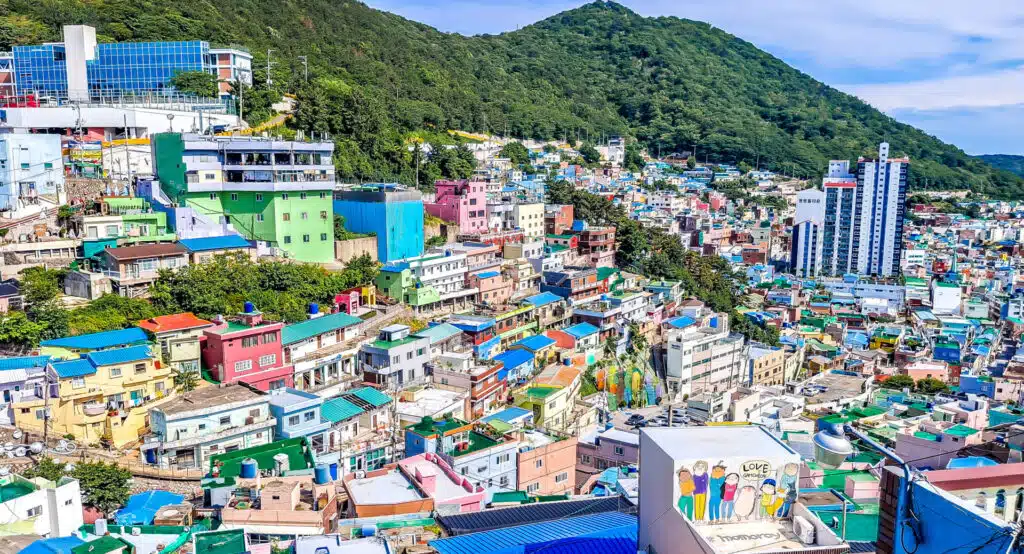
Seoul and Busan rank among the world’s safest major cities despite their dense populations and busy streets. You can walk through crowded neighbourhoods late at night, leave belongings at café tables, and move through subway systems without the need to constantly watch your back.
In rural areas, crime rates are extremely low, and small towns have tight-knit communities that look out for each other. It’s food for thought when weighing up rural versus urban teaching positions.


Read more: What It’s Like Teaching In South Korea: Rural VS Urban Living Compared
Don’t mistake quiet streets, a bit of isolation, or limited lighting after dark for danger, as these are just part of life in the sticks. The actual risk of crime is low, but it’s always helpful to have a few basic Korean phrases or a translation app handy when help isn’t as immediately accessible as in cities.
What about North Korea?
When I decided to teach English in South Korea way back in 2008, everyone’s main concern was my safety since North Korea was in the headlines. I’m so glad I never let the naysayers deter me from what turned out to be an amazing, life-changing experience.
Truth be told, yes, North Korea was (and still is) a persistent background threat that never truly goes away, but nobody panics about either — it’s weird. The only times it ever moved from background noise to “oh right, that exists” were during occasional military drills.
Now and then, I’d see fighter jets conducting routine training exercises overhead, but even then, locals barely reacted. It was just another Tuesday in Korea. Clearly, the situation is stable.
Read more: The Reality of Teaching English in South Korea: What Nobody Tells You
Safety for TEFL teachers
As a popular TEFL teacher location, South Korea brings specific considerations that your average tourist won’t encounter: Hagwon (ie, private school) schedules often run until 10:00 PM, and the moment someone discovers you’re an English teacher, there’s a good chance they’ll ask about private lessons.
At work: schools, hagwons, and neighbourhoods
Most schools and hagwons are located in ordinary neighbourhoods. You might walk through narrow side streets or quieter residential lanes to get to work, but these are typically safe, everyday routes where locals go about their business.
If you’re coming to Korea through EPIK (English Programme in Korea), you’ll likely be placed in a public school, and these schools are usually community hubs located in safe, family-oriented neighbourhoods.
Read more: Discover The EPIK Programme: Your Gateway To Teaching English In South Korea
Hagwon teachers often finish late, sometimes wrapping up classes at 9:00 or 10:00 PM. But this is generally okay because Korean streets remain busy and well-lit after dark. Convenience stores like GS25, CU, and 7-Eleven are open 24/7, so there’s always activity around, even late at night.
It’s also common to see students out and about at night, still uniformed and, yes, still studying at late-night study cafés or study rooms.
Always trust your instincts. If a particular route feels off, take a busier street or hop in a taxi.
Inside schools, security includes controlled entry via locked main doors, visitor sign-ins, and often a security guard or administrative staff keeping an eye on who’s coming and going. Many schools also use CCTV in hallways and entrances, adding an extra layer of security.
The 2025 Daejeon school tragedy brought national attention to school violence as a serious concern. Consequently, Korea has been beefing up school security, so you may see more patrols, emergency alarms, and on-site safety officers.
Read more: The Lowdown On Teaching English In South Korea
The private lesson question
A quirky phenomenon that foreigners experience is that they sometimes get approached by locals who want to “practice English.” Most of these encounters are genuine, but sometimes they can go south.
After a friendly chat, the person might invite you to a café, restaurant, or event, only to give you a sales pitch for English materials, religious recruitment, or a pyramid scheme. It can be quite awkward, though rarely dangerous, but it’s always better to be safe than sorry – so if you do connect with someone this way, make sure you meet up in a public space.
Read more: TEFL Scams And How to Avoid Them
And while it might seem harmless, encounters like these can cross over into safety and legal issues in Korea.
Heads up: if you’re on a standard E-2 teaching visa (the TEFL visa), private tutoring on the side is technically illegal unless you have the proper authorisation. Getting caught could mean visa trouble, fines, or even deportation.
Some schools are really strict about this and spell it out clearly in your contract, so make sure you check before taking on any extra work!
So, if a stranger approaches you out of the blue and the conversation quickly shifts to invitations or “opportunities,” politely excuse yourself and walk away.
How you handle private lesson requests can affect your safety, stay, and ability to work legally in Korea, especially if you wish to extend your teaching contract. Being aware protects you and avoids unnecessary risks.
Read more: How To Extend Your Teacher Contract In South Korea: Renewal Tips For TEFL Teachers


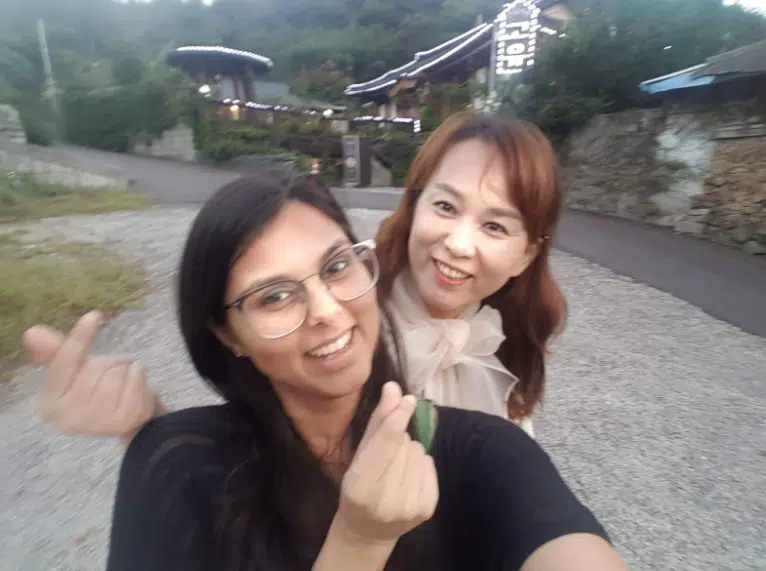
Is South Korea safe for female teachers?
Korea is widely considered one of the safest countries in the world for solo female travellers and teachers. Violent crime against women is rare — you can walk through most neighbourhoods at night without looking over your shoulder.
I recall walking home at midnight after a solo subway ride, phone in hand, not a worry about being mugged — in a tiny town.
The risk of harassment is low. Most issues are things like unwanted attention, crowded subway carriages, or the odd pushy stranger. However, alcohol can cause people to disregard personal space and overstep boundaries, so they may stand too close or ignore signs that show disinterest.
Generally, Korean men avoid confrontation — it’s a cultural thing — so thankfully, catcalling or blatant street harassment is uncommon.
As for public transport, trains and buses are generally safe for women. If someone makes you uncomfortable, simply switch carriages or alert station staff and they’ll sort everything out quickly.
Nightlife, going out & social safety
Is Korea safe to walk at night?
Let’s talk about safety when you’re out and about, since TEFL teachers will definitely be keen to experience Korea’s fun social scene.
Drinking culture and staying safe
It’s no secret that Korea has a huge drinking culture. Soju is the national drink of choice. It is deeply embedded in social life and is super cheap and easy to find – your local convenience store will definitely stock it.
As a foreign teacher, you’ll find yourself invited to eat with co-workers at after-work gatherings (called hoesik), where the famous soju will make its appearance. The trouble with soju is how easy it is to misjudge since it goes down smoothly, and it’s easy to overdrink.
Navigating your way home drunk can be a safety hazard, but forgetting your wallet in the taxi is probably as dangerous as it gets.
Late-night taxis are safe, though it’s worth using Kakao Taxi to avoid confusion or overcharging. Drivers are generally trustworthy, and the app tracks your route.
When out socialising or clubbing, let others know your limits. Don’t let anyone pressure you into drinking more than you want. Going out in groups is safer as there are more eyes on both your belongings and on you.
Once, a Korean guy was dancing too close to me in a nightclub. All it took was a quick signal to my friends and a bit of manoeuvring on the dance floor, problem solved — easy peasy.
Drunk locals are common, but rarely dangerous. You’ll definitely see them stumbling about, causing the odd scene, and filling subway carriages with a strong soju smell, but actual confrontations are uncommon.
Popular areas and what to expect
Itaewon, Hongdae, and Gangnam are Seoul’s main nightlife and socialising hubs. Gangnam is so popular that it inspired the global dance hit Gangnam Style.
However, Itaewon is the most international district where expats and tourists flock. You can enjoy international food, late-night bars and shops that stock familiar brands like Heinz and other hard-to-find foreign foods. Hongdae is a hipster university district catering to a younger, artsy crowd with tons of nightclubs and bars.
The point is, all three areas get absolutely packed on weekends, creating ideal conditions for pickpockets and bag-snatchers.
Practise basic safety common sense, such as:
- Keeping your belongings close
- Zipping up bags
- Keeping phones in front pockets
- Not leaving valuables unattended
One time, I left a shopping bag in a changing room in Forever 21 in the busy shopping district of Myeongdong. When I came back, the attendant had safely set it aside for me. If this had happened in South Africa, I would’ve had to kiss my belongings goodbye!
Moments like these are golden — they increased my appreciation for Korean culture and solidified my choice to teach there as the right one.
Read more: 11 Best Countries To Teach English Abroad In 2026
Transportation safety
Buses, subways, and taxis are reliable, well-monitored, and widely used by locals. As a TEFL teacher in Korea, you’ll be maxing out the subway and hopping in plenty of taxis. You’ll be relieved to know that Korea’s late-night transportation system is super safe and reliable.
Seoul’s subway operates from around 5:30 AM to midnight and is a safe way to travel. Security cameras, emergency phones and alarms, good lighting and security staff all help enhance safety in stations. Screen doors help reduce the risk of accidents, like falling onto the tracks.
And if, for some reason, you miss your train home, you can:
- Use night buses (called “Owl buses”): They run between 1:00 AM and 4:00 AM, but on a limited number of routes in Seoul.
- Use a licensed taxi. They’re pretty easy to spot. Look for:
- Taxi light and signage: Roof light saying “TAXI” (on when available); company name and registration number on the doors.
- Colour: Standard taxis are orange, white, or cream; premium/deluxe taxis are black or dark grey.
- Metre: Licensed taxis must use a meter (that means no rate negotiations).
- Crash in a 24-hour café or PC room. These are cafés or gaming centres that stay open all night and usually let you nap/relax for a few hours.
Grab taxis through Kakao T or k.ride. These apps display your fare, track your route, and let you pay in-app. With Seoul’s Ansimi (Safe Return) app, you can share your route with friends so they know you got home safe and sound.
When you want to travel a greater distance but want a faster commute, you can take the KTX (Korea Train Express) — Korea’s high-speed rail system. The KTX is great for weekend trips as it zips over to your location at about 305 km/h and can reach Busan from Seoul in under three hours.
Read more: How To Protect Yourself While Travelling Solo
Emergency services and what to do if something happens
When something happens, it’s important to know who to call and what to do. The Korean National Police Agency assists with various crimes, including car accidents, taxi fare disputes, and even unfair treatment by an employer!
When you call, it’s important to wait until you’re connected to an interpreter, so don’t hang up when you hear a beep or similar sound.
Tip: When calling an emergency number, stay calm, give your location, and use landmarks or nearby subway stations if you don’t know the address.
Korea also has tourist police (known as gwangwang gyeongchal) in popular areas, easy to spot by their marked armbands. You can also approach them in an emergency.
There are various emergency numbers expats can dial in case of an emergency. Below is a list of some useful numbers with English options.
Emergency numbers
112 – Korean National Police Agency (interpretation service available)
114 – Local Directory Assistance
117 – School violence/Violence against women
119 – Fire and ambulance (with English interpretation)
129 – Medical emergencies
1339 – Korea Centre for Disease Control (24/7 crisis support)
1345 – Immigration office (in 19 languages)
(02) 798-7529 – FOCUS (Foreigner Community Service — counselling, legal advice, emergency assistance)
Is Korea safe for English teachers? The verdict
Is it safe to work in Korea?
The verdict is in, and it’s a resounding YES. South Korea truly is one of the safest countries in the world to live and teach English abroad.
Public order? ✅
Low crime rates? ✅
Peace of mind for expats? ✅✅
It’s common sense to take precautions no matter where in the world you end up and no matter how safe a country is. And honestly, if being wary of strangers, watching your alcohol consumption, travelling with friends and holding onto your belongings are your main concerns, you may feel even more at home in Korea than in your own country!
If safety and peace of mind are top priorities when choosing a TEFL location, Korea has it all, and then some. With a welcoming environment and a low-crime culture, it’s easy to see why Korea is a top TEFL destination — it pretty much sells itself!
So if you’re ready to jump on the teaching-in-Korea bandwagon and experience life in Korea for yourself, start researching programmes and make the move.
Author Bio

Accreditation & Quality Assurance
The TEFL Academy was the world’s first TEFL course provider to receive official recognition from government regulated awarding bodies in both the USA and UK. This means when you graduate you’ll hold a globally recognised Level 3 (120hr) Certificate or Level 5 (168hr) Diploma, meaning you can find work anywhere and apply for jobs immediately.