 United States
US
United States
US










Specialised TEFL: Teaching English In The Air Force
Join a global community of over 200,000 TEFL teachers working throughout the world! Enrol me!


 March 26, 2026
Trading the traditional classroom for the hangar, teaching English in the Air Force is the ultimate mission-driven career for TEFL educators. This high-stakes environment focuses on Aviation English, where proficiency in English is a matter of safety. If you thrive on structure and want to master the world of English for Specific Purposes (ESP), instructing pilots and ground crews offers a unique professional challenge at the forefront of global aviation.
Read more: What Is English For Specific Purposes And How Do I Teach It?
Hi, I’m Ashleigh, and I found my way into the Royal Omani Air Force classroom after years of teaching Business English and leading corporate training sessions across Africa.
When my family and I moved to Oman, driven by a desire for adventure and cultural growth, I landed one of the most fulfilling roles of my career: teaching English to future air force personnel.
If you’re an aspiring TEFL teacher, especially with little experience, this story is for you — warts, wins, and all.
Initial expectations vs reality: Breaking preconceptions
Before stepping into my first air force classroom, I imagined a rigid, almost corporate environment. In reality, the discipline was there but wrapped in layers of vulnerability and camaraderie.
Most of my students were young men living away from home for the first time, learning to navigate not just flight dynamics but also independence, homesickness, and cross-cultural communication. Our classroom evolved into a small, supportive community, with plenty of laughter and the occasional nerves before a big jump (sometimes literally, as with helicopter exercises!).
For example, on the day of a nerve-wracking helicopter jump, the students rallied around each other, supporting those who were nervous, and ultimately succeeded, all of them making it back to shore in full kit!
Moments like these highlighted the unique camaraderie and resilience of my students. The experience quickly taught me that teaching in the Air Force is about much more than grammar drills and vocabulary lists.


What did you teach in the air force?
I began by teaching basic English to ensure all students reached at least a B1 level for promotion, despite varied proficiency and levels of nervousness. Once foundational grammar, listening, speaking, and reading were established, we progressed to flight dynamics and military vocabulary, all delivered in English.
I also covered library skills and listening skills. I recorded listening texts with diverse native speakers to expose students to various accents. These sound lab exercises entailed a group of individuals from various nations to ensure students were able to experience different accents first-hand. I must say, we had a blast!
Lesson planning for teaching English in the air force
Effective lesson planning focuses on air force trainees’ specific language needs.
For flight dynamics, I introduced core terms with simple visuals, advancing to real-life scenarios via role-play and technical materials like flight manuals. Progress was tracked using ipsative testing as this is hugely motivating for individual students, alongside mandatory formative and summative assessments, including oral, listening, and written tasks, plus peer review for constructive feedback.
Editor’s note: Ipsative testing in language learning is assessment that measures a learner’s progress against their own previous performance, not against other students or a fixed standard.
Teaching requires adaptability, using visual aids, hands-on activities, and breaking down tough vocabulary with mnemonics.
After learning about the various forces at work on an aeroplane, we took the men out to the airfield, and some of them got to fly, including me!
Mission simulations and model aircraft projects reinforced learning through practical application and competition. These are young men after all, and who doesn’t enjoy a model aeroplane competition?
Vocabulary journals, glossaries, and international listening labs further supported retention and understanding.
In summary, ESP instruction in the Omani Air Force combined targeted lessons, authentic resources, and active engagement with continuous assessment to build technical English proficiency.
Teacher requirements to teach in the air force
I don’t think there is a specific qualification to get into the air force. I know my corporate training helped my application, but some of the teachers had backgrounds in secondary education.
I was approached for the job as the EFL world is small in the Middle East. I was qualified and already in the country with my husband, and this is how I landed what was one of my best positions ever.
Editor’s note: For ESP courses, it’s not necessary for TEFL teachers to be qualified in that specialty. For example, you don’t need to be a lawyer to teach Legal English. The key qualification is a TEFL certification.
Who are the students in the air force?
Generally, students in the air force are men and women pursuing careers in the armed services.
I didn’t teach any of the women, as their role was more administrative. My main class was an entry-level class, and I spent most of the day with these men.
I also taught Advanced English to higher-ranking officers a couple of times a week. These students were more senior in ranking and generally older.
When teaching adults, especially men in the Middle East, one must keep in mind that respect and honour are essential. These classes were very formal, focused, and outcomes-driven. I didn’t get to know these students as well as I did my home room students.
However, I respected their dedication to succeed and their need to do well to be promoted.
In the classroom, respect and formality are critical in the Middle Eastern context, where honour and decorum are highly valued. The classroom culture was outcome-driven yet supportive. I am proud to say that my young men were disciplined.
And they were driven.
In terms of motivation, my students’ motivations ranged from career advancement to personal pride.
Challenges teaching in the air force
Navigating rules, inspections, and technical English
One of the challenges in the Air Force is the rules and regulations.
One of the biggest hurdles was the ever-present possibility of random teaching inspections. Teaching inspection is not an event any teacher or student looks forward to, and they were ongoing and rigorous.
I believe the level of oversight was essential at the institution I was in, and the Air Force Training School conducted frequent, random inspections. Did it change my teaching methodology? No, not at all. I was always prepared for lessons.
The Air Force Training School took quality control seriously, and there was no room for improvisation. At first, this level of scrutiny was intimidating. I still remember the adrenaline rush when an officer would unexpectedly walk in, clipboard in hand!
To cope, I developed a habit of meticulous lesson planning with detailed backup activities. I always kept a few tried-and-tested lessons in my “emergency kit” — something engaging yet familiar, so students could shine even under pressure.
I learned to view inspections as opportunities to showcase our strengths, sometimes even inviting the inspectors to participate in activities. It’s nerve-wracking but also validating when your students step up and impress the brass.
If you’re the type to rely on improvisation, this environment will quickly train you out of it. My best advice? Have a checklist for daily readiness and keep your records updated. It’s a discipline that pays off, not just for inspections but for your own peace of mind.
Technical English presented its own hurdles, especially for students with limited prior exposure. I overcame these by fostering peer teaching, using visual aids, and breaking down complex topics into manageable parts.
Teaching flight dynamics and military terminology to students with varying English levels — and cultural reservations about speaking with a female teacher — requires creativity and a sense of humour.
In my classes, some students hesitated to speak at all, worried about making mistakes or addressing a woman in a foreign language. The technical vocabulary, from altitude and drag to specific ICAO radio protocols, was daunting for many.
Read more: Encouraging Mistakes In The TEFL Classroom
What worked best were step-by-step visual mnemonics and collaborative, hands-on projects. I started with hand-drawn diagrams labelled with aviation terms, then moved to group activities like building model aircraft. Each group would be responsible for researching a technical concept, illustrating it, and explaining it to the class. Role-playing radio communications and emergency scenarios made the language real and memorable.
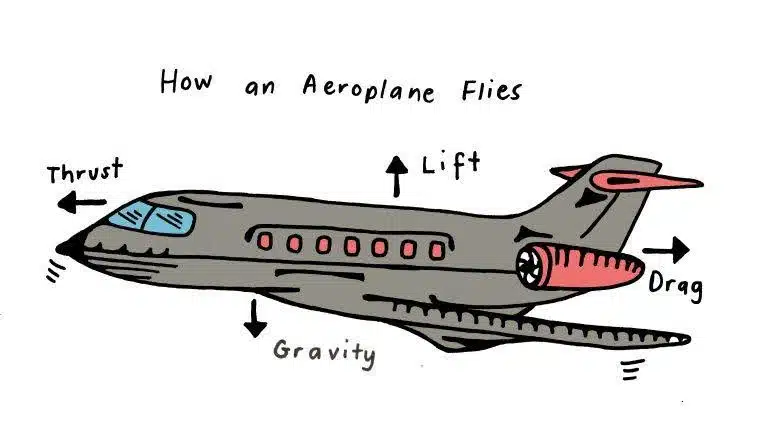
For the trickiest terms, we created silly associations or stories. One time, we linked rotor blade to a classroom fan, and then visited the helipad for the ultimate demonstration. These moments turned confusion into aha! moments, and technical language became less intimidating.
Another strategy was peer teaching: students who grasped a concept quickly would help their classmates, often translating or rephrasing terms in ways that made sense culturally and linguistically.
Celebrating small wins, like everyone successfully completing a listening lab with international accents, built confidence and camaraderie.
Managing cultural sensitivities and student shyness
Navigating cultural expectations was a learning curve for me, too.
In Oman, honour, respect, and formality are deeply ingrained, especially in military settings. As a female teacher, I dressed conservatively and kept interactions highly professional, which helped build trust and comfort over time. I made it a point to greet students using local customs, and to respect the flow of formal communication—titles, handshakes, and all.
Student shyness was most apparent in the early days. Many were nervous about speaking English, especially in front of peers. I addressed this by fostering a supportive environment where mistakes were seen as part of the learning process. Group activities and peer feedback sessions helped break the ice.
One memorable moment was when a usually reserved student volunteered for a simulated radio call, and the class erupted in supportive applause—a turning point for our group dynamic.
Sometimes, vulnerability worked both ways. I remember once mispronouncing a technical aeronautical term, only to have a student gently correct me. We all laughed, and it set a tone of mutual learning and humility that carried us through tough days.
Rewards and takeaways
During the semester, I think the biggest reward was the students themselves. They worked hard and did everything they could to achieve recognition. As we got to know each other, there was gentle teasing, nicknames, encouragement and support. Each and every one of us was driven to succeed, and as a group, totally united in a goal.
Outside of school, during the holidays, we also arranged meetings for those who lived relatively close by. Our family travelled to Masirah Island for a two-week break with one of the student’s family and were enchanted by all the shipwrecks we could explore.
The first time I dived out of the boat, four boys jumped in after me, convinced I was going to drown. Typically, Arabic women don’t swim or explore shipwrecks. I also had a broken foot in a cast at the time, so this was cause for hilarity!
We had the opportunity to travel on a dhow to a nearby island that had a pink castle on top. The dhow was rolled into the ocean in the age-old tradition, using logs; the back log was carried to the front of the boat as it rolled down the beach to the sea. The castle was built entirely of pink stone and was fascinating to explore. We could see Iran from the top. The only other colours were the gold of the sand and the big blue H for the helipad.
We also engaged in a few sunset picnics on the beach. It’s far too hot during the day to be at the beach, but come evening, some boys would go fishing to catch dinner, which was then baked in the sand. So delicious!
The greatest gift of teaching in the air force wasn’t just seeing test scores rise. It was watching young men grow in confidence, skill, and camaraderie. We became a tight-knit group, celebrating each other’s victories and supporting each other through tough days.
During the semester, my so-called “C” group — once considered underdogs — ranked among the top performers, a testament to their teamwork and determination.
These adventures, from baking fish in the sand to learning to climb coconut trees, deepened my family’s understanding of the local culture and created memories that will last a lifetime.
Teaching in the air force offered deep personal connections, professional pride, and unforgettable cultural experiences.
Contracts for teaching in the air force
The rates for teaching in the air force at that time were OMR700 ($1,800) a month, which was a reasonable rate, on par with what my husband was earning at the College of Technology.
However, there was no paid leave, so sick leave or family emergency leave would have been unpaid if I had ever needed it.
We were all employed through a personnel company. My contact hours of teaching were 8 am to 2 pm, and afternoons were spent teaching library and research skills, or in the sound lab, or prepping. If I didn’t have to be on site, I could do my prep at home.
Practical tips for TEFL teachers: Systems, checklists, and cultural adaptation
Teaching in the Air Force is rewarding but demands professionalism and preparedness. Here’s how to excel:
- Dress and conduct: Women should dress conservatively; men should wear formal attire and a tie. Always arrive prepared and punctual.
- Backup lessons: Keep 2–3 alternative lessons ready at all times for unexpected inspections or schedule changes.
- Record-keeping system: Detailed records are essential.
- Student progress log: Track attendance, assessment dates, test scores, and notes on individual strengths/areas for improvement.
- Lesson planner: Include objectives, materials used, activities, and outcomes for each lesson.
- Inspection tracker: Log inspection dates, feedback received, and follow-up actions.
Sample Record-Keeping Template:
| Date | Student Name | Attendance | Assessment/Activity | Score | Notes |
| 2025/11/16 | Khamis | Present | Flight Dynamics Quiz | 85% | Needs work on navigation terms |
Classroom preparedness checklist:
- Daily lesson plan printed and ready
- Backup activities prepared
- Attendance and assessment logs updated
- Materials (handouts, visuals, audio) organised
- Cultural norms reviewed (dress code, greetings, behaviour)
- Technical vocabulary/glossary ready
- Student progress notes up to date
Always take cultural considerations for Oman into account when in military settings. Respect local customs: greetings, dress, and gender interactions are important. Emphasise punctuality and professionalism and be mindful of hierarchy and formality in communications. Be aware that some students may be nervous or homesick; a supportive, understanding approach goes a long way.
Success in teaching in the air force relies on thorough record-keeping, lesson preparedness, and cultural sensitivity, backed by systems and checklists that keep both teacher and students on track.
Conclusion: Is military ESP teaching right for you?
I wholeheartedly recommend teaching with the armed forces to those who are disciplined, adaptable, and willing to learn.
The students are highly motivated and grow rapidly, but the environment is challenging and requires strong subject knowledge, quick thinking, and genuine compassion. Tailoring lessons, maintaining detailed records, and respecting cultural norms are key to thriving in this niche.
For aspiring TEFL teachers, Air Force ESP teaching is not only a career opportunity, it’s a chance to make a lasting impact and experience profound personal and professional growth.
If you’re searching for a rewarding, dynamic teaching setting and are prepared for the challenges, teaching English in the air force could be the perfect fit for your TEFL journey.
Read more about ESP:
Author Bio

Accreditation & Quality Assurance
The TEFL Academy was the world’s first TEFL course provider to receive official recognition from government regulated awarding bodies in both the USA and UK. This means when you graduate you’ll hold a globally recognised Level 3 (120hr) Certificate or Level 5 (168hr) Diploma, meaning you can find work anywhere and apply for jobs immediately.