What if your next adventure took you from braais and biltong to bibimbap and karaoke?
Imagine trading minibus taxis for high-speed trains, or swapping weekend safaris for hikes up South Korea’s misty mountains. Then, picture yourself in the classroom, where your South African accent and culture light up your students’ faces.
Can South Africans teach English in South Korea? For South Africans, teaching English in South Korea is a great opportunity to earn a good salary while experiencing a new culture and building a teaching career abroad.
Read more: Teach English In South Korea
Just ask Sonya, a South African TEFL teacher who spent three years teaching English in South Korea.

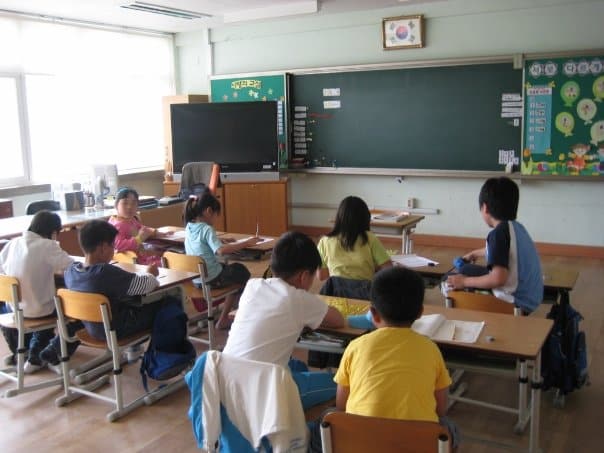
I worked in a public elementary school in South Korea, teaching English to children aged 7-13 through the EPIK programme.Unfortunately, the pandemic struck 10 months into my first contract, making every day a rollercoaster.
Navigating the pandemic alone abroad made me stronger both as a teacher and a person.
Read more: Discover The EPIK Programme: Your Gateway To Teaching English In South Korea
Why South Africans are choosing to teach English in South Korea
What motivated you to teach English abroad, and why South Korea specifically?
The EPIK programme in South Korea stood out from other government-supported programmes in Asia. It’s highly reputable, well-structured and incredibly supportive for first-time teachers.
The application process is clear, and once you have a contract, the benefits are excellent:
- Orientation
- School placement
- Professional development
- Ongoing support
South Korea is known for being a very safe place for women, which was crucial for me as a young woman moving abroad for the first time.
Read more: Solo Travel: Tips, Safety, And The Best Destinations
Honestly, my knowledge of Korean culture was limited. I hadn’t watched K-dramas or listened to K-pop, but was drawn to Korea’s high-tech, easy-to-navigate cities and the promise of strong support from colleagues and the expat community.
What was your first teaching job?
I arrived in Korea in 2019 feeling jet-lagged and completely overwhelmed. I didn’t know a word of Korean, but my recruiter and the co-ordinator from the Gyeongsangnam-do Office of Education guided me every step of the way.
Read more: What It’s Like Teaching English In South Korea Without Speaking Korean
In Korean, the suffix “do” means province. So Gyeongsangnam-do translates to Gyeongsangnam Province.
I was picked up from the airport, taken to a hotel near orientation, and had the chance to meet other teachers joining the programme. We were hired as Native English Teachers (NETs) to work alongside Korean co-teachers in public elementary schools.
EPIK placements are usually random and never guaranteed, but I applied directly through the Gyeongsangnam-do Office of Education, so at least I knew which province I’d be in. I was placed in Hamangun, where I fell in love with the countryside.
Preparation and getting hired
Did you face any specific challenges applying as a South African?
As a first-time traveller, my biggest challenge applying as a South African was navigating the visa process. The paperwork can feel overwhelming, and South African government offices move slowly, which adds anxiety while waiting for documents to be prepared and sent.
Thankfully, EPIK provides clear guidance, and my recruiter supported me every step of the way.
Read more: Teach English in South Korea with EPIK
The interview itself wasn’t difficult at all, as I had a practice run with my recruiter beforehand. No one commented on my accent or passport, since South Africa is one of the seven countries South Korea recruits from.
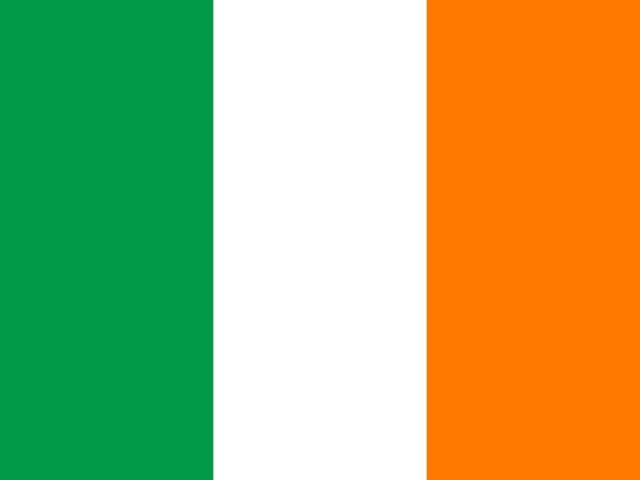
The other six countries are Canada, Ireland, the UK, the US, Australia and New Zealand.
Extra documentation, like letters from my primary and high schools stating that English was the language of instruction, was required. These can be hard to obtain years after graduation.
Also, two reference letters with handwritten signatures were required, which can be tricky to secure from previous teachers or lecturers.
Read more: What Documents Do I Need To Teach English Abroad?
How did you find this teaching role in South Korea?
I worked with a highly reputable recruiter specialising in placing teachers in South Korean public schools. He guided me through every step, from preparing my application to coaching me for the interview, ensuring I was fully prepared.
I did not interview with the school directly. My interview was with the Programme Co-ordinator at the Gyeongsangnam-do Office of Education.
I’d definitely recommend using a recruiter, especially for first-time applicants. Just make sure they are listed as an official EPIK recruiter on the EPIK website to avoid scams.
Read more: TEFL Job Interviews: Insider Tips For Success From A Recruiter
How long does the application and visa process usually take?
The EPIK application and visa process can be lengthy, mainly due to the South African government offices.
In 2019, I was able to notarise my documents at the Durban High Court with an attorney, but this changed after I left for South Korea.
Now, criminal clearances must be obtained through SAPS in Pretoria (via your local SAPS), and your qualifications must be verified by SAQA to confirm your degree comes from a registered South African university.
DIRCO then notarises both the criminal clearance and the verification letter. This process can take a long time.
Tips to avoid delays:
- Research requirements carefully.
- Stay organised.
- If using an agency, ensure it’s reputable with a good turnaround time.
SAPS = South African Police Services
SAQA = South African Qualifications Authority
DIRCO = Department of International Relations and Cooperation
Read more: When Is The Best Time To Apply For TEFL Jobs?
What it’s really like living and teaching in South Korea?
Can you describe your first teaching experience?
Teaching English in South Korea was my first ESL role. During my first week, I observed my co-teacher to understand lesson flow and get to know the students.
Read more: Co-Teaching In The EFL Classroom
The hardest part was teaching students with low English proficiency while learning to collaborate with my co-teacher effectively. Sometimes I led classes; sometimes I was a support.
It was easy to establish rapport with bright, curious students. I had to develop a flexible teaching style to adapt to several different co-teachers and respect their classroom leadership.
Support came from colleagues, the Gyeongsangnam-do Office of Education, and online teacher communities, helping navigate stressful moments like the annual open class assessment.
Read more: Things To Know About South Korean Classroom Culture
What kinds of schools or programmes have you worked in?
I applied directly through the GOE, the Gyeongsangnam-do Office of Education, which gave me some control over my placement since I at least knew which province I’d be placed in.
My co-ordinator from the Office of Education was passionate about the programme. Having been a foreign English teacher himself, he truly understood the experience.
I fell in love with the southern province. It’s beautiful, with a mix of rich cultural and historical experiences, trendy nightlife and great food.
Workload and expectations will vary depending on your school and co-teacher. Some expect you to plan and lead every lesson, while others prefer you mainly support the lessons they plan.
Generally, I taught speaking and listening lessons and spent about 22 hours in class per week, but you’re usually at school from morning until around 4:30 PM for additional admin and planning.
EPIK placements are well-known for being random, even if you indicate a preferred location on your application.
I’d highly recommend Gyeongsangnam-do for its mix of traditional and urban areas and active expat community.
Read more: The Lowdown On Teaching English In South Korea
How did students and co-teachers react to your accent or nationality?
I worked with multiple co-teachers for every grade and never had an issue with them understanding my accent. I just needed to slow down and simplify my language so they could follow.
In the classroom, the students were naturally curious about my accent. I only needed to adjust certain pronunciations so they could recognise vowel sounds. For example, saying “can’t” with an American-style a-sound /æ/ instead of the British-style a-sound /ɑː/ used in South Africa.
Over time, my sixth graders became comfortable with both UK and US pronunciations. In fact, they came to enjoy learning the different accents, which helped them recognise sounds more easily in listening activities.
These small adjustments helped me build rapport and made lessons smoother, while also allowing the students to engage with English in a fun, practical way.
Overall, both co-teachers and students were very receptive.
Read more: The Great Big Accent Debate: English Accents In The Classroom
Life in Korea as a South African
Any big culture shock moments when you arrived?
One of the biggest shocks was how fast-paced everything felt. From day one, there was no time to ease in.
You dive straight into orientation, planning, and teaching while still jetlagged.
Schools also run on strict hierarchies, and it’s normal for colleagues or students to ask very direct questions about age, marriage, or even health. At first, it felt unusual, but I learned it’s just part of how people connect.
On the flip side, I loved the efficiency — online systems work flawlessly, and ordering through Coupang (an online shopping app) is incredible. The food is generally great!
Social etiquette was something I picked up through nunchi — observation and reading the room. And things I thought would be difficult, like using a wet bathroom, turned out to be easier than expected.
Wet bathrooms are common in Korea. They have no divisions, meaning the shower, toilet and sink share the same space. When someone showers, the whole room becomes a “wet zone,” which makes cleaning a lot easier.
Read more: How To Deal With Culture Shock
As a South African, how did you find life in South Korea?
Settling in was easier than I expected.
By surrounding myself with the language, learning to read Hangul and listening to Korean daily, I picked up basics like “hello” and “thank you” by observing how Koreans used them, then listening and repeating.
By the end of my first year, I could read Hangul, which helped with street signs and KakaoMap, though I still relied on Papago for translations.
Hangul is the Korean system of writing. It consists of 14 consonants and 10 vowels, which are combined into syllabic blocks.
My co-teacher helped me set up a basic bank account, but I managed a remittance account and a credit card on my own. I used prepared documents, a sheet of questions in Korean and the bank’s English customer care line on the loudspeaker.
Read more: How to Learn the Local Language
The pandemic hit 10 months in and made life much harder. Long stretches between my apartment and school, combined with not seeing my family for three years due to travel restrictions, turned everyday expat challenges into a pressure cooker.
Small routines, neighbourhood connections, and the community I built over time became crucial anchors, helping Korea feel like home even in the toughest circumstances.
Read more: Top 3 Ways To Make Friends While Abroad
What was the South African community like?
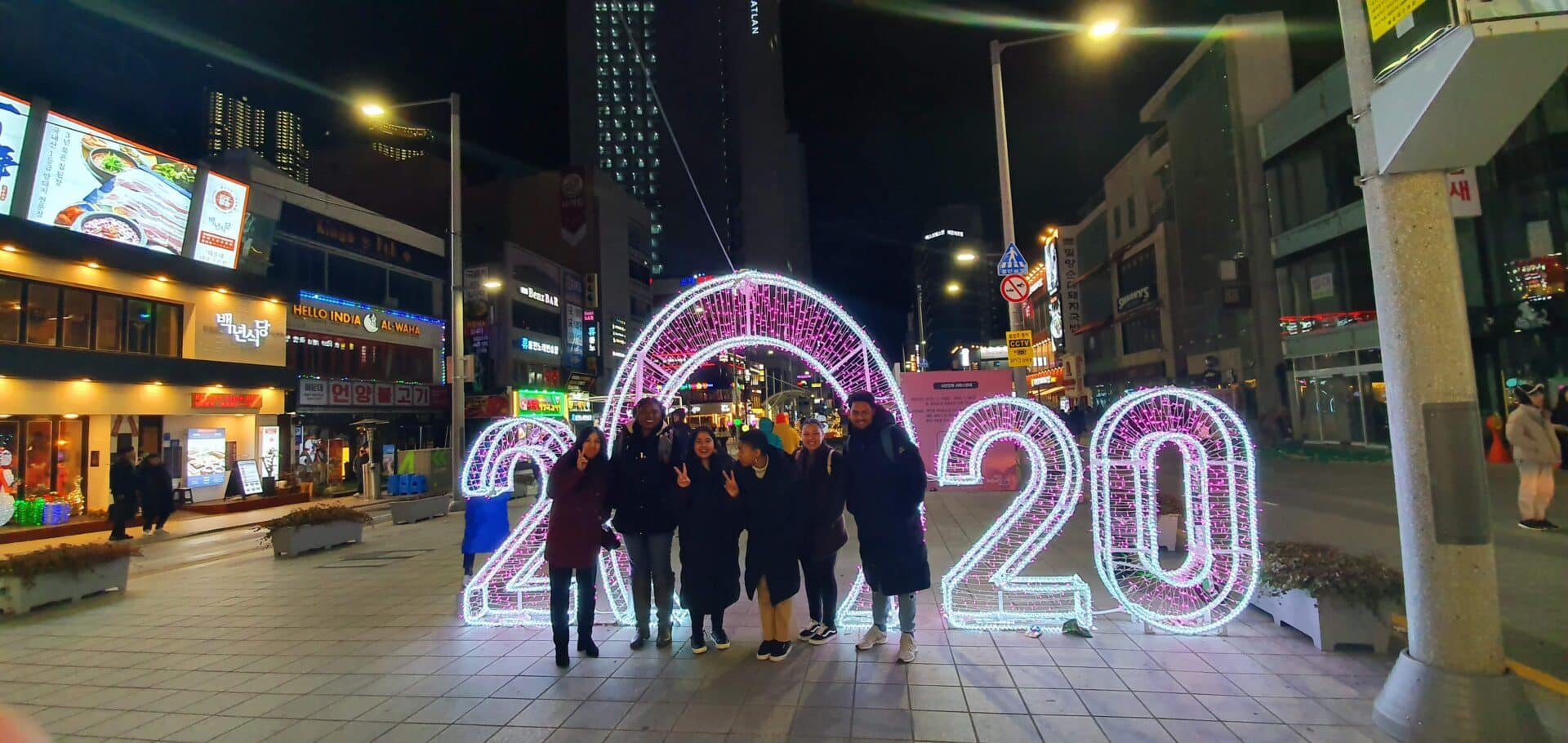
The South African community in Korea is truly remarkable, and in my province, there were quite a few of us. In almost every city I visited, I’d hear a familiar South African accent.
I’d definitely recommend joining the Facebook group “South Africans in South Korea”.
The community is incredibly supportive. South Africans will reach out if you’re struggling or need help, and once you’ve settled in, you can do the same for newcomers.
I made some of my best friends helping teachers who arrived a semester or two after me, just as others had helped me. I also made amazing friends from countries like the US, UK and Australia, as well as local Korean friends.
Don’t limit yourself to the South African community, but know that they’re there, incredibly helpful, and make you feel far less alone.
Read more: How To Find Your Community As A TEFL Teacher
Top tips for South Africans moving to South Korea
When it comes to packing:
- Prioritise clothing. If you’re larger than the average Korean size or have big feet, bring enough basics that fit.
- Don’t overpack toiletries. You’re in the beauty capital of the world, so one bar of soap and a bottle of lotion is plenty.
Read more: Long-term Travel Essentials For TEFL Teachers: The Ultimate Packing Guide For Teaching Abroad
I’d also focus more on saving for myself rather than sending so much money home to your family.
Have a plan for your time in Korea. Know what you want to get out of it and what comes next. Don’t just keep renewing your contract without thinking — you’ll end up with only one type of experience, which can limit your options later.
When job hunting, do your research, work with legitimate recruiters, and double-check everything.
Mindset matters. Avoid getting sucked into expat negativity. The experience has its challenges, but stay positive. Focus on why you came, and make the most of living and working somewhere new. Your attitude shapes everything.
Read more: 4 Ways To Work & Live In South Korea As A Foreigner
Are there any common misconceptions about living and teaching in South Korea?
Misconception #1: Teaching ESL is easy.
One common misconception is that teaching in South Korea is easy or “just a holiday job.”
The workload is manageable, but ESL teaching still requires planning, classroom management, and flexibility, especially when working with Korean co-teachers and different school cultures.
Misconception #2: Most expats live in major cities.
Another misconception is that expats automatically live in Seoul or major cities. Smaller provinces like Gyeongsangnam-do have so much to discover. It’s also more affordable, though not as convenient as big cities.
Misconception #3: Life abroad is always glamorous.
Lastly, social media can give an unrealistic picture of teaching abroad. Many posts highlight travel, nightlife, and perks, but they often skip the challenges like adjusting to cultural norms, handling isolation, or navigating bureaucracy.
My advice to anyone who feels hesitant is:
- Do thorough research.
- Connect with current or former teachers.
- Go in with realistic expectations.
The experience is incredibly rewarding, but it’s as much about adaptability and mindset as it is about the job itself.
Read more: Common TEFL Myths Busted!
💬 Quick-fire questions
● Favourite place in Korea?
Masan and Changwon. These cities near Haman-gun are where I met some of my closest friends during my time in Korea.
● Best food discovery?
Sugogi gukbap! This hearty, spicy beef stew served with rice was incredibly comforting, especially at the 24-hour restaurant near my apartment.
● A Korean word or phrase every new teacher should know?
Jeong (정) — a deeply emotional and social concept central to relationships in Korean culture. It doesn’t have a perfect English translation, but it can be described as a mix of affection, attachment, empathy, and shared history.
Understanding jeong can really help you navigate connections with colleagues, students, and the community.
Teaching English in South Korea as a South African is an adventure you won’t forget. The paperwork can be slow, and you’ll get hit with the occasional culture shock, but there’s also ramyeon, amazing students and a supportive expat community to catch you when you’re in freefall.
Think you’ve got what it takes? Get TEFL-certified and start your South Korean adventure today – kimchi included.
Author Bio
Our Guest Authors represent our TEFL Academy global community, sharing their real-world experiences from classrooms and institutions across the world. From diving into TEFL to chomping down on chow mein in China, to navigating your first-day nerves in Spain, our collective voice brings authentic stories, insights, and practical advice right from those living the adventure.
Read
Guest Author's story →
 United States
US
United States
US