 United States
US
United States
US









Beyond The Webcam: 5 Surprising Ways To Boost Engagement In Online English Lessons
Join a global community of over 200,000 TEFL teachers working throughout the world! Enrol me!


 February 3, 2026
Online lessons ask teachers to do something unnatural: teach in a space where you can’t rely on eye contact, body language, or the subtle cues you’d notice in a physical classroom. It’s no wonder students drift, hide behind their cameras, or slip into passive mode. But engagement isn’t about being more entertaining — it’s about using strategies that work with how the brain functions when learning online.
In this article, you’ll find five surprising, research-backed techniques that activate attention, reduce cognitive overload, and help students participate more — even the quiet ones. These aren’t the usual suggestions you’ve seen before. They’re counterintuitive, simple to use, and genuinely effective in today’s digital classroom.
Read more: What Skills Do You Need To Teach English Online Effectively?
Why engagement is challenging in online lessons
Online learning is super convenient but, naturally, virtual lessons come with some of its own challenges, like keeping learners motivated and genuinely engaged. It’s hard enough to do in a physical classroom! With online learning, your students are at home, comfortable, camera-shy, tired. There is noise, people walking around, internet connectivity issues, the list goes on! Aaaargh.
So when it comes to teaching online, TEFL teachers need strategies that are designed specifically for online classes. Let’s get into it: how to promote student engagement in online learning.
What strategies would you use to engage students in the online classroom?
Strategy 1 – Make intentional mistakes
Strategy:
- Make easy, visible mistakes in your instruction, descriptions, or written content, so your students can correct you.
- Don’t make mistakes in the target language or in areas they haven’t learnt yet.
- Focus on common mistakes your students make.
- If students miss the error, nudge them into spotting it by repeating the mistake.
Examples:
- For A1 students: You could show a picture of a dog with the word cat written on it.
- For B1 students: You could say That movie was so bored.
- For C1 students: You could say The economy is on thin water. This gets them to notice the idiom on thin ice.
Why it’s surprising:
As TEFL teachers, to purposely make mistakes with our own language feels counter-intuitive! Plus our students won’t expect their teachers to make mistakes – and they usually take great joy in calling us out!
Why it works:
There is a language learning theory called the noticing hypothesis that states that when students consciously notice something, it’s more memorable. In this case, the focus on the particular language item (eg, vocabulary, idiom, tense issue) helps keep the correct version top of mind.
Pitfalls:
Don’t make mistakes in the target language. It will only confuse your students.
Read more: Encouraging Mistakes In The EFL Classroom
Strategy 2 – Bite-sized learning AKA micro-learning
Strategy:
Split your lesson into 5-10-minute chunks. Each block should incorporate a different format, for example, active or passive, individual or collaborative.
Examples:
- Start the lesson with a 5-minute verbal brainstorm on the topic.
- Do a quick discovery exercise to introduce the target language.
- Role-play the target language in groups in a relevant context.
- At the end of the lesson, use another game to revise vocabulary for 5 minutes.
Why it’s surprising:
Splitting your lesson up into smaller, bite-sized parts may seem disruptive to keeping the lesson’s flow. It may even feel like you are simplifying the content too much. It’s essentially a PPP lesson format but breaking it down in this way helps you be mindful of changing up the formats and styles of learning.
Why it works:
Studies show that bite-sized learning can improve engagement in online learning by up to 50%! It reduces cognitive overload, keeps students mentally “on”. Let us not forget that our attention spans are heading towards nonexistence.
Pitfalls:
Don’t make segments too fast — students still need processing time.
Strategy 3 – Think time
Strategy:
- After asking questions, intentionally pause for longer than 3 seconds to get an answer.
- Before asking follow-up questions, pause for longer than 3 seconds as well.
- Don’t rush to help. Don’t re-ask the question or rephrase it.
- Wait until your students respond.
Examples:
- After asking a question, count to 3.
- If students still don’t speak, add 2 more seconds of wait time.
- If students still dont speak say, “Take 5 seconds to think and write down your answer.”
- If a student gives an incomplete answer, then pause for 3 more seconds. This spurs them on to self-correct.
Why it’s surprising:
Newer teachers often see silence as a bad sign. After all, we want student’s to speak, right? We want to assist and guide students as much as possible, making it hard to take a step back and let our students breathe – which is important in learning. Plus, our awareness of time constraints to reach the lessons objective can sometimes make us feel a sense of urgency, which may, inadvertently, impede students learning.
Why it works:
Research shows that when teachers adopt the “Wait time” learning methodology, student engagement improves!
Results are impressive! Students:
- talk more and for longer,
- ask more questions, and
- discuss things more.
It increases critical thinking and confidence in learners of all ages.
Pitfalls:
- Pausing for longer than 10 seconds is too long. Sometimes we can give our students all the time in the world to think but they still won’t give you an answer – because they don’t know it!
Read more: How To Ask Questions In The EFL Classroom

Strategy 4 – Pattern interruptions
Strategy:
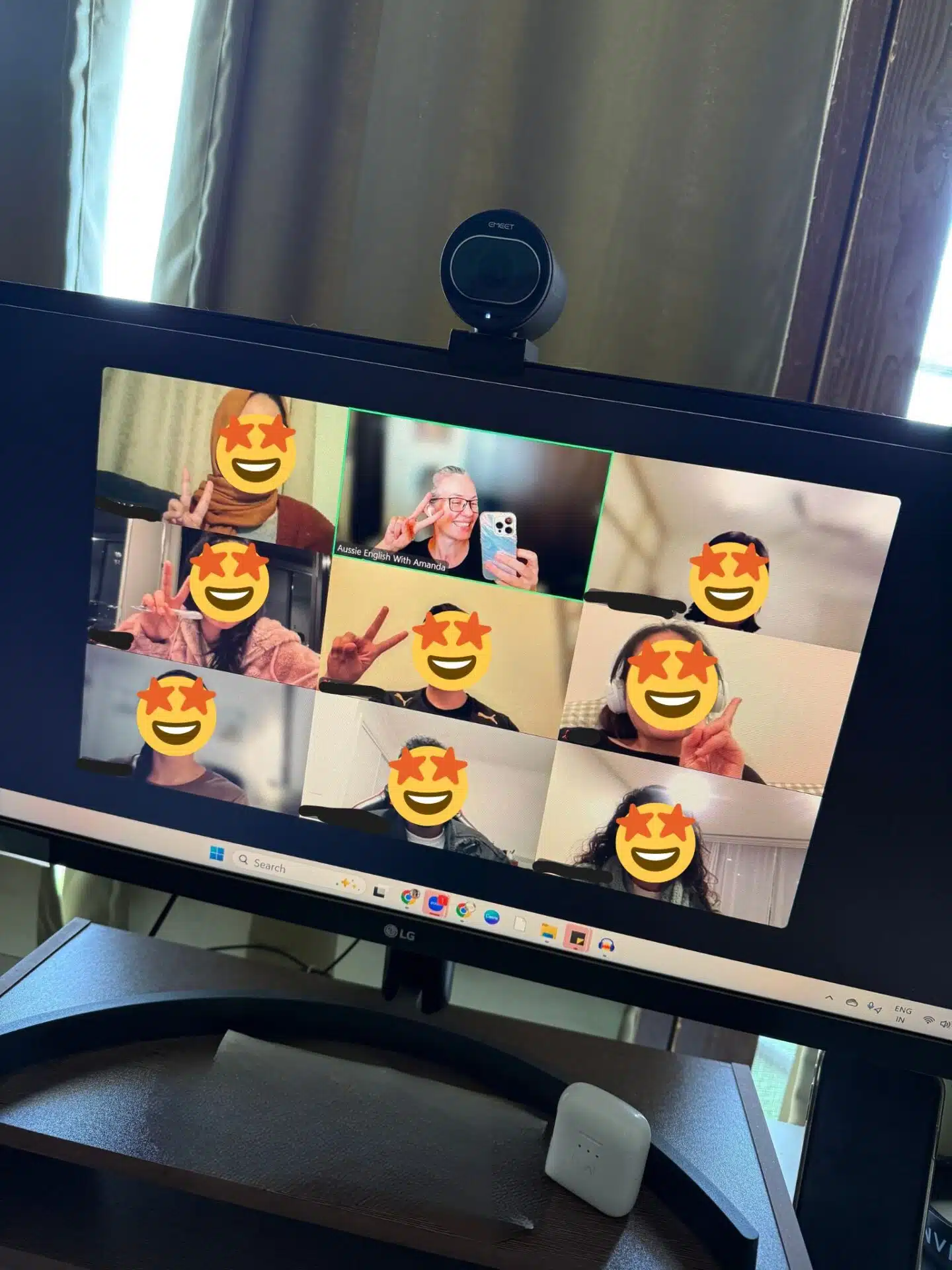
- Break your lesson routine with short surprises, like: memes, GIFS, activities, games, songs or videos that your students are likely to have never seen.
- Be sure to keep the surprise content relevant to your students – and to your lesson, if possible.
- Keep it short, no longer than 1 minute.
Examples:
- After a written exercise, play a song related to the target language or the topic of the lesson.
- Introduce realia but only introduce them mid-way through the lesson.
- For Young Learners, have a simultaneous dance break after a reading activity.
Why it’s surprising:
Breaking routine, with short bursts of unexpected content that is fun works really well in resetting students’ attention and getting them to engage organically.
Why it works:
The brain responds well to novel experiences. When students see something they haven’t seen before, that is fun, it refreshes attention and ignites curiosity. These activities are also known as brain breaks because they give the students a moment to break away from their concentration.
Pitfalls:
- If done too often, the novelty wears off.
- Younger students may get too distracted to continue with the lesson.
True story: In one of my online lessons with a young student, I showed her my cat and for the rest of the lesson she just wanted to see the cat!
Strategy 5 – Give students autonomy
Strategy:
Give students guided choices within the lesson – to an extent:
- Let them choose the game they want to play, with 2 suggestions or options.
- Ask them what activity they would like to do: a gap-fill, matching exercise, dialogue, reading, writing an email, etc.
Why it’s surprising:
Giving students some freedom to make decisions can make teachers feel a bit uneasy, but is very motivational for students!
Why it works:
Having agency in one’s learning, or in any aspect of one’s life, helps with creating accountability, being innately invested and leads to more engagement!
Examples:
- Ask adult students, “Discussion or writing first?”
- In a group class, ask your students to vote on the speaking/dialogue topic.
- For corporate students, ask them, “What activity do you want to do? Writing an e-mail or editing an email?”
Pitfalls:
- Asking students open-ended questions like “What activity do you want to do?”, without guided suggestions can lead to students choosing activities that don’t align with the lesson.
- Giving too many choices can overwhelm students.
The great thing about teaching is that the classroom is your lab for you to experiment in! Start off with one strategy and see how it fares. You can adjust the strategies yourself to give it your own spin. Make notes on any changes or possible improvements so that they’ll work better the next time you use them.
At the end of the day, your students will remember you for how you made them feel, which will reflect in their eagerness to engage. So have fun, experiment and level up your teaching game, one strategy at a time.
Read more: How Teaching English Online Can Help You Travel The World
Author Bio

Accreditation & Quality Assurance
The TEFL Academy was the world’s first TEFL course provider to receive official recognition from government regulated awarding bodies in both the USA and UK. This means when you graduate you’ll hold a globally recognised Level 3 (120hr) Certificate or Level 5 (168hr) Diploma, meaning you can find work anywhere and apply for jobs immediately.