 United States
US
United States
US





How Much Should You Save Before Moving To South Korea To Teach English in 2026?



Last Updated
October 17, 2026


Table of Contents
- Introduction
- Start-up costs
- First month’s expenses
- What jobs in South Korea include
- Ways to keep costs down
- First paycheque
- Verdict
Whether it’s the EPIK programme, SMOE or a hagwon position, teaching English in South Korea might be on your radar right now. Which is probably why you’re here!
But all good things come with a price tag, don’t they? Moving to South Korea can be exhilarating – but it can also be seriously expensive. So, how much money do you really need in the bank before you land without panicking?
TTA alum and experienced EFL teacher Yasmien taught English in an elementary school in Gyeongnam in South Korea. Who better to talk to us than someone who has had to do the exact same thing herself?!
Read more: Is South Korea Safe For TEFL Teachers?
Moving to South Korea can be quite pricey! Before getting your first ESL teacher salary, you may need to cough up quite a bit of money. That being said, you’ll make up for all the costs incurred and be able to save once you start getting your official ESL teacher salary!
Read more: 4 Ways To Live And Work In South Korea
Even if it means borrowing money from the bank or family or dipping into your savings or retirement fund – as many TEFL teachers who now teach English in South Korea have done – the initial investment is worth it. You’ll be able to make that money back and save – if that’s what you want to do.
Whether you’re on a tight budget or want long-term stability, this guide offers financial advice for teachers just starting out teaching abroad in South Korea.
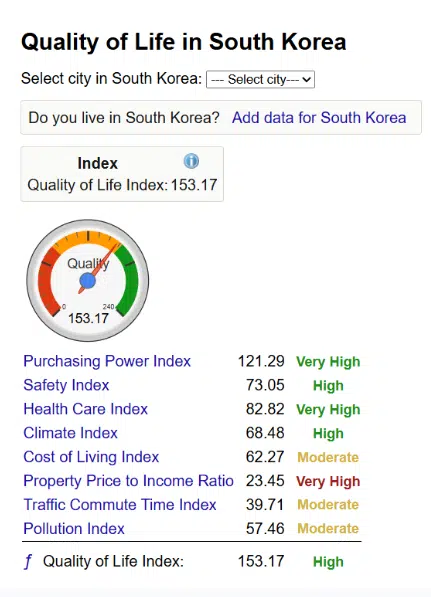
I would be remiss if I didn’t mention that the cost of living in South Korea, along with the rest of the world, has increased in recent years. As of 2026, South Korea ranks 33rd out of 121 countries on the global Cost of Living Index — making it one of the more expensive countries to live in across Asia.
But wait! Don’t let this deter you. Many teachers look to South Korea not just for the experience, but because it’s one of the best countries to teach English and save money.
Start-up costs: What you’ll need to pay before or upon arrival
Costs vary depending on what country you’re from. You can expect to pay anywhere from $1,100 to $2,300, depending on the options you choose, such as your chosen TEFL course, expediting the apostilling of your documents, using a courier service, and the flights from your home country – to name a few expenses.
*Bear in mind that certain costs mentioned below are subject to your home country.
TEFL certificate: $120-$540
- A Combined TEFL Course, Level 5 TEFL Diploma (168hrs) (from The TEFL Academy, of course!) is recommended as it has a 10-hour in-classroom practicum, which is perfect for getting teacher practice!
- $270- $530
- An Online Level 5 TEFL Diploma (168 hours) is best for securing formal work like contracted positions, including government teaching programmes.
- $214 – $360
- An Online Level 3 TEFL Certificate (120 hours) is best for volunteering, teaching English online and other casual TEFL work.
- $120 – $200
Visa documents: $80 – $60
- E2 Visa application: $40 – $200
Criminal background check: $0-$120
Apostilling of documents (criminal background check, copy of your Bachelor’s degree, an official copy of your degree transcript): $0 – $120 (excluding expediting; $36-$120 including expediting)
Courier/postage for sending documents to a South Korean employer/recruiter: $30 -$160
Passport photos: $5 -$15
Flights: Variable
Minimum bank balance: $650 (ballpark figure)
-
- Bring as much money as you can – it’s better to be over-prepared for any unexpected costs.
- Have cash with you as you’ll need to buy a bus card, food, in case your bank card doesn’t work at ATMs
SIM card at the airport: $5-$54
-
- Buy a 1+ month SIM contract from the airport.
- If you don’t, you won’t be able to buy a SIM card elsewhere until you have your Alien Registration Card (ARC), which could take about a month to get. Additionally, without a SIM card and phone number, you won’t be able to open a bank account.
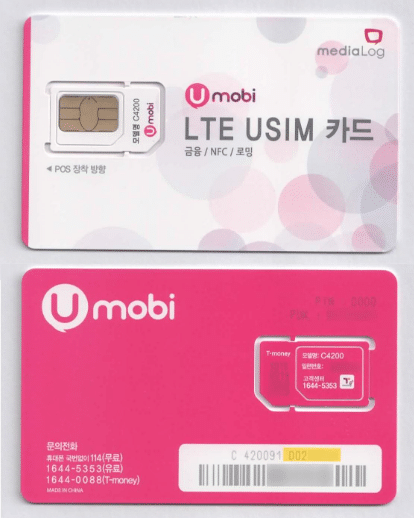
Source: 데시청두, CC0, via Wikimedia Commons
- Travel insurance: $40 -$80
- Before your NHI (National Health Insurance) is activated, having travel insurance will cover any medical or travel emergencies.
First month’s expenses before your first paycheck
During the first month of your arrival in South Korea, you can expect to spend between $190 (₩250,000) and $325 (₩450,000) before you receive your teacher’s salary. This is naturally dependent on how much you choose to spend on food, going out, exploring and so on.
But here are the main costs you can expect:
- ARC (Alien Registration Card) card fee: $25 (₩35,000) – in cash
- Health check at local hospital: $40 – $90 (₩60,000 – ₩120,000) – in cash
- Transport T-Money Card: $2 (₩3,000)
- Single fare bus trip: $1 (₩1,150)
- Groceries: $100 – $300 (₩140,000 – ₩400,000)

What’s often included in TEFL jobs in South Korea (that can reduce costs)?
Besides your salary, employers offer quite a few financial perks, which make teaching English in South Korea very attractive.
- Free/Subsidised housing: Government teaching programmes and private academies (hagwons) mostly offer free furnished housing or, alternatively, a housing allowance.
- Entrance allowance: $1,300 (₩1,800,000)
- You receive this once-off payment after your first month of working, to cover your flight cost to Korea.
- Contract completion bonus: A bonus equivalent to a one-month salary is offered at the end of your 1-year contract.
- Compulsory medical insurance:
- In most cases, 50% of your NHI premium is paid by your employer, with the other half coming off your paycheque.
- National Pension Plan: Teachers from countries with a pension treaty (like Ireland, the USA, Canada, and Australia) get half their premium paid by their employer to Korea’s National Pension System – which will be refunded on departure. Check your country’s eligibility here.
EPIK/SMOE/GEPIK/GOE – Government Programmes
- Settlement allowance: $220 (₩300,000)
- This is a once- off payment which you receive after your first month of working.
- Bonus pay for rural placements: An incentive of $70 – $150 (₩100,000 – ₩200,000) per month is offered to TEFL teachers who are placed in rural locations.
- Contract completion bonus: At the end of your 1-year contract, you’ll be given one month’s salary, which could be anywhere between $1,400 to $1,940 (₩2M – ₩2.7M) depending on what your current salary is.
- Contract renewal bonus: Renewing your contract for a second year will give you a new settlement allowance of $500 (₩700,000) + extra paid vacation days!
Read more: Discover The EPIK Programme
Where do ESL teachers earn the highest salaries in South Korea?
The highest-paid teachers in South Korea have a minimum of 2+ years of teaching experience along with a valid teaching license, and work at international schools and universities.
Read more: What It’s Like Teaching In South Korea: Rural vs Urban Living Compared

Ways to keep costs down
Did somebody say money-saving tips for teachers? Many TEFL teachers fall into the trap of splurging when they receive their paycheck. Fortunately, there are plenty of simple ways to save money without sacrificing your experience.
If you’re disciplined and set on saving money, you can bank enough to go on holiday to neighbouring countries, pay off any debt accrued in your home country, or save it for a rainy day.
Here is some financial advice for teachers who want to save money while living and teaching in South Korea:
- Avoid the temptation of living in Seoul – the cost of living is higher in this metro city.
- Use public transport.
- Eat at home. If you drink alcohol, buy it from convenience stores and enjoy it at home, instead of buying it in restaurants.
- One of the best ways for teachers to make extra money is to teach extra lessons in person or online.
- Find cheap entertainment – hiking, exploring your city on foot or taking a trip to a different city by bus has saved so many teachers money!
- Don’t splurge on unnecessary shopping items – the temptation to buy frivolous things is real.
- Limit the amount of electricity you use for heating during winter – electricity bills usually double in winter. By dressing warmly, you can mitigate a high utility bill!
When will I get my first paycheck?
An ESL teacher’s salary is usually paid after one full working month. Flight re-imbursement and settlement allowances will be included as well.
You’ll need to have your bank account set up before then, as your employer will transfer your salary into your South Korean account. You’ll need your passport, Alien Registration card (ARC) and a South Korean phone number.
Verdict
Moving to South Korea to teach English can certainly feel expensive to begin with; however, with the right preparation in place, it’s totally manageable.
Most ESL teachers should aim to save about $2,000-$3,000 to cover their initial start-up costs, their first month’s expenses, and any unexpected fees that crop up.
Once you’re all settled and receiving your TEFL salary, you’ll discover that Korea is not just an incredible place to live and work, but also one of the best countries in Asia to save money.
If you’re looking to make the transition smoother and maximise your savings, check out some of our other TEFL Guide posts below. With the right support and a pinch of planning, your dream of teaching abroad can become a reality – no breaking the bank necessary.
- What It’s Like Teaching English In Korea Without Speaking Korean
- Things To Know About South Korean Classroom Culture
- The Reality Of Teaching English In South Korea: What Nobody Tells You
Author Bio
Table of Contents
- Introduction
- Start-up costs
- First month’s expenses
- What jobs in South Korea include
- Ways to keep costs down
- First paycheque
- Verdict
Whether it’s the EPIK programme, SMOE or a hagwon position, teaching English in South Korea might be on your radar right now. Which is probably why you’re here!
But all good things come with a price tag, don’t they? Moving to South Korea can be exhilarating – but it can also be seriously expensive. So, how much money do you really need in the bank before you land without panicking?
TTA alum and experienced EFL teacher Yasmien taught English in an elementary school in Gyeongnam in South Korea. Who better to talk to us than someone who has had to do the exact same thing herself?!
Read more: Is South Korea Safe For TEFL Teachers?
Moving to South Korea can be quite pricey! Before getting your first ESL teacher salary, you may need to cough up quite a bit of money. That being said, you’ll make up for all the costs incurred and be able to save once you start getting your official ESL teacher salary!
Read more: 4 Ways To Live And Work In South Korea
Even if it means borrowing money from the bank or family or dipping into your savings or retirement fund – as many TEFL teachers who now teach English in South Korea have done – the initial investment is worth it. You’ll be able to make that money back and save – if that’s what you want to do.
Whether you’re on a tight budget or want long-term stability, this guide offers financial advice for teachers just starting out teaching abroad in South Korea.
I would be remiss if I didn’t mention that the cost of living in South Korea, along with the rest of the world, has increased in recent years. As of 2026, South Korea ranks 33rd out of 121 countries on the global Cost of Living Index — making it one of the more expensive countries to live in across Asia.
But wait! Don’t let this deter you. Many teachers look to South Korea not just for the experience, but because it’s one of the best countries to teach English and save money.
Start-up costs: What you’ll need to pay before or upon arrival
Costs vary depending on what country you’re from. You can expect to pay anywhere from $1,100 to $2,300, depending on the options you choose, such as your chosen TEFL course, expediting the apostilling of your documents, using a courier service, and the flights from your home country – to name a few expenses.
*Bear in mind that certain costs mentioned below are subject to your home country.
TEFL certificate: $120-$540
- A Combined TEFL Course, Level 5 TEFL Diploma (168hrs) (from The TEFL Academy, of course!) is recommended as it has a 10-hour in-classroom practicum, which is perfect for getting teacher practice!
- $270- $530
- An Online Level 5 TEFL Diploma (168 hours) is best for securing formal work like contracted positions, including government teaching programmes.
- $214 – $360
- An Online Level 3 TEFL Certificate (120 hours) is best for volunteering, teaching English online and other casual TEFL work.
- $120 – $200
Visa documents: $80 – $60
- E2 Visa application: $40 – $200
Criminal background check: $0-$120
Apostilling of documents (criminal background check, copy of your Bachelor’s degree, an official copy of your degree transcript): $0 – $120 (excluding expediting; $36-$120 including expediting)
Courier/postage for sending documents to a South Korean employer/recruiter: $30 -$160
Passport photos: $5 -$15
Flights: Variable
Minimum bank balance: $650 (ballpark figure)
-
- Bring as much money as you can – it’s better to be over-prepared for any unexpected costs.
- Have cash with you as you’ll need to buy a bus card, food, in case your bank card doesn’t work at ATMs
SIM card at the airport: $5-$54
-
- Buy a 1+ month SIM contract from the airport.
- If you don’t, you won’t be able to buy a SIM card elsewhere until you have your Alien Registration Card (ARC), which could take about a month to get. Additionally, without a SIM card and phone number, you won’t be able to open a bank account.
Source: 데시청두, CC0, via Wikimedia Commons
- Travel insurance: $40 -$80
- Before your NHI (National Health Insurance) is activated, having travel insurance will cover any medical or travel emergencies.
First month’s expenses before your first paycheck
During the first month of your arrival in South Korea, you can expect to spend between $190 (₩250,000) and $325 (₩450,000) before you receive your teacher’s salary. This is naturally dependent on how much you choose to spend on food, going out, exploring and so on.
But here are the main costs you can expect:
- ARC (Alien Registration Card) card fee: $25 (₩35,000) – in cash
- Health check at local hospital: $40 – $90 (₩60,000 – ₩120,000) – in cash
- Transport T-Money Card: $2 (₩3,000)
- Single fare bus trip: $1 (₩1,150)
- Groceries: $100 – $300 (₩140,000 – ₩400,000)
What’s often included in TEFL jobs in South Korea (that can reduce costs)?
Besides your salary, employers offer quite a few financial perks, which make teaching English in South Korea very attractive.
- Free/Subsidised housing: Government teaching programmes and private academies (hagwons) mostly offer free furnished housing or, alternatively, a housing allowance.
- Entrance allowance: $1,300 (₩1,800,000)
- You receive this once-off payment after your first month of working, to cover your flight cost to Korea.
- Contract completion bonus: A bonus equivalent to a one-month salary is offered at the end of your 1-year contract.
- Compulsory medical insurance:
- In most cases, 50% of your NHI premium is paid by your employer, with the other half coming off your paycheque.
- National Pension Plan: Teachers from countries with a pension treaty (like Ireland, the USA, Canada, and Australia) get half their premium paid by their employer to Korea’s National Pension System – which will be refunded on departure. Check your country’s eligibility here.
EPIK/SMOE/GEPIK/GOE – Government Programmes
- Settlement allowance: $220 (₩300,000)
- This is a once- off payment which you receive after your first month of working.
- Bonus pay for rural placements: An incentive of $70 – $150 (₩100,000 – ₩200,000) per month is offered to TEFL teachers who are placed in rural locations.
- Contract completion bonus: At the end of your 1-year contract, you’ll be given one month’s salary, which could be anywhere between $1,400 to $1,940 (₩2M – ₩2.7M) depending on what your current salary is.
- Contract renewal bonus: Renewing your contract for a second year will give you a new settlement allowance of $500 (₩700,000) + extra paid vacation days!
Read more: Discover The EPIK Programme
Where do ESL teachers earn the highest salaries in South Korea?
The highest-paid teachers in South Korea have a minimum of 2+ years of teaching experience along with a valid teaching license, and work at international schools and universities.
Read more: What It’s Like Teaching In South Korea: Rural vs Urban Living Compared
Ways to keep costs down
Did somebody say money-saving tips for teachers? Many TEFL teachers fall into the trap of splurging when they receive their paycheck. Fortunately, there are plenty of simple ways to save money without sacrificing your experience.
If you’re disciplined and set on saving money, you can bank enough to go on holiday to neighbouring countries, pay off any debt accrued in your home country, or save it for a rainy day.
Here is some financial advice for teachers who want to save money while living and teaching in South Korea:
- Avoid the temptation of living in Seoul – the cost of living is higher in this metro city.
- Use public transport.
- Eat at home. If you drink alcohol, buy it from convenience stores and enjoy it at home, instead of buying it in restaurants.
- One of the best ways for teachers to make extra money is to teach extra lessons in person or online.
- Find cheap entertainment – hiking, exploring your city on foot or taking a trip to a different city by bus has saved so many teachers money!
- Don’t splurge on unnecessary shopping items – the temptation to buy frivolous things is real.
- Limit the amount of electricity you use for heating during winter – electricity bills usually double in winter. By dressing warmly, you can mitigate a high utility bill!
When will I get my first paycheck?
An ESL teacher’s salary is usually paid after one full working month. Flight re-imbursement and settlement allowances will be included as well.
You’ll need to have your bank account set up before then, as your employer will transfer your salary into your South Korean account. You’ll need your passport, Alien Registration card (ARC) and a South Korean phone number.
Verdict
Moving to South Korea to teach English can certainly feel expensive to begin with; however, with the right preparation in place, it’s totally manageable.
Most ESL teachers should aim to save about $2,000-$3,000 to cover their initial start-up costs, their first month’s expenses, and any unexpected fees that crop up.
Once you’re all settled and receiving your TEFL salary, you’ll discover that Korea is not just an incredible place to live and work, but also one of the best countries in Asia to save money.
If you’re looking to make the transition smoother and maximise your savings, check out some of our other TEFL Guide posts below. With the right support and a pinch of planning, your dream of teaching abroad can become a reality – no breaking the bank necessary.
- What It’s Like Teaching English In Korea Without Speaking Korean
- Things To Know About South Korean Classroom Culture
- The Reality Of Teaching English In South Korea: What Nobody Tells You
Author Bio