 United States
US
United States
US










What Benefits Do TEFL Jobs In Japan Really Offer? Data From 200+ Listings


Last Updated
March 30, 2026


Table of Contents
- Introduction
- Do most jobs offer other benefits?
- 🧑🏫 1. Training & development
- ✈️ 2. Relocation & logistics
- 🏮 3. Community & perks
- 🛂 4. Visa-related benefits
- Rare benefits
TEFL jobs in Japan almost always include extra benefits, with 99.3% of 200 surveyed listings offering perks beyond base salary and housing. Roughly 24.6% of employers provide professional development, including paid training, whilst 17.2% offer relocation support such as commuting reimbursements up to ¥50,000. Other popular benefits include visa sponsorship assistance and Japanese language tuition subsidies. Check about specific commuting stipends and visa renewal support during your interview to maximise the value of your contract.
Salaries, housing and contract length are a few things we need to consider when looking for a teaching job abroad. But what about other benefits?
We’ve looked at TEFL salaries in Japan and considered whether housing or an allowance is included in a teaching contract in Japan. Now let’s talk about the benefits of TEFL contracts in Japan – based on our data, of course.
Salary and housing often dominate job discussions, but many TEFL positions in Japan include a variety of other benefits that improve quality of life, ease your transition into life in Japan, and support your professional growth. Based on our data from over 200 job listings, here’s what to expect.
Do most TEFL jobs in Japan offer other benefits?
Good news! Yes – they almost all do.
99.3% of jobs included some form of additional benefit beyond base pay, housing, or paid leave.
These benefits include:
- Training and professional development
- Relocation and logistics support
- Community and cultural perks
- Visa-related benefits
Winning!

🧑🏫 1. Training & professional development (24.6% of listings)
Professional growth is a major focus for many employers in Japan. This is especially true for new or inexperienced teachers.
Continuous Professional Development is often an added extra in TEFL positions around the world, so it’s refreshing to see that Japanese TEFL employers are taking it seriously as a way to upskill their teachers.
Read more: Your First Day In The EFL Classroom. No Experience? No Problem
Here are the most common perks in this category:
- Comprehensive training at the start of the job
- Ongoing workshops and in-class observations
- Feedback and mentorship from Directors of Studies or senior staff
- Career advancement opportunities
- Support for curriculum development and lesson planning
These are especially prevalent in larger private schools and international pre-schools.
For example, one job opportunity offers: “Two weeks of paid training (Teachers will be observing their trainer as well as teaching up to 6 days in a real classroom setting in Nagoya or Osaka)”.
TTA Teacher Robyn taught at NOVA, an eikaiwa. She describes her initial training:
“Training was a whirlwind. There were about five of us in a group. The days were long and packed with information. The first day was an overview of textbooks and methodology, and by the second day, we had to conduct our first demo lesson. That was nerve-wracking. You’re essentially thrown into teaching while the trainer watches you closely. My trainer was supportive and stepped in when needed.”
Read more: Inside The Eikaiwa: Revealing The Unfiltered Truth
This is a great way for new teachers to get to know their teaching set-up, as well as get some on-the-job training – while getting paid!
✈️ 2. Relocation & logistics support (17.2% of listings)
Moving to Japan comes with a logistical learning curve, and many employers help ease the transition. This is a bonus in any foreign country, but particularly in a country where you don’t speak the language, and the culture, way of life, and business practices are very different from your own.
From our research, Japanese employers offer:
- help opening a Japanese bank account,
- transportation stipends or commuting reimbursement,
- travel costs covered (sometimes up to a fixed amount), and
- onboarding support for daily life in Japan.
These are more common with entry-level or rural roles, where support is a recruiting advantage.
Some job postings require the TEFL teacher to already be resident in Japan. In these cases, the relocation help is not offered because it’s not relevant.

🏮 3. Community & cultural perks (6% of listings)
Some schools foster a strong sense of community through:
- Seasonal events (cherry blossom parties, holiday gatherings)
- School festivals, sports days, or arts & crafts activities
- Teacher participation in field trips
These perks may not be financial, but they deeply enrich the teaching experience.
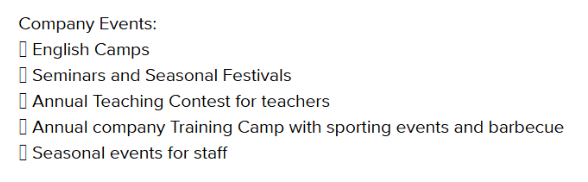
An international kindergarten hosts these events for teachers:
🛂 4. Visa-related benefits (11.8% of listings)
Only a few jobs explicitly mention visa renewal support or sponsorship help, though it’s likely more common than stated.
Tip: It’s worth asking during the application process, even if not listed.
Occasional extras
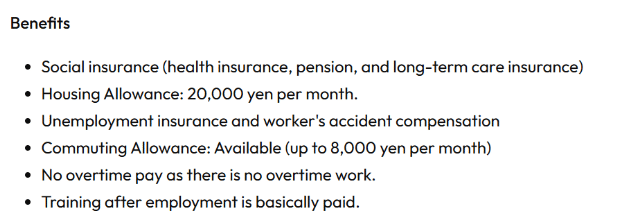
Here is an example of a job (teaching in a kindergarten) which offers a fair few extra benefits:
Commuting costs
Commuting costs might seem like an unusual bonus, but bear in mind that some cities in Japan are huge, which means travelling to and from school can be an expense. In more rural areas, teachers are sometimes required to drive a fair distance to work, in which case their petrol costs are covered. Usually, the teachers are given a car for the duration of their contract as well!
One job advert provides an apartment and also a car and mobile phone for use during the teaching contract, while another reimburses teachers ¥50,000 a month for commuting costs.
Rare or “surprise” benefits

- Japanese language instruction
“We encourage teachers to have a better understanding of the Japanese language and culture by subsidising partial tuition fees for Japanese language school.”
- Further education
“Through our partnership with Temple University Japan, you will also have an exclusive discount for any courses you wish to pursue.”
- Tech
“Devices such as PCs and mobile phones, office equipment, etc., will be provided as needed.”
- Social
“Free participation in dinner parties (generally held once every three months).”
- Health & beauty
“Discounts available for beauty salons of affiliated companies.”
Freeflow drink & snack bar
Free lunch on national holidays
- Personal
Marriage Gift Money
Milestone celebrations
- Extra work
“We also have a bus attendant position available for those looking for extra hours.”
Beyond salary, TEFL jobs in Japan often come with valuable “hidden” perks — from career development to cultural immersion. While not all jobs offer the same set of extras, nearly every listing includes something that can improve your experience abroad.
Remember: TEFL employers in Japan (and in any country, for that matter) want to retain their teachers. Finding qualified teachers and going through the job hiring process takes time and money. And then there are all the resources used up to ensure the teacher arrives safely in that country (if coming from abroad) and settles into their new life effortlessly.
Your employers want to be as helpful as possible, because they don’t want you to pack your bags and leave a few months into your contract. As well as being a waste of their time, money and resources, a change of teacher part-way through the academic year can be unsettling for students.
Author Bio
Table of Contents
- Introduction
- Do most jobs offer other benefits?
- 🧑🏫 1. Training & development
- ✈️ 2. Relocation & logistics
- 🏮 3. Community & perks
- 🛂 4. Visa-related benefits
- Rare benefits
TEFL jobs in Japan almost always include extra benefits, with 99.3% of 200 surveyed listings offering perks beyond base salary and housing. Roughly 24.6% of employers provide professional development, including paid training, whilst 17.2% offer relocation support such as commuting reimbursements up to ¥50,000. Other popular benefits include visa sponsorship assistance and Japanese language tuition subsidies. Check about specific commuting stipends and visa renewal support during your interview to maximise the value of your contract.
Salaries, housing and contract length are a few things we need to consider when looking for a teaching job abroad. But what about other benefits?
We’ve looked at TEFL salaries in Japan and considered whether housing or an allowance is included in a teaching contract in Japan. Now let’s talk about the benefits of TEFL contracts in Japan – based on our data, of course.
Salary and housing often dominate job discussions, but many TEFL positions in Japan include a variety of other benefits that improve quality of life, ease your transition into life in Japan, and support your professional growth. Based on our data from over 200 job listings, here’s what to expect.
Do most TEFL jobs in Japan offer other benefits?
Good news! Yes – they almost all do.
99.3% of jobs included some form of additional benefit beyond base pay, housing, or paid leave.
These benefits include:
- Training and professional development
- Relocation and logistics support
- Community and cultural perks
- Visa-related benefits
Winning!
🧑🏫 1. Training & professional development (24.6% of listings)
Professional growth is a major focus for many employers in Japan. This is especially true for new or inexperienced teachers.
Continuous Professional Development is often an added extra in TEFL positions around the world, so it’s refreshing to see that Japanese TEFL employers are taking it seriously as a way to upskill their teachers.
Read more: Your First Day In The EFL Classroom. No Experience? No Problem
Here are the most common perks in this category:
- Comprehensive training at the start of the job
- Ongoing workshops and in-class observations
- Feedback and mentorship from Directors of Studies or senior staff
- Career advancement opportunities
- Support for curriculum development and lesson planning
These are especially prevalent in larger private schools and international pre-schools.
For example, one job opportunity offers: “Two weeks of paid training (Teachers will be observing their trainer as well as teaching up to 6 days in a real classroom setting in Nagoya or Osaka)”.
TTA Teacher Robyn taught at NOVA, an eikaiwa. She describes her initial training:
“Training was a whirlwind. There were about five of us in a group. The days were long and packed with information. The first day was an overview of textbooks and methodology, and by the second day, we had to conduct our first demo lesson. That was nerve-wracking. You’re essentially thrown into teaching while the trainer watches you closely. My trainer was supportive and stepped in when needed.”
Read more: Inside The Eikaiwa: Revealing The Unfiltered Truth
This is a great way for new teachers to get to know their teaching set-up, as well as get some on-the-job training – while getting paid!
✈️ 2. Relocation & logistics support (17.2% of listings)
Moving to Japan comes with a logistical learning curve, and many employers help ease the transition. This is a bonus in any foreign country, but particularly in a country where you don’t speak the language, and the culture, way of life, and business practices are very different from your own.
From our research, Japanese employers offer:
- help opening a Japanese bank account,
- transportation stipends or commuting reimbursement,
- travel costs covered (sometimes up to a fixed amount), and
- onboarding support for daily life in Japan.
These are more common with entry-level or rural roles, where support is a recruiting advantage.
Some job postings require the TEFL teacher to already be resident in Japan. In these cases, the relocation help is not offered because it’s not relevant.
🏮 3. Community & cultural perks (6% of listings)
Some schools foster a strong sense of community through:
- Seasonal events (cherry blossom parties, holiday gatherings)
- School festivals, sports days, or arts & crafts activities
- Teacher participation in field trips
These perks may not be financial, but they deeply enrich the teaching experience.
An international kindergarten hosts these events for teachers:
🛂 4. Visa-related benefits (11.8% of listings)
Only a few jobs explicitly mention visa renewal support or sponsorship help, though it’s likely more common than stated.
Tip: It’s worth asking during the application process, even if not listed.
Occasional extras
Here is an example of a job (teaching in a kindergarten) which offers a fair few extra benefits:
Commuting costs
Commuting costs might seem like an unusual bonus, but bear in mind that some cities in Japan are huge, which means travelling to and from school can be an expense. In more rural areas, teachers are sometimes required to drive a fair distance to work, in which case their petrol costs are covered. Usually, the teachers are given a car for the duration of their contract as well!
One job advert provides an apartment and also a car and mobile phone for use during the teaching contract, while another reimburses teachers ¥50,000 a month for commuting costs.
Rare or “surprise” benefits
- Japanese language instruction
“We encourage teachers to have a better understanding of the Japanese language and culture by subsidising partial tuition fees for Japanese language school.”
- Further education
“Through our partnership with Temple University Japan, you will also have an exclusive discount for any courses you wish to pursue.”
- Tech
“Devices such as PCs and mobile phones, office equipment, etc., will be provided as needed.”
- Social
“Free participation in dinner parties (generally held once every three months).”
- Health & beauty
“Discounts available for beauty salons of affiliated companies.”
Freeflow drink & snack bar
Free lunch on national holidays
- Personal
Marriage Gift Money
Milestone celebrations
- Extra work
“We also have a bus attendant position available for those looking for extra hours.”
Beyond salary, TEFL jobs in Japan often come with valuable “hidden” perks — from career development to cultural immersion. While not all jobs offer the same set of extras, nearly every listing includes something that can improve your experience abroad.
Remember: TEFL employers in Japan (and in any country, for that matter) want to retain their teachers. Finding qualified teachers and going through the job hiring process takes time and money. And then there are all the resources used up to ensure the teacher arrives safely in that country (if coming from abroad) and settles into their new life effortlessly.
Your employers want to be as helpful as possible, because they don’t want you to pack your bags and leave a few months into your contract. As well as being a waste of their time, money and resources, a change of teacher part-way through the academic year can be unsettling for students.
Author Bio