 United States
US
United States
US




Teaching English In South Korea vs. Vietnam: The Ultimate Work-Life Balance Comparison



Last Updated
March 26, 2026


Table of Contents
- Introduction
- Job opportunities
- Teaching hours and workload
- Challenges
- Daily routine
- Cost of living
- Expat experiences
- Leisure time compared
- Overall teaching experiences
South Korea offers higher absolute savings and comprehensive benefits such as free housing. Vietnam offers a better work-life balance with a much lower cost of living. In South Korea, teachers usually earn ₩1.5–4 million ($1,100–$3,000) with 20+ teaching hours, whereas Vietnam offers $1,000–$2,000 for roughly 15–20 hours. Opt for South Korea to maximize financial gain through structured programs; if flexible living with high local purchasing power is more your thing, Vietnam should be your pick!
I’ve taught in Yeongtong-gu, Suwon, South Korea (in a hagwon), in a small Vietnamese town called Phuc Yen (just half an hour from Hanoi), and in the coastal city of Thanh Hoa. I’ve always valued a healthy work-life balance, and now I’m in what feels like the perfect place for me to teach English: Da Nang, Vietnam.
Hello, my name is Timea. I’m a dual citizen of Hungary and the UK, and I truly believe that life is meant to be filled with experiences rather than just rushing through office hours.
Everyone has their own idea of success; some want to climb the career ladder (which I completely understand, as I once thought that was my greatest motivation too), but over time, my priorities have changed. I became quite stubborn about finding a place where I could achieve the work-life balance that has become one of my biggest goals in life.
Read more: What Is A Hagwon?
You see, having lived most of my life in Hungary and the UK, I’ve always dreamed of finding my peace by a gorgeous beach while still being in a lively city. My time studying in Croatia, living by the coast, only made that dream grow. So, currently living in a big city, by a gorgeous beach, surrounded by nature, in a tourist destination in Da Nang, is a dream come true.
And not only that. My job allows me to have peace of mind to enjoy my days outside of work, which, if you had to deal with a difficult work environment, you know how precious that is.
If you’re looking for big savings and glossy infrastructure, South Korea is king. If you’re craving a relaxed vibe, beach life, and a less stressful environment, Vietnam is calling you.
Job opportunities: South Korea vs Vietnam
The Job Market: Exclusive vs Inclusive
- South Korea: “The Big Seven” native English-speaking countries only. Schools often hunt for specific “looks” or accents, meaning it can feel a bit like an exclusive club. If you don’t have the right passport, it can be hard to open the door.
- Vietnam: A truly global classroom. The diversity is incredible; you’ll work with teachers from every continent. Not only does this help your social life, it actually helps students prepare for real-world English, where accents are as varied as the people speaking them.
South Korean companies are a little pickier than Vietnamese companies when it comes to nationality. They mostly hire people from native English-speaking countries, especially from the US, Canada, the UK, and Australia. Depending on the company, they might be picky about accents, too.
I must say, I felt extremely lucky and advantaged having dual citizenship, being both Hungarian and English, with a little mixture of my accent from both.
In Vietnam, on the other hand, there’s a much wider variety of teachers from all around the world. This diversity makes it easier to connect with people from different backgrounds, and from a professional point of view, it’s also beneficial for the students. Being exposed to a range of accents helps prepare them for real-life communication in English beyond the classroom.
Teaching hours and workload compared
- South Korea: more time dedicated to lesson prep
- Vietnam: better work-life balance
As someone keen on work-life balance, the winner for me is Vietnam. Vietnam has fewer working hours, similar pay, fewer benefits, but greater peace of mind outside of work.
In South Korea, I had to write student reviews every week. In Vietnam, I only do this every 6th session, along with evaluating midterm and final exams.
In South Korea, lesson preparation also required much more time and effort. I had to create extra worksheets and homework, come up with new ideas for “Show and Tell” each month, and often felt like I was dragging my students through so many requirements.
The working hours also made it difficult to keep up with my workload, unless you dedicated part of your weekend to planning, which many of my co-workers did.
In Vietnam, lesson slides are already prepared for each class, and you just need to review them before teaching. This setup might give teachers a bit less creative freedom when organising their lessons, but it also provides a sense of structure, security, and peace of mind, knowing that everything is ready and under control.
Read more: Lesson Planning In South Korea: A Q&A With Teacher Ben
Both countries have excellent classroom resources. In both countries, I had projectors to do my presentations. In Vietnam, they try to emphasise and implement game activities, including these even in the teaching slides, ensuring students learn English in a fun way. So we have equipment for games as well, like sticky balls, flashcards for each lesson, and other tools.
In Korea, we had computers in a staffroom. But I mostly relied on my laptop and did my admin work from home or a café. In Vietnam, we only really needed our computers for tasks such as writing comments.
The challenges of teaching in South Korea vs Vietnam
- South Korea: stricter classrooms, more pressurised work environment
- Vietnam: more relaxed work environment, complex paperwork
I would say, from the teaching perspective, I found the teaching itself stricter and a little more pressurised in hagwons in South Korea than I found it in private centres in Vietnam.
For me, it was very difficult to adjust to such a heavy work culture. I vividly remember one of the occasions when my employer called me on a Thursday at 9 pm to finish one of the materials for the next week. While it often depends on the employer/company you’re working for, I’d say 9 out of 10 teachers had similar experiences in hagwons.
With public schools, it can be slightly different. A friend of mine worked in a public school through the EPIK Programme, but in this scenario, you don’t have a say on the location, and you will be placed where they need you.
Read more: Discover The EPIK Programme
On the other hand, in Vietnam, children’s behaviour might be a little more challenging at times. This can be draining at first, but you’ll get used to it eventually, just like how kids are also getting used to you.
Furthermore, completing paperwork is a bit more difficult in Vietnam, and teachers often need to do a visa run before they secure their TRC (Temporary Residence Card), as it often takes ages to secure it.
For example, before I moved to South Korea, I was able to prepare my authorised and apostilled university degree from London. The same document in Vietnam was not accepted, as I needed to do it through the Vietnamese government with their ‘special stamp’. However, not only did my university degree need to be authorised and apostilled, but also my TEFL certificate.
Daily routine
- South Korea: standard teaching hours
- Vietnam: split shifts
In South Korea, I was working in a hagwon, which was a private kindergarten. These were my working hours:
Monday 9 am to 7 pm
Tuesday 9 am to 5 pm
Wednesday 9 am to 7 pm
Thursday 9 am to 5 pm
Friday 9 am to 7 pm
Saturday OFF
Sunday OFF
We had a 10-minute break between classes, but those were usually busy with work, too. While we were provided with lunch, we were also serving the children, and so we were eating together. It can be draining at times, as you barely get any quiet moments to yourself.
In regard to the actual work, we had about an hour assigned to do administrative work, but that wasn’t long enough, which meant we often worked outside of the above-mentioned working hours. While we had two days off, I often ended up staying at home, because I was tired. Once I got used to the workload, I was travelling a little more, but I felt exhausted by the end of it.
In Vietnam, I work six days a week, but my working hours are short. I work 90 hours a month, and these are usually between 5:30 pm to 8:45 pm on weekdays, and 2pm or 3:45pm to 7pm or 8:45pm on the weekends.
Monday OFF
Tuesday 5:30 pm to 8:45 pm
Wednesday 5:30 pm to 8:45 pm
Thursday 5:30 pm to 8:45 pm
Friday 5:30 pm to 8:45 pm
Saturday varies with morning/afternoon/evening classes
Sunday varies with morning/afternoon/evening classes
Read more: A Day In The Life Of An English Teacher In Vietnam

Cost of living: South Korea vs Vietnam
- South Korea: salary packages with benefits
- Vietnam: limited benefits
In South Korea, most companies offer accommodation, flight tickets, pension and severance pay. In most schools, you are also provided with lunch. The school pays for most of your visa expenses. You’ll have to pay for your own authorisation for your documents, which are never cheap, but the school pays for the rest, as well as helps you with the process.
Obviously, these are massive benefits! This was why I decided to start my journey there.
In Vietnam, you might get some benefits such as housing (which is mostly shared, if there’s any) and perhaps a motorbike, but I think that’s actually pretty rare. In Phuc Yen, I got a bike and shared accommodation. With my current company, I get a housing allowance, which would’ve covered most of my expenses in Thanh Hoa, but it barely covers my rent in Da Nang.
Also, in Vietnam, you’d likely have to get your own flight tickets, which, depending on the season, can be pretty pricey. Once you’re in Vietnam, it’s pretty manageable in terms of finances, though.
Read more: What Is The Cost Of Living In Vietnam? We Asked Our Teachers
Expat experiences: Hidden vs centre stage
- South Korea: polite and respectful
- Vietnam: friendly but excitable
In both South Korea and Vietnam, I moved to a smaller city as I was keen to get the authentic experience of each country. However, I soon realised that these cities/towns have fewer English teachers and people are less likely to speak any English. Surprise, surprise!
People would approach you in a very different way in both countries. In Korea, I’d say it’s almost rude to stare at people. So even though they wouldn’t be so used to international people in smaller cities, they try to respect you. In Vietnam, in Thanh Hoa, for example, I sometimes tried to cover myself as much as I could just to avoid so much attention.
There were plenty of times when I went grocery shopping and people – especially younger ones – would be surprised seeing me, and get overly excited, so they would point at me or whisper to their friends or family.
In Korea, people likely speak a few words in English or use their phone to translate a conversation. In Vietnam, in the smaller cities, it was mostly about body language. However, in Da Nang (a bigger town), most people do speak English due to tourism.
Initially, I lived in Phuc Yen, Vietnam – it was more like a village, and there were hardly any people I could meet besides my colleagues. Then I moved to a larger city called Thanh Hoa. Here, you could find a few more options to hang out with international people, but it was still quite limited.
Next, I moved to Da Nang, where I am currently based. I love it here. It has the Vietnamese vibe, but there are also lots of international people, which makes making friends much easier.
Leisure time compared: Efficiency vs freedom
- South Korea: easier travel
- Vietnam: more rustic vibes
Both countries offer lots of opportunities for things to do in your free time. It doesn’t even depend on what type of free activities you enjoy because I’m 100% sure both would offer you plenty of options, whatever your preferences are.
For example, I’m not big on late nights out or clubbing, but I do enjoy hiking, travelling, and spending quality time with friends.
However, here are some of the key differences between South Korea and Vietnam:
In Korea, the infrastructure is much better than in Vietnam. If you’re not comfortable driving a motorbike in Vietnam’s busy streets, Korea will definitely sound friendlier to you with its fast trains, frequent buses, and well-built metro systems.
For example, in Korea, you’d have dedicated bus stops with screens indicating the incoming buses, trains, and metros for local transportation within the city. In Vietnam, I don’t even remember seeing a train or metro, and I’ve only seen bus stop signs, but no other information is clearly available.
In Vietnam, when I moved to Da Nang, I bought my own bike. 😊
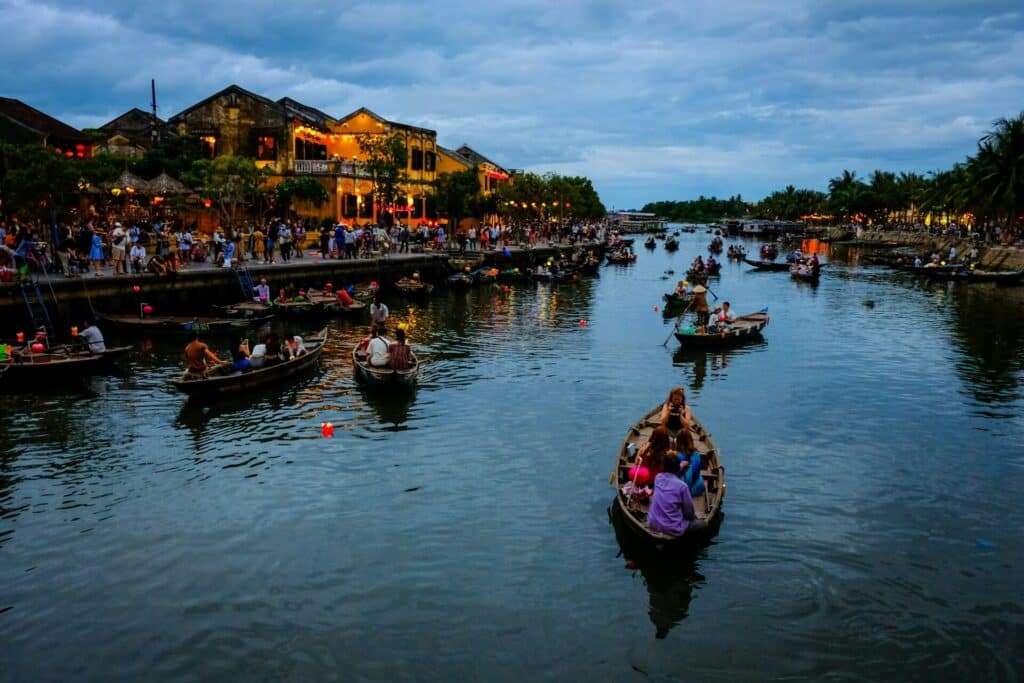
In Thanh Hoa, I was renting, but I thought it made more sense to buy one if I plan to stay here for a long time. Having a bike gives me lots of freedom. Sometimes I’ll get up early on a Monday morning and go somewhere nearby, stay a night, do some sightseeing and get back for my classes on Tuesday. Or during the week, I can go to the beach, have a nice swim, get my favourite Vietnamese coffee, get lunch, hang out for the afternoon, and go to work in the evening.
This is my type of joy and freedom.
However, in South Korea, we went out a lot to have lunch together with other international teachers – for a Korean BBQ, for example. We also went to some baseball matches, which is big in South Korea, and now I understand why! Everyone should go and see it once they’re there. Then, there’s karaoke, which is quite popular both in South Korea and Vietnam, although the vibes are very different!
Overall teaching experiences in South Korea vs Vietnam
Although each country has its own challenges, and at the same time, both are unique and beautiful in their own ways, I am much happier in Vietnam.
The main reason lies in the pressure that is a part of Korean work culture. Out of 10 friends, 9 would say they experienced a great deal of pressure while working at a hagwon in South Korea. However, South Korea offers a more developed infrastructure, which can be more appealing for some, making everyday life a little easier.
Both countries are considered safe. In Korea, I often left my phone or laptop unattended on a café table, and no one would touch it. In Vietnam, depending on where you live, pickpocketing might be a bit more common, but overall, it’s still a very safe country.
Both countries are unique in their own ways, so it would be very difficult to compare them directly. South Korea is much more modern overall. Vietnam, on the other hand, is still catching up after being considered a developing country for so long, though it’s progressed a lot recently.
If you like modern places, more buildings, pavements to walk on, then choose South Korea. If you like a little rough nature, fewer buildings, and if you’re not afraid of travelling by motorbike, perhaps Vietnam is the place you might enjoy more.
For me, work-life balance is very important. Having lived in London for eight years, I love the energy of a big city and the opportunities that come with it. During my time in Croatia, I fell in love with living by the sea, and coming from a small town in Hungary, I also value community and the simplicity of life.
Now, living in Da Nang, I feel like all three of those lifestyles have merged into one. Da Nang is a fairly big city with plenty of opportunities, yet I’m only a short walk from the beach or from beautiful, hidden gems and hikes that slow life down and remind me of the importance of truly living and experiencing. I’m grateful to work for a company that finally allows me the mental space to enjoy my free time.
Author Bio
Table of Contents
- Introduction
- Job opportunities
- Teaching hours and workload
- Challenges
- Daily routine
- Cost of living
- Expat experiences
- Leisure time compared
- Overall teaching experiences
South Korea offers higher absolute savings and comprehensive benefits such as free housing. Vietnam offers a better work-life balance with a much lower cost of living. In South Korea, teachers usually earn ₩1.5–4 million ($1,100–$3,000) with 20+ teaching hours, whereas Vietnam offers $1,000–$2,000 for roughly 15–20 hours. Opt for South Korea to maximize financial gain through structured programs; if flexible living with high local purchasing power is more your thing, Vietnam should be your pick!
I’ve taught in Yeongtong-gu, Suwon, South Korea (in a hagwon), in a small Vietnamese town called Phuc Yen (just half an hour from Hanoi), and in the coastal city of Thanh Hoa. I’ve always valued a healthy work-life balance, and now I’m in what feels like the perfect place for me to teach English: Da Nang, Vietnam.
Hello, my name is Timea. I’m a dual citizen of Hungary and the UK, and I truly believe that life is meant to be filled with experiences rather than just rushing through office hours.
Everyone has their own idea of success; some want to climb the career ladder (which I completely understand, as I once thought that was my greatest motivation too), but over time, my priorities have changed. I became quite stubborn about finding a place where I could achieve the work-life balance that has become one of my biggest goals in life.
Read more: What Is A Hagwon?
You see, having lived most of my life in Hungary and the UK, I’ve always dreamed of finding my peace by a gorgeous beach while still being in a lively city. My time studying in Croatia, living by the coast, only made that dream grow. So, currently living in a big city, by a gorgeous beach, surrounded by nature, in a tourist destination in Da Nang, is a dream come true.
And not only that. My job allows me to have peace of mind to enjoy my days outside of work, which, if you had to deal with a difficult work environment, you know how precious that is.
If you’re looking for big savings and glossy infrastructure, South Korea is king. If you’re craving a relaxed vibe, beach life, and a less stressful environment, Vietnam is calling you.
Job opportunities: South Korea vs Vietnam
The Job Market: Exclusive vs Inclusive
- South Korea: “The Big Seven” native English-speaking countries only. Schools often hunt for specific “looks” or accents, meaning it can feel a bit like an exclusive club. If you don’t have the right passport, it can be hard to open the door.
- Vietnam: A truly global classroom. The diversity is incredible; you’ll work with teachers from every continent. Not only does this help your social life, it actually helps students prepare for real-world English, where accents are as varied as the people speaking them.
South Korean companies are a little pickier than Vietnamese companies when it comes to nationality. They mostly hire people from native English-speaking countries, especially from the US, Canada, the UK, and Australia. Depending on the company, they might be picky about accents, too.
I must say, I felt extremely lucky and advantaged having dual citizenship, being both Hungarian and English, with a little mixture of my accent from both.
In Vietnam, on the other hand, there’s a much wider variety of teachers from all around the world. This diversity makes it easier to connect with people from different backgrounds, and from a professional point of view, it’s also beneficial for the students. Being exposed to a range of accents helps prepare them for real-life communication in English beyond the classroom.
Teaching hours and workload compared
- South Korea: more time dedicated to lesson prep
- Vietnam: better work-life balance
As someone keen on work-life balance, the winner for me is Vietnam. Vietnam has fewer working hours, similar pay, fewer benefits, but greater peace of mind outside of work.
In South Korea, I had to write student reviews every week. In Vietnam, I only do this every 6th session, along with evaluating midterm and final exams.
In South Korea, lesson preparation also required much more time and effort. I had to create extra worksheets and homework, come up with new ideas for “Show and Tell” each month, and often felt like I was dragging my students through so many requirements.
The working hours also made it difficult to keep up with my workload, unless you dedicated part of your weekend to planning, which many of my co-workers did.
In Vietnam, lesson slides are already prepared for each class, and you just need to review them before teaching. This setup might give teachers a bit less creative freedom when organising their lessons, but it also provides a sense of structure, security, and peace of mind, knowing that everything is ready and under control.
Read more: Lesson Planning In South Korea: A Q&A With Teacher Ben
Both countries have excellent classroom resources. In both countries, I had projectors to do my presentations. In Vietnam, they try to emphasise and implement game activities, including these even in the teaching slides, ensuring students learn English in a fun way. So we have equipment for games as well, like sticky balls, flashcards for each lesson, and other tools.
In Korea, we had computers in a staffroom. But I mostly relied on my laptop and did my admin work from home or a café. In Vietnam, we only really needed our computers for tasks such as writing comments.
The challenges of teaching in South Korea vs Vietnam
- South Korea: stricter classrooms, more pressurised work environment
- Vietnam: more relaxed work environment, complex paperwork
I would say, from the teaching perspective, I found the teaching itself stricter and a little more pressurised in hagwons in South Korea than I found it in private centres in Vietnam.
For me, it was very difficult to adjust to such a heavy work culture. I vividly remember one of the occasions when my employer called me on a Thursday at 9 pm to finish one of the materials for the next week. While it often depends on the employer/company you’re working for, I’d say 9 out of 10 teachers had similar experiences in hagwons.
With public schools, it can be slightly different. A friend of mine worked in a public school through the EPIK Programme, but in this scenario, you don’t have a say on the location, and you will be placed where they need you.
Read more: Discover The EPIK Programme
On the other hand, in Vietnam, children’s behaviour might be a little more challenging at times. This can be draining at first, but you’ll get used to it eventually, just like how kids are also getting used to you.
Furthermore, completing paperwork is a bit more difficult in Vietnam, and teachers often need to do a visa run before they secure their TRC (Temporary Residence Card), as it often takes ages to secure it.
For example, before I moved to South Korea, I was able to prepare my authorised and apostilled university degree from London. The same document in Vietnam was not accepted, as I needed to do it through the Vietnamese government with their ‘special stamp’. However, not only did my university degree need to be authorised and apostilled, but also my TEFL certificate.
Daily routine
- South Korea: standard teaching hours
- Vietnam: split shifts
In South Korea, I was working in a hagwon, which was a private kindergarten. These were my working hours:
Monday 9 am to 7 pm
Tuesday 9 am to 5 pm
Wednesday 9 am to 7 pm
Thursday 9 am to 5 pm
Friday 9 am to 7 pm
Saturday OFF
Sunday OFF
We had a 10-minute break between classes, but those were usually busy with work, too. While we were provided with lunch, we were also serving the children, and so we were eating together. It can be draining at times, as you barely get any quiet moments to yourself.
In regard to the actual work, we had about an hour assigned to do administrative work, but that wasn’t long enough, which meant we often worked outside of the above-mentioned working hours. While we had two days off, I often ended up staying at home, because I was tired. Once I got used to the workload, I was travelling a little more, but I felt exhausted by the end of it.
In Vietnam, I work six days a week, but my working hours are short. I work 90 hours a month, and these are usually between 5:30 pm to 8:45 pm on weekdays, and 2pm or 3:45pm to 7pm or 8:45pm on the weekends.
Monday OFF
Tuesday 5:30 pm to 8:45 pm
Wednesday 5:30 pm to 8:45 pm
Thursday 5:30 pm to 8:45 pm
Friday 5:30 pm to 8:45 pm
Saturday varies with morning/afternoon/evening classes
Sunday varies with morning/afternoon/evening classes
Read more: A Day In The Life Of An English Teacher In Vietnam
Cost of living: South Korea vs Vietnam
- South Korea: salary packages with benefits
- Vietnam: limited benefits
In South Korea, most companies offer accommodation, flight tickets, pension and severance pay. In most schools, you are also provided with lunch. The school pays for most of your visa expenses. You’ll have to pay for your own authorisation for your documents, which are never cheap, but the school pays for the rest, as well as helps you with the process.
Obviously, these are massive benefits! This was why I decided to start my journey there.
In Vietnam, you might get some benefits such as housing (which is mostly shared, if there’s any) and perhaps a motorbike, but I think that’s actually pretty rare. In Phuc Yen, I got a bike and shared accommodation. With my current company, I get a housing allowance, which would’ve covered most of my expenses in Thanh Hoa, but it barely covers my rent in Da Nang.
Also, in Vietnam, you’d likely have to get your own flight tickets, which, depending on the season, can be pretty pricey. Once you’re in Vietnam, it’s pretty manageable in terms of finances, though.
Read more: What Is The Cost Of Living In Vietnam? We Asked Our Teachers
Expat experiences: Hidden vs centre stage
- South Korea: polite and respectful
- Vietnam: friendly but excitable
In both South Korea and Vietnam, I moved to a smaller city as I was keen to get the authentic experience of each country. However, I soon realised that these cities/towns have fewer English teachers and people are less likely to speak any English. Surprise, surprise!
People would approach you in a very different way in both countries. In Korea, I’d say it’s almost rude to stare at people. So even though they wouldn’t be so used to international people in smaller cities, they try to respect you. In Vietnam, in Thanh Hoa, for example, I sometimes tried to cover myself as much as I could just to avoid so much attention.
There were plenty of times when I went grocery shopping and people – especially younger ones – would be surprised seeing me, and get overly excited, so they would point at me or whisper to their friends or family.
In Korea, people likely speak a few words in English or use their phone to translate a conversation. In Vietnam, in the smaller cities, it was mostly about body language. However, in Da Nang (a bigger town), most people do speak English due to tourism.
Initially, I lived in Phuc Yen, Vietnam – it was more like a village, and there were hardly any people I could meet besides my colleagues. Then I moved to a larger city called Thanh Hoa. Here, you could find a few more options to hang out with international people, but it was still quite limited.
Next, I moved to Da Nang, where I am currently based. I love it here. It has the Vietnamese vibe, but there are also lots of international people, which makes making friends much easier.
Leisure time compared: Efficiency vs freedom
- South Korea: easier travel
- Vietnam: more rustic vibes
Both countries offer lots of opportunities for things to do in your free time. It doesn’t even depend on what type of free activities you enjoy because I’m 100% sure both would offer you plenty of options, whatever your preferences are.
For example, I’m not big on late nights out or clubbing, but I do enjoy hiking, travelling, and spending quality time with friends.
However, here are some of the key differences between South Korea and Vietnam:
In Korea, the infrastructure is much better than in Vietnam. If you’re not comfortable driving a motorbike in Vietnam’s busy streets, Korea will definitely sound friendlier to you with its fast trains, frequent buses, and well-built metro systems.
For example, in Korea, you’d have dedicated bus stops with screens indicating the incoming buses, trains, and metros for local transportation within the city. In Vietnam, I don’t even remember seeing a train or metro, and I’ve only seen bus stop signs, but no other information is clearly available.
In Vietnam, when I moved to Da Nang, I bought my own bike. 😊
In Thanh Hoa, I was renting, but I thought it made more sense to buy one if I plan to stay here for a long time. Having a bike gives me lots of freedom. Sometimes I’ll get up early on a Monday morning and go somewhere nearby, stay a night, do some sightseeing and get back for my classes on Tuesday. Or during the week, I can go to the beach, have a nice swim, get my favourite Vietnamese coffee, get lunch, hang out for the afternoon, and go to work in the evening.
This is my type of joy and freedom.
However, in South Korea, we went out a lot to have lunch together with other international teachers – for a Korean BBQ, for example. We also went to some baseball matches, which is big in South Korea, and now I understand why! Everyone should go and see it once they’re there. Then, there’s karaoke, which is quite popular both in South Korea and Vietnam, although the vibes are very different!
Overall teaching experiences in South Korea vs Vietnam
Although each country has its own challenges, and at the same time, both are unique and beautiful in their own ways, I am much happier in Vietnam.
The main reason lies in the pressure that is a part of Korean work culture. Out of 10 friends, 9 would say they experienced a great deal of pressure while working at a hagwon in South Korea. However, South Korea offers a more developed infrastructure, which can be more appealing for some, making everyday life a little easier.
Both countries are considered safe. In Korea, I often left my phone or laptop unattended on a café table, and no one would touch it. In Vietnam, depending on where you live, pickpocketing might be a bit more common, but overall, it’s still a very safe country.
Both countries are unique in their own ways, so it would be very difficult to compare them directly. South Korea is much more modern overall. Vietnam, on the other hand, is still catching up after being considered a developing country for so long, though it’s progressed a lot recently.
If you like modern places, more buildings, pavements to walk on, then choose South Korea. If you like a little rough nature, fewer buildings, and if you’re not afraid of travelling by motorbike, perhaps Vietnam is the place you might enjoy more.
For me, work-life balance is very important. Having lived in London for eight years, I love the energy of a big city and the opportunities that come with it. During my time in Croatia, I fell in love with living by the sea, and coming from a small town in Hungary, I also value community and the simplicity of life.
Now, living in Da Nang, I feel like all three of those lifestyles have merged into one. Da Nang is a fairly big city with plenty of opportunities, yet I’m only a short walk from the beach or from beautiful, hidden gems and hikes that slow life down and remind me of the importance of truly living and experiencing. I’m grateful to work for a company that finally allows me the mental space to enjoy my free time.
Author Bio