 United States
US
United States
US







Which Countries Accept TEFL In 2026? The Complete Guide



Last Updated
May 6, 2026


Table of Contents
- Introduction
- What it means
- Which countries accept TEFL?
- Asian countries that accept TEFL
- European countries available
- Middle East opportunities
- Teach in South America
- Can you teach in Africa?
- Beginner-friendly countries
- What should you look for
- Final thoughts
In a nutshell: almost everywhere! If you cannot teach in a specific country, it’s usually not because of your TEFL qualification but because of other requirements, such as a Bachelor’s degree or a specific citizenship.
Disclaimer: TEFL certifications need to satisfy certain requirements to be accepted as a legitimate qualification to teach English online or abroad. A 20-hour TEFL course or a free TEFL course might not lead to an adequate qualification.
Read more: 5 Reasons To Avoid A Cheap TEFL Course
So if you’re looking for an adventure, a career change, or a chance to share your love of languages, TEFL might just be the answer you’ve been searching for.
But where can TEFL take you?
From seaside living in Colombia to bustling cities in China, teaching English is your passport to the world.
So, if you’re considering teaching English abroad for the first time, this guide will help you explore your options. You’ll learn which countries accept TEFL qualifications, how requirements differ between regions, and what you need to apply for teaching jobs around the world.

What does it mean for a country to “accept a TEFL”?
When a country “accepts a TEFL”, it means that schools or language teaching programmes in that country recognise TEFL certificates as valid qualifications to teach English.
In this industry, TEFL certification is very important.
It shows that you have received training from a reputable provider and are equipped with all the necessary knowledge and skills to teach effectively.
To get certified, your first step is to complete an accredited course, like The TEFL Academy’s Level 3 or Level 5 qualification.
Read more: How To Get TEFL Certified In 5 Easy Steps
When researching reputable courses, you’ll encounter acronyms, such as TESOL and CELTA, but understanding all of these abbreviations can be confusing.
Let’s break them down.
TEFL, TESOL, and CELTA all refer to teaching English to non-native English speakers, but there are a few key differences:
- TEFL (Teaching English as a Foreign Language): Prepares you to teach in non-English speaking countries like Brazil, China, or Vietnam.
- TESOL (Teaching English to Speakers of Other Languages): Focuses on teaching non-native English speakers who live in English-speaking countries.
- CELTA: A similar qualification to TEFL and TESOL, but it is focused on teaching English to adults.
Editor’s note: By and large, TEFL and TESOL are used interchangeably. However, TESOL is more commonly used in the Americas, and TEFL is more commonly used elsewhere.
So, once you’ve earned your certificate, where can you actually teach?
That depends.
Every country has its own rules for who can teach English. Often, acceptance comes down to the following three factors:
- National education laws
- Visa regulations
- Employer preferences
Some countries have clear government guidelines for English teachers, while others leave it up to each school or language programme to decide which qualifications they value most.
Which countries accept TEFL certification?
From Asia and Europe to South America and the Middle East, TEFL certification is recognised all over the world.
Specific requirements can vary from region to region, but in many countries, a TEFL certificate alone is all you need to start teaching. However, others may require a university degree or prior experience.
If you aren’t a native English speaker, you may also need to prove your English proficiency. You can do this by taking the IELTS or a Cambridge proficiency exam.
This will earn you another certificate that can be added to your CV, showing employers that your English level is strong enough to teach confidently anywhere in the world.
So, how do you choose where to go?
Well, the key to finding the perfect destination starts with understanding which requirements you meet and how they affect where you can work.
Countries That Accept TEFL Comparison
| Country | Degree Required | TEFL Required? | Experience Needed | Notes |
| Thailand | Yes (for visa) | Preferred | No | Internships available without degree |
| South Korea | Yes | Yes (for most roles) | No | Must be a native speaker |
| Japan | Yes (for visa) | Preferred | No | Working Holiday Visa option available |
| Vietnam | Yes | Yes | No | Strong demand in major cities |
| China | Yes | Yes | No | Internships possible with degree |
| Spain | No (some roles) | Yes | No | Visa can be challenging for non-EU citizens |
| Italy | No (some roles) | Yes | No | Many private language schools |
| Czechia | Yes | Yes | No | Easier visa process than Western Europe |
| Poland | No | Yes | No | Growing TEFL market |
| UAE | Yes | Yes (often advanced) | Yes | High salaries, competitive roles |
| Qatar | Yes | Yes (often advanced) | Yes | Experience usually requred |
| Saudi Arabia | Yes | Yes (often advanced) | Yes | Strict requirements, but high pay |
| Chile | No | Yes | No | Great for beginners |
| Argentina | No | Yes | No | Flexible hiring |
| Colombia | No | Yes | No | Popular for cultural experience |
| Egypt | No | Yes | No | Growing demand |
| Morocco | Yes (for visa) | Yes | No | Visa required for legal work |
| South Africa | No | Yes | No | Mostly language school roles |
Top countries in Asia that accept TEFL teachers
Asia is home to some of the biggest TEFL markets in the world. Here are a few popular destinations:
Thailand
Thailand used to be known for its relaxed requirements, but not anymore.
To teach legally in Thailand, a degree (in any subject) is needed for a Non-Immigrant B visa. To apply for this visa, you need an offer of employment from a school.
Your employer will provide you with paperwork which confirms your job offer and provides proof of your employment contract.
Once in Thailand, this Non-Immigrant Work Visa is converted into a Work Permit and a Teaching Licence.
A TEFL certificate is not a legal requirement, but it is preferred by employers.
If you don’t have a degree but are interested in teaching English in Thailand, you can look into internships or volunteer opportunities.

Read more: Can You Save Money Teaching In Thailand? A Real Teacher Explains
South Korea
South Korea offers plenty of TEFL opportunities through government programs like EPIK (English Program in Korea).
These positions come with competitive salaries and benefits, making it one of the most sought-after countries for TEFL professionals.
To teach in South Korea, you need:
- A Bachelor’s degree
- A clear criminal record
- A clear health exam and drug test
- To be a native English speaker from an English-speaking country.
Government programmes generally require a TEFL certificate, while some private academies or hagwons might accept teachers without.
While experience is not necessary, it does give you an edge in an already competitive market and can help you secure a higher-paid position.
Japan
Teaching English in Japan is a huge industry, so there are plenty of jobs available.
A degree is required to get an Instructor or Humanities Visa to teach, but there are alternative options if you don’t have a Bachelor’s degree.
Japan offers a Working Holiday Visa that allows citizens of eligible countries under the age of 30 to teach English on a short-term basis while exploring the country. This is a great alternative for anyone who wants to explore without committing to a long-term contract or who doesn’t qualify for the standard work visa.
One of the positives to teaching in Japan is that you don’t need previous teaching experience, making it a great place for newly-qualified teachers to start their international careers.

Read more: How To Get A TEFL Job In Japan
Vietnam
Vietnam’s TEFL market is slowly growing, which means that opportunities for English teachers are increasing, especially in the lively cities of Ho Chi Minh City and Hanoi.
Many schools are willing to hire newly-qualified TEFL teachers, but to get a Work Visa, a degree (in any field) is necessary.
Read more: 8 Reasons TEFL Teachers Love Calling Hanoi Home
China
China is one of the largest TEFL markets in the world.
It is mandatory for EFL teachers to hold a degree (in any field) as well as a TEFL certificate to work in the country legally.
For those without a degree, there is hope.
China offers numerous internship opportunities to teachers without a Bachelor’s degree.
While these positions typically mean that you will only be working part-time, it’s still a great choice for newly-qualified teachers.

Countries in Europe that recognise TEFL certification
Europe attracts thousands of TEFL teachers every year.
From its sunny beaches to cobbled city streets, it’s easy to see why it’s so popular.
Spain and Italy are currently the top TEFL destinations in Europe, thanks to their abundance of private language schools.
The good news is that many positions don’t require a degree.
While having teaching experience definitely helps, both countries offer plenty of teaching assistant programs and entry-level positions. These are great opportunities for you to gain hands-on classroom experience while still enjoying the European lifestyle.
Read more: What Is An Assistant Language Teacher in Spain?
One of the main challenges to teaching in Spain and Italy is securing a work visa.
It can be difficult for non-EU citizens to get one, but luckily, both countries offer Working Holiday Visas and cultural exchange programs that can make this process easier for citizens of eligible countries.
Central Europe also has a lot to offer aspiring English teachers.
The Czech Republic and Poland grant work visas to non-EU citizens, making it much easier to find a teaching job than in other parts of Europe.
Poland doesn’t require TEFL teachers to have a degree, but the Czech Republic does. Fortunately, it can be in any field.
While there are options for non-EU citizens to work in Europe, it can certainly be tricky. Luckily, you can still look for volunteering positions or become a digital nomad by teaching English online.

TEFL opportunities in the Middle East
Positions in the Middle East tend to pay more than TEFL jobs in other regions, which is why so many teachers want to teach there. Unfortunately, this also means that there are stricter requirements in place.
Some schools in the Middle East may only accept teachers who have a CELTA or Level 5 Diploma instead of the 120-hour TEFL qualification.
The UAE, Qatar, and Saudi Arabia usually require EFL teachers to have a degree and prior teaching experience.
Oman and Bahrain have emerging TEFL markets and are slowly becoming more popular with English teachers seeking new opportunities.
Both countries require TEFL teachers to possess a degree and, ideally, previous experience.
To comply with local education standards, schools in Oman may also require teachers to have a recognised teaching license.
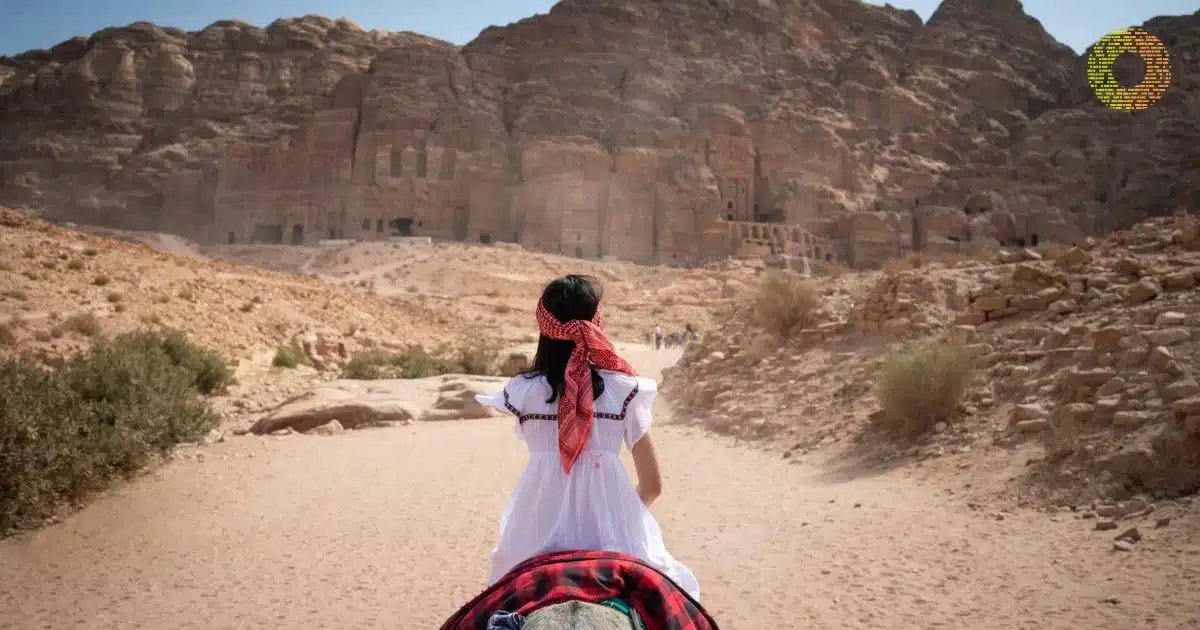
Where to teach English in South America with a TEFL certificate
With its welcoming communities and growing demand for English, South America is a dream TEFL destination for many.
One of the biggest draws is that a degree is not required in many countries. So, it’s the ideal choice for those wanting to take a gap year or just starting their TEFL journey.
Countries like Chile, Colombia, Peru, and Argentina are incredibly popular with TEFL teachers because:
- It’s a great opportunity for cultural exchange.
- Hiring is flexible.
- There’s a low cost of living.
While salaries in South America may not be as high as in other regions, the affordable lifestyle and priceless experiences more than make up for it.

Can you teach English in Africa with a TEFL qualification?
It’s possible to teach in Africa with a TEFL qualification, but the opportunities vary depending on where you go.
One country you can teach in is South Africa. There are numerous reasons to visit South Africa. It offers stunning views, unique wildlife, and a cultural experience like no other.
Teaching English as a foreign language in South Africa means teaching foreign students in a language school. These jobs might not be full-time positions, as your working contract will depend on how many students are at the school, which is seasonal.
On the northern side of the continent, Egypt and Morocco are growing TEFL destinations.
Between private schools and language centres, there is no shortage of teaching jobs in either country.
But what do you need to get started?
A degree is not needed to land a teaching job in Egypt, as long as you have a recognised TEFL certificate.
These positions prefer native English speakers or require proof of your proficiency in the language.
On the other hand, Morocco does require a degree (in any subject) to obtain an official work visa.
Egypt and Morocco are ideal places for newly-qualified EFL trainers to launch their teaching careers since neither country requires candidates to have prior experience.
Another advantage of teaching in these regions is that the cost of living is relatively low, allowing you to enjoy a comfortable lifestyle during your stay.

What are the most TEFL-friendly countries for beginners?
If you’re looking for the best country to start teaching in, consider:
- Thailand
- Vietnam
- Chile
- Argentina
These countries are among the easiest places to begin your TEFL journey.
Schools and language programmes in these regions do not typically require additional qualifications or experience, and getting a visa is a relatively straightforward process.
They’re also known for their affordable cost of living, high demand for English teachers, and welcoming expat communities – everything you need to start your new life abroad.
What should you look for in a TEFL-recognised country?
Choosing the right country to teach in isn’t just about where you can go. It’s also about finding a place that suits your goals and lifestyle.
Before packing your bags and jetting off to countries that hire TEFL teachers, it’s important that you think practically.
Here are some questions to ask yourself:
- Are you eligible for a visa?
- How does the typical cost of living compare to the advertised salary?
- What is the local work culture like? (Are long hours common?)
- Is the country safe for foreigners?
- Does the lifestyle suit your interests and comfort level?
- Will you have opportunities to grow as a teacher?
In the end, the best TEFL destination is one that not only welcomes you but also allows you to prosper in all areas of your life.
Final thoughts: Choosing the right country for your TEFL journey
From vibrant cities to quiet coastal towns, TEFL opens doors all over the world.
But when it comes to choosing the “right” country, this is a choice that only you can make.
Your goals, qualifications, and preferences all play a part in finding the perfect place for you to begin your TEFL career.
So, whether you’re chasing adventure, looking for professional growth, or wanting to connect with people across the globe, there’s a TEFL destination that’s right for you.
Author Bio
Table of Contents
- Introduction
- What it means
- Which countries accept TEFL?
- Asian countries that accept TEFL
- European countries available
- Middle East opportunities
- Teach in South America
- Can you teach in Africa?
- Beginner-friendly countries
- What should you look for
- Final thoughts
In a nutshell: almost everywhere! If you cannot teach in a specific country, it’s usually not because of your TEFL qualification but because of other requirements, such as a Bachelor’s degree or a specific citizenship.
Disclaimer: TEFL certifications need to satisfy certain requirements to be accepted as a legitimate qualification to teach English online or abroad. A 20-hour TEFL course or a free TEFL course might not lead to an adequate qualification.
Read more: 5 Reasons To Avoid A Cheap TEFL Course
So if you’re looking for an adventure, a career change, or a chance to share your love of languages, TEFL might just be the answer you’ve been searching for.
But where can TEFL take you?
From seaside living in Colombia to bustling cities in China, teaching English is your passport to the world.
So, if you’re considering teaching English abroad for the first time, this guide will help you explore your options. You’ll learn which countries accept TEFL qualifications, how requirements differ between regions, and what you need to apply for teaching jobs around the world.
What does it mean for a country to “accept a TEFL”?
When a country “accepts a TEFL”, it means that schools or language teaching programmes in that country recognise TEFL certificates as valid qualifications to teach English.
In this industry, TEFL certification is very important.
It shows that you have received training from a reputable provider and are equipped with all the necessary knowledge and skills to teach effectively.
To get certified, your first step is to complete an accredited course, like The TEFL Academy’s Level 3 or Level 5 qualification.
Read more: How To Get TEFL Certified In 5 Easy Steps
When researching reputable courses, you’ll encounter acronyms, such as TESOL and CELTA, but understanding all of these abbreviations can be confusing.
Let’s break them down.
TEFL, TESOL, and CELTA all refer to teaching English to non-native English speakers, but there are a few key differences:
- TEFL (Teaching English as a Foreign Language): Prepares you to teach in non-English speaking countries like Brazil, China, or Vietnam.
- TESOL (Teaching English to Speakers of Other Languages): Focuses on teaching non-native English speakers who live in English-speaking countries.
- CELTA: A similar qualification to TEFL and TESOL, but it is focused on teaching English to adults.
Editor’s note: By and large, TEFL and TESOL are used interchangeably. However, TESOL is more commonly used in the Americas, and TEFL is more commonly used elsewhere.
So, once you’ve earned your certificate, where can you actually teach?
That depends.
Every country has its own rules for who can teach English. Often, acceptance comes down to the following three factors:
- National education laws
- Visa regulations
- Employer preferences
Some countries have clear government guidelines for English teachers, while others leave it up to each school or language programme to decide which qualifications they value most.
Which countries accept TEFL certification?
From Asia and Europe to South America and the Middle East, TEFL certification is recognised all over the world.
Specific requirements can vary from region to region, but in many countries, a TEFL certificate alone is all you need to start teaching. However, others may require a university degree or prior experience.
If you aren’t a native English speaker, you may also need to prove your English proficiency. You can do this by taking the IELTS or a Cambridge proficiency exam.
This will earn you another certificate that can be added to your CV, showing employers that your English level is strong enough to teach confidently anywhere in the world.
So, how do you choose where to go?
Well, the key to finding the perfect destination starts with understanding which requirements you meet and how they affect where you can work.
Countries That Accept TEFL Comparison
| Country | Degree Required | TEFL Required? | Experience Needed | Notes |
| Thailand | Yes (for visa) | Preferred | No | Internships available without degree |
| South Korea | Yes | Yes (for most roles) | No | Must be a native speaker |
| Japan | Yes (for visa) | Preferred | No | Working Holiday Visa option available |
| Vietnam | Yes | Yes | No | Strong demand in major cities |
| China | Yes | Yes | No | Internships possible with degree |
| Spain | No (some roles) | Yes | No | Visa can be challenging for non-EU citizens |
| Italy | No (some roles) | Yes | No | Many private language schools |
| Czechia | Yes | Yes | No | Easier visa process than Western Europe |
| Poland | No | Yes | No | Growing TEFL market |
| UAE | Yes | Yes (often advanced) | Yes | High salaries, competitive roles |
| Qatar | Yes | Yes (often advanced) | Yes | Experience usually requred |
| Saudi Arabia | Yes | Yes (often advanced) | Yes | Strict requirements, but high pay |
| Chile | No | Yes | No | Great for beginners |
| Argentina | No | Yes | No | Flexible hiring |
| Colombia | No | Yes | No | Popular for cultural experience |
| Egypt | No | Yes | No | Growing demand |
| Morocco | Yes (for visa) | Yes | No | Visa required for legal work |
| South Africa | No | Yes | No | Mostly language school roles |
Top countries in Asia that accept TEFL teachers
Asia is home to some of the biggest TEFL markets in the world. Here are a few popular destinations:
Thailand
Thailand used to be known for its relaxed requirements, but not anymore.
To teach legally in Thailand, a degree (in any subject) is needed for a Non-Immigrant B visa. To apply for this visa, you need an offer of employment from a school.
Your employer will provide you with paperwork which confirms your job offer and provides proof of your employment contract.
Once in Thailand, this Non-Immigrant Work Visa is converted into a Work Permit and a Teaching Licence.
A TEFL certificate is not a legal requirement, but it is preferred by employers.
If you don’t have a degree but are interested in teaching English in Thailand, you can look into internships or volunteer opportunities.
Read more: Can You Save Money Teaching In Thailand? A Real Teacher Explains
South Korea
South Korea offers plenty of TEFL opportunities through government programs like EPIK (English Program in Korea).
These positions come with competitive salaries and benefits, making it one of the most sought-after countries for TEFL professionals.
To teach in South Korea, you need:
- A Bachelor’s degree
- A clear criminal record
- A clear health exam and drug test
- To be a native English speaker from an English-speaking country.
Government programmes generally require a TEFL certificate, while some private academies or hagwons might accept teachers without.
While experience is not necessary, it does give you an edge in an already competitive market and can help you secure a higher-paid position.
Japan
Teaching English in Japan is a huge industry, so there are plenty of jobs available.
A degree is required to get an Instructor or Humanities Visa to teach, but there are alternative options if you don’t have a Bachelor’s degree.
Japan offers a Working Holiday Visa that allows citizens of eligible countries under the age of 30 to teach English on a short-term basis while exploring the country. This is a great alternative for anyone who wants to explore without committing to a long-term contract or who doesn’t qualify for the standard work visa.
One of the positives to teaching in Japan is that you don’t need previous teaching experience, making it a great place for newly-qualified teachers to start their international careers.
Read more: How To Get A TEFL Job In Japan
Vietnam
Vietnam’s TEFL market is slowly growing, which means that opportunities for English teachers are increasing, especially in the lively cities of Ho Chi Minh City and Hanoi.
Many schools are willing to hire newly-qualified TEFL teachers, but to get a Work Visa, a degree (in any field) is necessary.
Read more: 8 Reasons TEFL Teachers Love Calling Hanoi Home
China
China is one of the largest TEFL markets in the world.
It is mandatory for EFL teachers to hold a degree (in any field) as well as a TEFL certificate to work in the country legally.
For those without a degree, there is hope.
China offers numerous internship opportunities to teachers without a Bachelor’s degree.
While these positions typically mean that you will only be working part-time, it’s still a great choice for newly-qualified teachers.
Countries in Europe that recognise TEFL certification
Europe attracts thousands of TEFL teachers every year.
From its sunny beaches to cobbled city streets, it’s easy to see why it’s so popular.
Spain and Italy are currently the top TEFL destinations in Europe, thanks to their abundance of private language schools.
The good news is that many positions don’t require a degree.
While having teaching experience definitely helps, both countries offer plenty of teaching assistant programs and entry-level positions. These are great opportunities for you to gain hands-on classroom experience while still enjoying the European lifestyle.
Read more: What Is An Assistant Language Teacher in Spain?
One of the main challenges to teaching in Spain and Italy is securing a work visa.
It can be difficult for non-EU citizens to get one, but luckily, both countries offer Working Holiday Visas and cultural exchange programs that can make this process easier for citizens of eligible countries.
Central Europe also has a lot to offer aspiring English teachers.
The Czech Republic and Poland grant work visas to non-EU citizens, making it much easier to find a teaching job than in other parts of Europe.
Poland doesn’t require TEFL teachers to have a degree, but the Czech Republic does. Fortunately, it can be in any field.
While there are options for non-EU citizens to work in Europe, it can certainly be tricky. Luckily, you can still look for volunteering positions or become a digital nomad by teaching English online.
TEFL opportunities in the Middle East
Positions in the Middle East tend to pay more than TEFL jobs in other regions, which is why so many teachers want to teach there. Unfortunately, this also means that there are stricter requirements in place.
Some schools in the Middle East may only accept teachers who have a CELTA or Level 5 Diploma instead of the 120-hour TEFL qualification.
The UAE, Qatar, and Saudi Arabia usually require EFL teachers to have a degree and prior teaching experience.
Oman and Bahrain have emerging TEFL markets and are slowly becoming more popular with English teachers seeking new opportunities.
Both countries require TEFL teachers to possess a degree and, ideally, previous experience.
To comply with local education standards, schools in Oman may also require teachers to have a recognised teaching license.
Where to teach English in South America with a TEFL certificate
With its welcoming communities and growing demand for English, South America is a dream TEFL destination for many.
One of the biggest draws is that a degree is not required in many countries. So, it’s the ideal choice for those wanting to take a gap year or just starting their TEFL journey.
Countries like Chile, Colombia, Peru, and Argentina are incredibly popular with TEFL teachers because:
- It’s a great opportunity for cultural exchange.
- Hiring is flexible.
- There’s a low cost of living.
While salaries in South America may not be as high as in other regions, the affordable lifestyle and priceless experiences more than make up for it.
Can you teach English in Africa with a TEFL qualification?
It’s possible to teach in Africa with a TEFL qualification, but the opportunities vary depending on where you go.
One country you can teach in is South Africa. There are numerous reasons to visit South Africa. It offers stunning views, unique wildlife, and a cultural experience like no other.
Teaching English as a foreign language in South Africa means teaching foreign students in a language school. These jobs might not be full-time positions, as your working contract will depend on how many students are at the school, which is seasonal.
On the northern side of the continent, Egypt and Morocco are growing TEFL destinations.
Between private schools and language centres, there is no shortage of teaching jobs in either country.
But what do you need to get started?
A degree is not needed to land a teaching job in Egypt, as long as you have a recognised TEFL certificate.
These positions prefer native English speakers or require proof of your proficiency in the language.
On the other hand, Morocco does require a degree (in any subject) to obtain an official work visa.
Egypt and Morocco are ideal places for newly-qualified EFL trainers to launch their teaching careers since neither country requires candidates to have prior experience.
Another advantage of teaching in these regions is that the cost of living is relatively low, allowing you to enjoy a comfortable lifestyle during your stay.
What are the most TEFL-friendly countries for beginners?
If you’re looking for the best country to start teaching in, consider:
- Thailand
- Vietnam
- Chile
- Argentina
These countries are among the easiest places to begin your TEFL journey.
Schools and language programmes in these regions do not typically require additional qualifications or experience, and getting a visa is a relatively straightforward process.
They’re also known for their affordable cost of living, high demand for English teachers, and welcoming expat communities – everything you need to start your new life abroad.
What should you look for in a TEFL-recognised country?
Choosing the right country to teach in isn’t just about where you can go. It’s also about finding a place that suits your goals and lifestyle.
Before packing your bags and jetting off to countries that hire TEFL teachers, it’s important that you think practically.
Here are some questions to ask yourself:
- Are you eligible for a visa?
- How does the typical cost of living compare to the advertised salary?
- What is the local work culture like? (Are long hours common?)
- Is the country safe for foreigners?
- Does the lifestyle suit your interests and comfort level?
- Will you have opportunities to grow as a teacher?
In the end, the best TEFL destination is one that not only welcomes you but also allows you to prosper in all areas of your life.
Final thoughts: Choosing the right country for your TEFL journey
From vibrant cities to quiet coastal towns, TEFL opens doors all over the world.
But when it comes to choosing the “right” country, this is a choice that only you can make.
Your goals, qualifications, and preferences all play a part in finding the perfect place for you to begin your TEFL career.
So, whether you’re chasing adventure, looking for professional growth, or wanting to connect with people across the globe, there’s a TEFL destination that’s right for you.
Author Bio