 United States
US
United States
US










How To Teach English Grammar: Practical Strategies That Actually Work



Last Updated
October 19, 2026


Table of Contents
- Introduction
- Why grammar is hard to teach
- Effective grammar teaching
- Grammar in context
- The PPP method
- Focus on grammar meaning
- Student-friendly explanations
- Controlled and communicative
- Correcting grammar mistakes
- Adapting grammar teaching
- Grammar for different learners
- Common mistakes
- How TEFL helps teaching
Grammar is one of the biggest challenges new ESL teachers face. Knowing English isn’t the same as knowing how to explain it, and many teachers freeze when students ask Why? We’ve spoken to some of our favourite TEFL teachers to help you teach grammar clearly, confidently, and with lesson guides that ensure your students will actually remember what you’ve taught.
Why grammar is hard to teach
- Many new teachers feel that they do not know enough, while more seasoned teachers struggle to keep things simple.
- Many of us have learnt grammar holistically, and while this is a good thing for us from a learning perspective, when teaching, we need to explain intricacies that do not form part of this rather natural acquisition.
- Textbooks focus on form instead of function and use.
- Students expect simple answers when grammar isn’t always logical.
- Grammar is often ambiguous, and form and function do not always relate.
All these reasons above result in a teacher often saying, I understand grammar, but when students ask why, I freeze. And this is unfortunately more common than we think.
The most effective way to teach grammar is by introducing it in context, allowing students to understand meaning before rules, providing controlled practice, and giving learners the chance to communicate naturally using the new grammar. A lot of TEFL teachers lean on the PPP (Presentation, Practice, Production) blueprint because it develops both fluency and accuracy.

What does “effective” grammar teaching actually mean?
Grammar teaching is not about:
- Lengthy, wordy, monologue-y explanations
- Memorising rules
- Perfection from the start – or very early on in the lesson
Instead, teaching English grammar means:
- Students are able to express themselves using the new grammar
- Lessons are simple, clear, and relevant
- Students get plenty of practice that mimics real-world communication
How do we do this?
When our students leave the lesson using the grammar, the lesson has worked! But how do we get them there?
Teach grammar in context- not in isolation
A common pitfall is introducing the rule first.
Instead of starting with: Today’s lesson is about the future simple.
Try: Let’s talk about our weekend plans!
This creates a relatable context and gives students an idea of what type of situation requires this upcoming grammar form.
Practical example:
- Display the words: The weekend
- Ask them what they usually do on weekends.
- Then ask them what their plans are for the upcoming weekend.
- Elicit the structure, eg, I will (verb)
This method allows learners to show you what they know and accept the new form in a more fluid manner. Without context, your presentation of new grammar feels like a podcast on rules.
“Teaching grammar rules out of context is like handing learners a bunch of ingredients without telling them what they’re meant to create.”- Rene, online English teacher, teacher trainer
Use the PPP method
PPP stands for:
- Presentation – introduce the grammar in context
- Practice – controlled exercises
- Production – freer communication
While there are three core stages in this format – Present, Practice, Produce – there is usually also a warmer at the start, and a plenary at the end. Five stages in total.
- Presentation: In the presentation stage, keep it engaging but simple.
If your ESL grammar lesson plan is around the future tense, ask your students what they usually do on the weekend or their weekend plans in the warmer. Listen to their ideas.
At the start of the presentation stage, ask them how they would talk about these things for a future weekend.
This process is called eliciting.
Once you have the model sentence in the target language fully elicited and written on the board, ask questions to elicit form/structure, eg:
Where is the subject in our sentence?
What comes after the subject?
Where is the verb? What form is this verb?
Finally, to check understanding of function or meaning, ask concept questions that are simple, graded and closed, eg:
Are these things happening now?
Must they still happen?
Do these actions in the past, the present or the future?
The techniques above make the presentation of a new form student-centered and relatable.
- Practice:
Use controlled activities like fill-in-the-blank exercises or sentence matching to build accuracy. A worksheet is my go-to; one where the questions are uniform and the answers predetermined. - Production:
Students discuss their own weekend plans using the target structure in a more natural, communicative way.
For example:
- Role-plays
- Simple conversation with keyword prompts for guidance
- Planning a weekend activity together, eg, a hike.
“The PPP structure is the recipe that leads to meaningful results.” – Wikus, EFL teacher, teacher trainer.
Read more: Teaching Grammar Using PPP

Why you should focus on grammar meaning before grammar form
As a new teacher, your go-to may be form or structure first:
Subject + auxiliary + verb
However, students first need to understand the following:
- When do we use this grammar?
- Why do we use it?
- What are we trying to say when we use it?
In other words, before they grasp the form, they need to understand the function of the new grammar they are learning. This gives your ESL lesson plans purpose and direction.
“Imagine calling your best friend just to use a certain verb form — and then wondering what to say and how to say it. You wouldn’t do that. You’d know why you’re calling before you even think about how to speak. Let your lesson reflect this: why before how.” – Rene, EFL teacher, teacher trainer
Keep explanations simple and student-friendly
Trying to learn grammar in another language is challenging enough. So, as teachers, we simplify the process and make it more engaging.
Ways to do this:
- Use a relatable context to engage your students.
- Grade your language by using forms and vocabulary they already know at this point. The new grammar should be the only new content in the lesson.
- Reduce your teacher talking time by incorporating techniques like eliciting and concept checking.
“When I teach my students, being able to explain the grammar in a practical, relatable way allows them to then give an example using the grammar, and this is how I know they are on track.” – Nancy, online EFL teacher, Business English teacher
Read more: Teacher Talk Time vs Student Talk Time
Provide plenty of controlled and communicative practice
The opportunity to study and manipulate the new target language occurs in the Practice and Production stages of a grammar lesson.
- Offer controlled practice tasks where the focus is on structure and accuracy.
Consider materials like worksheets here, eg:
- gap-fill tasks
- multiple choice
- sentence completion or transformation and other cloze activities.
In these tasks, the questions are uniform and the answers pre-determined, making feedback and error correction more streamlined.
- Freer practice tasks, where the focus is on fluency, should offer students the opportunity to use the target language freely, inserting it and manipulating it as they see fit.
Consider tasks where students get to speak naturally, eg:
- role-plays
- story-telling
- conversations in pairs or groups where the objective is communication.
“We can’t expect students to use a structure effectively in speech or writing before they’ve had time to process it beforehand. For that reason, controlled practice is an essential step in the PPP process before they proceed to freer practice.” – Mairead, EFL teacher, teacher trainer.
How to correct grammar mistakes effectively
Timing is everything. When to correct, when to hold off until a more appropriate time.
During accuracy activities:
- Correct more actively in real-time as students make mistakes
- Focus on the target language
During fluency activities:
- Don’t interrupt constantly
- Note errors and correct later
Your approach here matters too. Think about how to correct your students. Here are a few ideas:
- Reformulation: “He go yesterday?” “He went yesterday.”
- Elicitation: “He…?” (student corrects themselves)
- Delayed feedback: review errors after the task
“Plan ahead for when and how you’ll correct grammar, so students feel safe, gain confidence, and can keep communicating freely.” – Donné, EFL senior teacher.
Adapting grammar teaching for online classes
Teaching grammar online brings new opportunities but also a few challenges.
Tips for teaching online:
- Use visuals to present context or clarify meaning
- Keep instructions clear and concise, and consider displaying them on the screen or in the chat.
- Break tasks into short, manageable steps.
- Use tools like breakout rooms to encourage real interaction and communication.
A common issue encountered by online teachers is that students can become passive.
A few solutions:
- Use frequent interactions
- Use breakout rooms
- Ask direct questions
- Inform students beforehand that you will be asking for feedback throughout.
“An online lesson should really mirror a face-to-face lesson- providing the same interaction and engagement.” – Nancy, online EFL teacher.
How to teach grammar to different learner types
Not all students learn grammar the same way.
Analytical learners:
- Prefer rules and structure
- Benefit from clear explanations
Visual learners:
- Respond well to timelines, diagrams, and images
Kinaesthetic learners:
- Learn through activities and interaction – and this can be achieved in an online setting too. Consider feedback methods like total physical response (TPR).
Read more: The Controversy Over Learning Styles
Younger learners:
- Need games, repetition, and visuals
Adults:
- Often want explanations but still need context
Read more: 6 Differences Between Teaching Adults And Young Learners
“As teachers, we understand that not everyone learns in the same way! We should aim to provide as much variety as we can in how we present grammar. So, try not to lecture! Elicit, use visuals like gestures and timelines, create relatable contexts… do whatever it takes to engage all of your students with the target language.” – Mairead, EFL teacher, teacher trainer.

Common mistakes teachers make
Teaching grammar can feel overwhelming, and many teachers — new and experienced — fall into similar traps. Being aware of these common mistakes is the first step to improving your lessons:
- Over-explaining grammar rules and increasing teacher talking time
- Correcting mistakes at the wrong time, especially during fluency activities
- Trying to know everything (or pretending to) without proper preparation
- Teaching grammar in isolation without context
- Overloading lessons with too many worksheets (“death by worksheet”)
- Not allowing enough time for communicative, fluency-based practice
- Failing to create a safe environment where students feel comfortable making mistakes
“What always helps me to avoid the common pitfalls is keeping grammar simple, cutting back on worksheets and long explanations, and giving students plenty of time to practise in context and build fluency.” – Donné, EFL senior teacher.
How does TEFL training help to teach grammar?
Simply put, a TEFL course bridges the gap between knowing grammar and teaching it effectively.
It helps you:
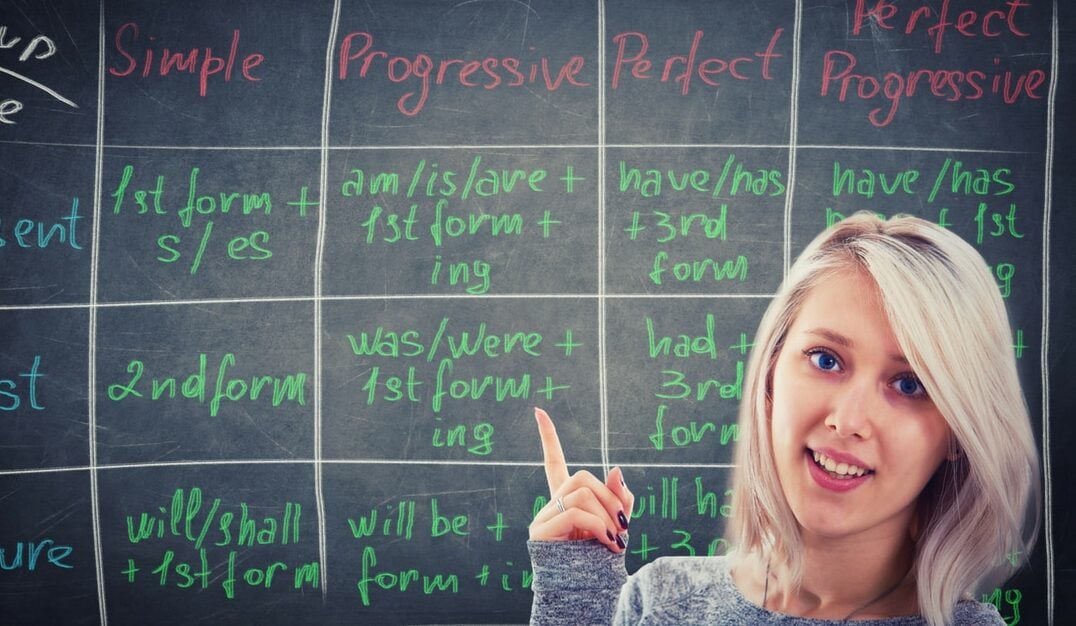
- Understand grammar basics like parts of speech and the tenses
- Understand how to present grammar clearly
- Use frameworks like PPP confidently
- Design engaging practice activities
- Learn error correction techniques
- Teach grammar in a communicative, student-centred way
“My TEFL course refreshed the grammar I already knew, but the real help was learning how to teach it in class. It made all the difference.” – Nancy, online EFL teacher and TTA alumni
A common misconception is that grammar is difficult or dull. However, when you plan your lessons and teach grammar effectively, it helps students communicate clearly and confidently. When students stop thinking about rules and start using English naturally, you know your grammar teaching is effective.
Author Bio
Table of Contents
- Introduction
- Why grammar is hard to teach
- Effective grammar teaching
- Grammar in context
- The PPP method
- Focus on grammar meaning
- Student-friendly explanations
- Controlled and communicative
- Correcting grammar mistakes
- Adapting grammar teaching
- Grammar for different learners
- Common mistakes
- How TEFL helps teaching
Grammar is one of the biggest challenges new ESL teachers face. Knowing English isn’t the same as knowing how to explain it, and many teachers freeze when students ask Why? We’ve spoken to some of our favourite TEFL teachers to help you teach grammar clearly, confidently, and with lesson guides that ensure your students will actually remember what you’ve taught.
Why grammar is hard to teach
- Many new teachers feel that they do not know enough, while more seasoned teachers struggle to keep things simple.
- Many of us have learnt grammar holistically, and while this is a good thing for us from a learning perspective, when teaching, we need to explain intricacies that do not form part of this rather natural acquisition.
- Textbooks focus on form instead of function and use.
- Students expect simple answers when grammar isn’t always logical.
- Grammar is often ambiguous, and form and function do not always relate.
All these reasons above result in a teacher often saying, I understand grammar, but when students ask why, I freeze. And this is unfortunately more common than we think.
The most effective way to teach grammar is by introducing it in context, allowing students to understand meaning before rules, providing controlled practice, and giving learners the chance to communicate naturally using the new grammar. A lot of TEFL teachers lean on the PPP (Presentation, Practice, Production) blueprint because it develops both fluency and accuracy.
What does “effective” grammar teaching actually mean?
Grammar teaching is not about:
- Lengthy, wordy, monologue-y explanations
- Memorising rules
- Perfection from the start – or very early on in the lesson
Instead, teaching English grammar means:
- Students are able to express themselves using the new grammar
- Lessons are simple, clear, and relevant
- Students get plenty of practice that mimics real-world communication
How do we do this?
When our students leave the lesson using the grammar, the lesson has worked! But how do we get them there?
Teach grammar in context- not in isolation
A common pitfall is introducing the rule first.
Instead of starting with: Today’s lesson is about the future simple.
Try: Let’s talk about our weekend plans!
This creates a relatable context and gives students an idea of what type of situation requires this upcoming grammar form.
Practical example:
- Display the words: The weekend
- Ask them what they usually do on weekends.
- Then ask them what their plans are for the upcoming weekend.
- Elicit the structure, eg, I will (verb)
This method allows learners to show you what they know and accept the new form in a more fluid manner. Without context, your presentation of new grammar feels like a podcast on rules.
“Teaching grammar rules out of context is like handing learners a bunch of ingredients without telling them what they’re meant to create.”- Rene, online English teacher, teacher trainer
Use the PPP method
PPP stands for:
- Presentation – introduce the grammar in context
- Practice – controlled exercises
- Production – freer communication
While there are three core stages in this format – Present, Practice, Produce – there is usually also a warmer at the start, and a plenary at the end. Five stages in total.
- Presentation: In the presentation stage, keep it engaging but simple.
If your ESL grammar lesson plan is around the future tense, ask your students what they usually do on the weekend or their weekend plans in the warmer. Listen to their ideas.
At the start of the presentation stage, ask them how they would talk about these things for a future weekend.
This process is called eliciting.
Once you have the model sentence in the target language fully elicited and written on the board, ask questions to elicit form/structure, eg:
Where is the subject in our sentence?
What comes after the subject?
Where is the verb? What form is this verb?
Finally, to check understanding of function or meaning, ask concept questions that are simple, graded and closed, eg:
Are these things happening now?
Must they still happen?
Do these actions in the past, the present or the future?
The techniques above make the presentation of a new form student-centered and relatable.
- Practice:
Use controlled activities like fill-in-the-blank exercises or sentence matching to build accuracy. A worksheet is my go-to; one where the questions are uniform and the answers predetermined. - Production:
Students discuss their own weekend plans using the target structure in a more natural, communicative way.
For example:
- Role-plays
- Simple conversation with keyword prompts for guidance
- Planning a weekend activity together, eg, a hike.
“The PPP structure is the recipe that leads to meaningful results.” – Wikus, EFL teacher, teacher trainer.
Read more: Teaching Grammar Using PPP
Why you should focus on grammar meaning before grammar form
As a new teacher, your go-to may be form or structure first:
Subject + auxiliary + verb
However, students first need to understand the following:
- When do we use this grammar?
- Why do we use it?
- What are we trying to say when we use it?
In other words, before they grasp the form, they need to understand the function of the new grammar they are learning. This gives your ESL lesson plans purpose and direction.
“Imagine calling your best friend just to use a certain verb form — and then wondering what to say and how to say it. You wouldn’t do that. You’d know why you’re calling before you even think about how to speak. Let your lesson reflect this: why before how.” – Rene, EFL teacher, teacher trainer
Keep explanations simple and student-friendly
Trying to learn grammar in another language is challenging enough. So, as teachers, we simplify the process and make it more engaging.
Ways to do this:
- Use a relatable context to engage your students.
- Grade your language by using forms and vocabulary they already know at this point. The new grammar should be the only new content in the lesson.
- Reduce your teacher talking time by incorporating techniques like eliciting and concept checking.
“When I teach my students, being able to explain the grammar in a practical, relatable way allows them to then give an example using the grammar, and this is how I know they are on track.” – Nancy, online EFL teacher, Business English teacher
Read more: Teacher Talk Time vs Student Talk Time
Provide plenty of controlled and communicative practice
The opportunity to study and manipulate the new target language occurs in the Practice and Production stages of a grammar lesson.
- Offer controlled practice tasks where the focus is on structure and accuracy.
Consider materials like worksheets here, eg:
- gap-fill tasks
- multiple choice
- sentence completion or transformation and other cloze activities.
In these tasks, the questions are uniform and the answers pre-determined, making feedback and error correction more streamlined.
- Freer practice tasks, where the focus is on fluency, should offer students the opportunity to use the target language freely, inserting it and manipulating it as they see fit.
Consider tasks where students get to speak naturally, eg:
- role-plays
- story-telling
- conversations in pairs or groups where the objective is communication.
“We can’t expect students to use a structure effectively in speech or writing before they’ve had time to process it beforehand. For that reason, controlled practice is an essential step in the PPP process before they proceed to freer practice.” – Mairead, EFL teacher, teacher trainer.
How to correct grammar mistakes effectively
Timing is everything. When to correct, when to hold off until a more appropriate time.
During accuracy activities:
- Correct more actively in real-time as students make mistakes
- Focus on the target language
During fluency activities:
- Don’t interrupt constantly
- Note errors and correct later
Your approach here matters too. Think about how to correct your students. Here are a few ideas:
- Reformulation: “He go yesterday?” “He went yesterday.”
- Elicitation: “He…?” (student corrects themselves)
- Delayed feedback: review errors after the task
“Plan ahead for when and how you’ll correct grammar, so students feel safe, gain confidence, and can keep communicating freely.” – Donné, EFL senior teacher.
Adapting grammar teaching for online classes
Teaching grammar online brings new opportunities but also a few challenges.
Tips for teaching online:
- Use visuals to present context or clarify meaning
- Keep instructions clear and concise, and consider displaying them on the screen or in the chat.
- Break tasks into short, manageable steps.
- Use tools like breakout rooms to encourage real interaction and communication.
A common issue encountered by online teachers is that students can become passive.
A few solutions:
- Use frequent interactions
- Use breakout rooms
- Ask direct questions
- Inform students beforehand that you will be asking for feedback throughout.
“An online lesson should really mirror a face-to-face lesson- providing the same interaction and engagement.” – Nancy, online EFL teacher.
How to teach grammar to different learner types
Not all students learn grammar the same way.
Analytical learners:
- Prefer rules and structure
- Benefit from clear explanations
Visual learners:
- Respond well to timelines, diagrams, and images
Kinaesthetic learners:
- Learn through activities and interaction – and this can be achieved in an online setting too. Consider feedback methods like total physical response (TPR).
Read more: The Controversy Over Learning Styles
Younger learners:
- Need games, repetition, and visuals
Adults:
- Often want explanations but still need context
Read more: 6 Differences Between Teaching Adults And Young Learners
“As teachers, we understand that not everyone learns in the same way! We should aim to provide as much variety as we can in how we present grammar. So, try not to lecture! Elicit, use visuals like gestures and timelines, create relatable contexts… do whatever it takes to engage all of your students with the target language.” – Mairead, EFL teacher, teacher trainer.
Common mistakes teachers make
Teaching grammar can feel overwhelming, and many teachers — new and experienced — fall into similar traps. Being aware of these common mistakes is the first step to improving your lessons:
- Over-explaining grammar rules and increasing teacher talking time
- Correcting mistakes at the wrong time, especially during fluency activities
- Trying to know everything (or pretending to) without proper preparation
- Teaching grammar in isolation without context
- Overloading lessons with too many worksheets (“death by worksheet”)
- Not allowing enough time for communicative, fluency-based practice
- Failing to create a safe environment where students feel comfortable making mistakes
“What always helps me to avoid the common pitfalls is keeping grammar simple, cutting back on worksheets and long explanations, and giving students plenty of time to practise in context and build fluency.” – Donné, EFL senior teacher.
How does TEFL training help to teach grammar?
Simply put, a TEFL course bridges the gap between knowing grammar and teaching it effectively.
It helps you:
- Understand grammar basics like parts of speech and the tenses
- Understand how to present grammar clearly
- Use frameworks like PPP confidently
- Design engaging practice activities
- Learn error correction techniques
- Teach grammar in a communicative, student-centred way
“My TEFL course refreshed the grammar I already knew, but the real help was learning how to teach it in class. It made all the difference.” – Nancy, online EFL teacher and TTA alumni
A common misconception is that grammar is difficult or dull. However, when you plan your lessons and teach grammar effectively, it helps students communicate clearly and confidently. When students stop thinking about rules and start using English naturally, you know your grammar teaching is effective.
Author Bio