 United States
US
United States
US









Teaching English to Teenagers in Vietnam: Tips from a Teacher in Hanoi



Last Updated
January 30, 2026


Table of Contents
- Introduction
- What to expect
- Challenges of teaching teens
- Common pitfalls
- Tips for teaching teenagers
Teenagers! Possibly the most difficult species on the planet to understand. And some of us are expected to teach them the difference between the second and the third conditional, when we know they’re more interested in the meaning of “skibidi” and “rizz”.
Teaching teenagers is never dull — no matter where in the world you are. But imagine doing it in Vietnam? Between packed classrooms, ever-changing trends, and the occasional bout of classroom chaos, life as a teacher in Hanoi is full of surprises.
Read more: A Day In The Life Of An English Teacher In Hanoi, Vietnam
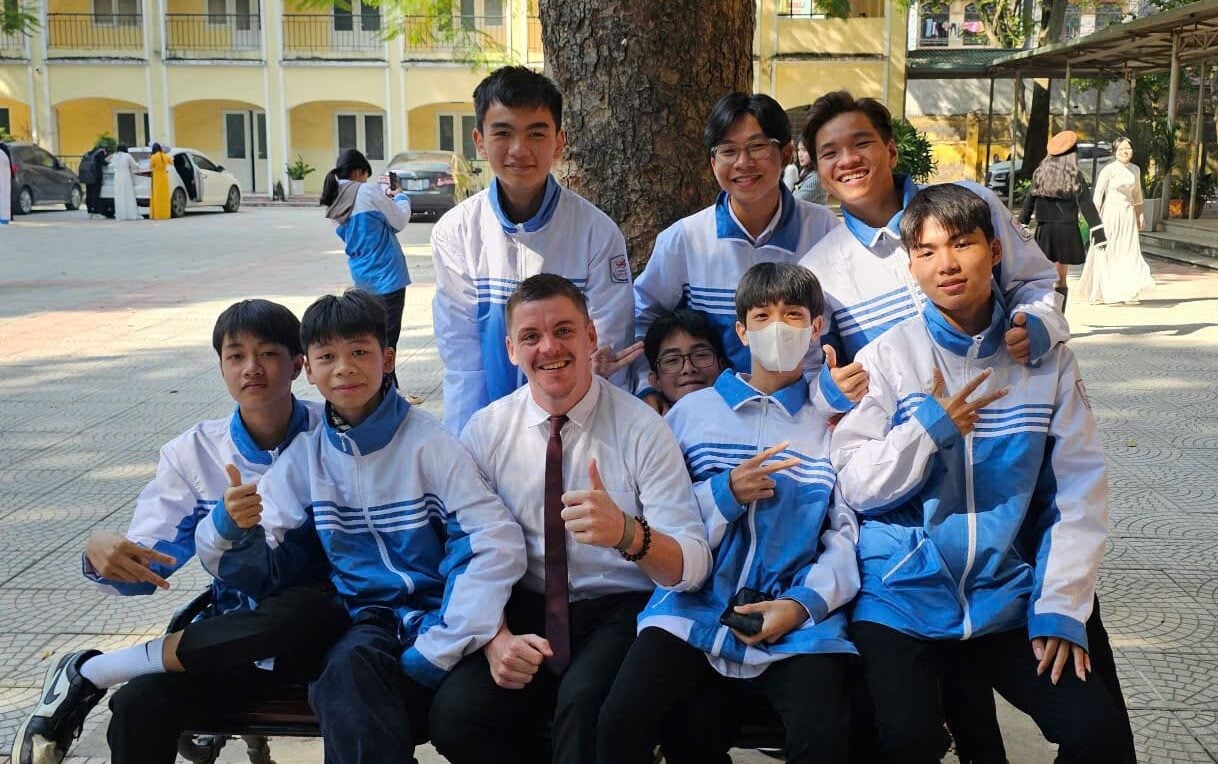
We spoke to TTA alum Dave about teaching teens in Vietnam because that’s exactly what he’s been doing. “Thầy David*” is a British teacher who went from a reluctant student in Liverpool to a respected English teacher in Vietnam.
With six years of experience guiding Vietnamese teens through lessons, debates, and even the odd football argument, David shares what he’s learned — warts and all — so that you can walk into your own classroom with confidence, humour, and the right mindset.
*”Teacher David” to us non-Vietnamese folk
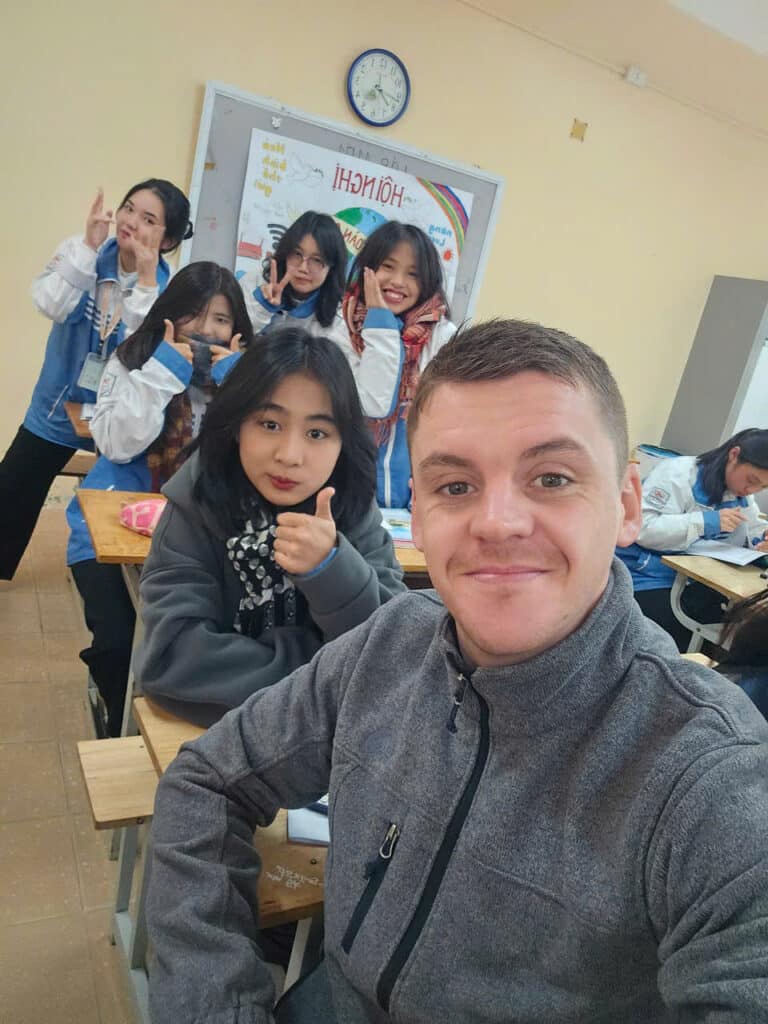
We can all remember our own times as teenagers: The good, the bad, the downright delinquent. They were a blessing… and occasionally a curse! I’m here to share with you some of my experiences with students and the newfound knowledge that I’ve gained since my arrival. After six years of teaching English to teens in Vietnam, what do I know now that I never knew before?
What to expect when teaching English to teenagers in Vietnam
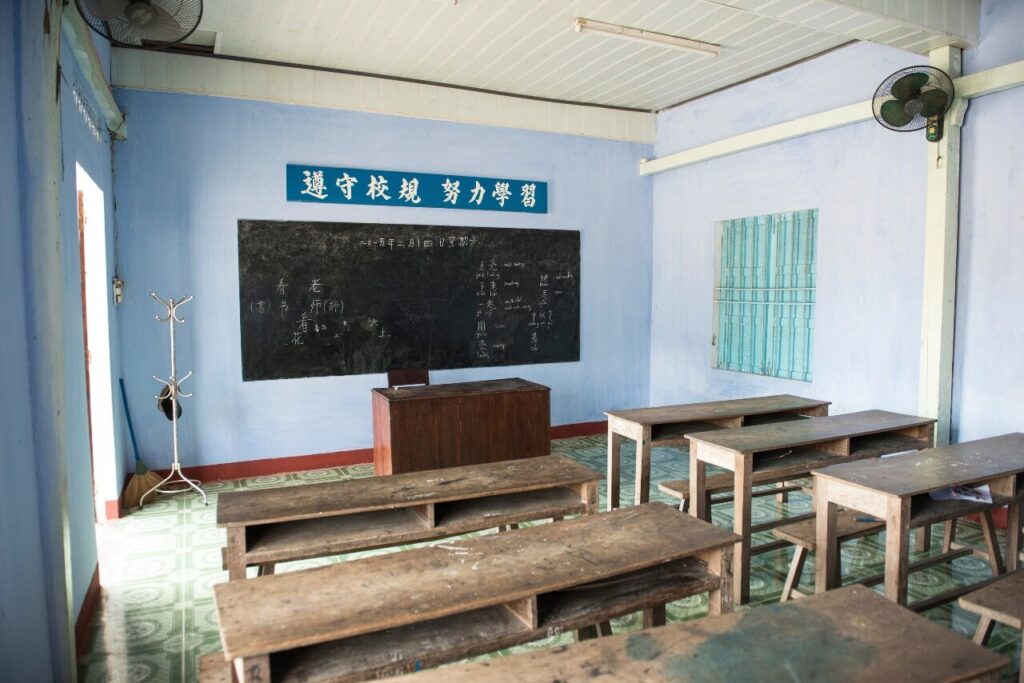
So, what about the students? What are they like? What is their level of English? And how do they react to having a Western teacher?
The high school where I began my teaching career is called Soc Son. Located about 20 km outside Hanoi’s city centre, the school sits in a small suburban town often rattled by planes taking off from nearby Nội Bài International Airport.
With few Westerners around, the local community isn’t exactly used to seeing someone like me eating Phở bò (beef noodle soup) in their restaurants or sipping Cà phê sữa đá (iced coffee) in their cafés.
However, unlike the older generations, my students were far more accustomed to Western culture through the influence of social media and global pop trends.
In many ways, Vietnamese teens are just like those in the UK.
To keep up with the flow of conversation and overall classroom culture with the girls, I had to always be in tune with everything that was trending at the time, quickly becoming an expert on all things Blackpink and Taylor Swift.
The boys were hilarious. Most of them only wanted to talk about one thing: football. That was fine by me, being a die-hard Liverpool FC supporter. I was always ready for vigorous, friendly debates with the large majority of Manchester United–supporting students.
If you know anything about football, you’ll know these two teams have no love lost, so the banter was always flowing.
All in all, the students were easy to speak with. The majority of them spoke English with impressive fluency and confidence, and were eager to learn through natural conversation about their own hobbies and interests.
When given the chance to converse with English native speakers like myself, teenage students in Vietnam will always take the opportunity, and often use the modern slang of the day. They speak with good grace and humour, and you can be sure that their choice for the topic of conversation will undoubtedly be very interesting, to say the least.
Read more: Cool Conversation Topics For Teens
Challenges of teaching teens in Vietnam
Truthfully, when speaking to the students, my biggest concern was staying up-to-date with the latest trends — whether it was Jennie, Rosé, Lisa and Jisoo’s choreography, or Cristiano Ronaldo’s latest goal.
Lessons don’t always go smoothly. Issues with the internet, HDMI cable malfunctions, or occasional student mischief are regular hurdles to overcome.
You’ve got to have a strategy — and a back-up plan — to keep students engaged no matter what.
With higher-level students, you can give them a debate topic or a presentation task and let them express themselves freely.
For lower-level students, activities like competitive games or karaoke may not have them reciting Shakespeare anytime soon, but at least they will be practising their English skills, and perhaps more importantly, have fun while doing it.
Class sizes at Soc Son were massive, which made managing focus and behaviour a real challenge. Trying to control 50 students in one room is like a game of whack-a-mole — settle one down, and two more would pop up!
Yet even on the toughest days, one thing never changes: their kindness and sense of humour.
For sure, teens aren’t always thrilled about completing workbook activities or speaking exercises. Some are shy to speak, others half-asleep at their desks. But regardless of their energy levels, Vietnamese teenagers are consistently friendly, sharp-witted, and more often than not fully motivated to improve their English skills.
Common pitfalls and how to avoid them

Of course, it’s not all rosy.
The smartphone epidemic
As you’d expect — and as with most teens worldwide — Vietnamese students are glued to their smartphones, whether they’re doomscrolling social media or gaming online.
Sometimes they’re so bold about it that I can’t help but laugh. I’ve even had to encourage them to at least pretend to read by hiding their phone under a textbook.
But here’s the thing — you’ve got to choose your battles.
In a classroom full of energetic teenagers, you won’t reach every single one. And that’s okay.
Some will hang on your every word, speak with charisma, and try their best. Others will tune out, pull their hood up, and dive into a video game or a side conversation.
The balancing act
Their days are packed with intense academic schedules. Their Vietnamese English teacher focuses lessons on vocabulary, grammar, and structure.
The English teacher’s role is to help them improve these skills, but it is more about providing a comfortable, thought-provoking space where students can practice speaking freely — without judgment.
Over five years working at that school, I can say truthfully that not every student became fluent in English. But every single one of them was genuine, polite, and respectful toward me as their teacher.
Tips for teaching teenagers English in Vietnam from a teacher
- Knowledge is power
Stay up-to-date on local traditions, politics, and especially youth culture — it’ll help you connect with your students.
- You win some, you lose some
Not every student will master English from your lessons. That’s okay. You might still be a teacher they’ll never forget.
- Fail to prepare = prepare to fail
Not every lesson will go to plan. Always be ready for the unexpected.
- Prepare for the worst, hope for the best
Have a plan, but bring a backup. Keep your lessons flexible.
- It is what it is
Unfortunate things can and will happen.
Things can happen, like showing up to school after driving 30 minutes in torrential rain to find no sign of any students anywhere because there was a field trip that day, and a colleague has forgotten to tell you that you’re not required to work!
- Don’t dwell on mistakes
We’re human. Learn from your mistakes and move forward.
Don’t forget to encourage your students to make mistakes too!
- Respect is earned, not given
Your title means nothing without respect and balance. You’re not only a teacher. You’re the authority, facilitator, and guide. Be all of those things.
- Strive for excellence
Go above and beyond. The rewards last long after the bell rings (or, in the case of Vietnamese schools, after the drum is beaten).
- Keep the faith
Yes, you can do this. From the paperwork to the plane ticket, every little thing is gonna be alright.
- You’ll Never Walk Alone
I’ve been there… and I’m here now.
Spoken like a true Liverpool fan!
Think you’re up for teaching teens in Vietnam? In Vietnam, you’re likely to teach teens in a public or international high school or a language academy.
In a public school, you can expect between 30 and 50 students in a class. You’ll earn around USD$2,000 a month and work about 20 to 25 hours a week.
International schools have smaller classes and higher salaries but stricter requirements for teachers.
Language academies pay about $20 to $25 an hour. Your hours may vary, and your classes will include other age groups and not only teens.
To teach in Vietnam, you need a Bachelor’s degree and a TEFL qualification. Experience is not needed, but teaching experience will increase your salary.
And don’t forget, teaching salaries in Vietnam might not sound like much in US dollars, but the cost of living is low. Just ask Timea, who is living and teaching in Vietnam in 2025. Here she breaks down the cost of living in Vietnam for TEFL teachers, and here she tells us everything we need to know about classroom culture in Vietnam.
If you want to find out more about teaching and living in Vietnam, follow Dave on @teachwithdave.
For more details on teaching jobs in Vietnam, check out Teaching English In Vietnam: What Are The Requirements? and our Jobs Board to see current teaching opportunities in Vietnam.
Author Bio
Table of Contents
- Introduction
- What to expect
- Challenges of teaching teens
- Common pitfalls
- Tips for teaching teenagers
Teenagers! Possibly the most difficult species on the planet to understand. And some of us are expected to teach them the difference between the second and the third conditional, when we know they’re more interested in the meaning of “skibidi” and “rizz”.
Teaching teenagers is never dull — no matter where in the world you are. But imagine doing it in Vietnam? Between packed classrooms, ever-changing trends, and the occasional bout of classroom chaos, life as a teacher in Hanoi is full of surprises.
Read more: A Day In The Life Of An English Teacher In Hanoi, Vietnam
We spoke to TTA alum Dave about teaching teens in Vietnam because that’s exactly what he’s been doing. “Thầy David*” is a British teacher who went from a reluctant student in Liverpool to a respected English teacher in Vietnam.
With six years of experience guiding Vietnamese teens through lessons, debates, and even the odd football argument, David shares what he’s learned — warts and all — so that you can walk into your own classroom with confidence, humour, and the right mindset.
*”Teacher David” to us non-Vietnamese folk
We can all remember our own times as teenagers: The good, the bad, the downright delinquent. They were a blessing… and occasionally a curse! I’m here to share with you some of my experiences with students and the newfound knowledge that I’ve gained since my arrival. After six years of teaching English to teens in Vietnam, what do I know now that I never knew before?
What to expect when teaching English to teenagers in Vietnam
So, what about the students? What are they like? What is their level of English? And how do they react to having a Western teacher?
The high school where I began my teaching career is called Soc Son. Located about 20 km outside Hanoi’s city centre, the school sits in a small suburban town often rattled by planes taking off from nearby Nội Bài International Airport.
With few Westerners around, the local community isn’t exactly used to seeing someone like me eating Phở bò (beef noodle soup) in their restaurants or sipping Cà phê sữa đá (iced coffee) in their cafés.
However, unlike the older generations, my students were far more accustomed to Western culture through the influence of social media and global pop trends.
In many ways, Vietnamese teens are just like those in the UK.
To keep up with the flow of conversation and overall classroom culture with the girls, I had to always be in tune with everything that was trending at the time, quickly becoming an expert on all things Blackpink and Taylor Swift.
The boys were hilarious. Most of them only wanted to talk about one thing: football. That was fine by me, being a die-hard Liverpool FC supporter. I was always ready for vigorous, friendly debates with the large majority of Manchester United–supporting students.
If you know anything about football, you’ll know these two teams have no love lost, so the banter was always flowing.
All in all, the students were easy to speak with. The majority of them spoke English with impressive fluency and confidence, and were eager to learn through natural conversation about their own hobbies and interests.
When given the chance to converse with English native speakers like myself, teenage students in Vietnam will always take the opportunity, and often use the modern slang of the day. They speak with good grace and humour, and you can be sure that their choice for the topic of conversation will undoubtedly be very interesting, to say the least.
Read more: Cool Conversation Topics For Teens
Challenges of teaching teens in Vietnam
Truthfully, when speaking to the students, my biggest concern was staying up-to-date with the latest trends — whether it was Jennie, Rosé, Lisa and Jisoo’s choreography, or Cristiano Ronaldo’s latest goal.
Lessons don’t always go smoothly. Issues with the internet, HDMI cable malfunctions, or occasional student mischief are regular hurdles to overcome.
You’ve got to have a strategy — and a back-up plan — to keep students engaged no matter what.
With higher-level students, you can give them a debate topic or a presentation task and let them express themselves freely.
For lower-level students, activities like competitive games or karaoke may not have them reciting Shakespeare anytime soon, but at least they will be practising their English skills, and perhaps more importantly, have fun while doing it.
Class sizes at Soc Son were massive, which made managing focus and behaviour a real challenge. Trying to control 50 students in one room is like a game of whack-a-mole — settle one down, and two more would pop up!
Yet even on the toughest days, one thing never changes: their kindness and sense of humour.
For sure, teens aren’t always thrilled about completing workbook activities or speaking exercises. Some are shy to speak, others half-asleep at their desks. But regardless of their energy levels, Vietnamese teenagers are consistently friendly, sharp-witted, and more often than not fully motivated to improve their English skills.
Common pitfalls and how to avoid them
Of course, it’s not all rosy.
The smartphone epidemic
As you’d expect — and as with most teens worldwide — Vietnamese students are glued to their smartphones, whether they’re doomscrolling social media or gaming online.
Sometimes they’re so bold about it that I can’t help but laugh. I’ve even had to encourage them to at least pretend to read by hiding their phone under a textbook.
But here’s the thing — you’ve got to choose your battles.
In a classroom full of energetic teenagers, you won’t reach every single one. And that’s okay.
Some will hang on your every word, speak with charisma, and try their best. Others will tune out, pull their hood up, and dive into a video game or a side conversation.
The balancing act
Their days are packed with intense academic schedules. Their Vietnamese English teacher focuses lessons on vocabulary, grammar, and structure.
The English teacher’s role is to help them improve these skills, but it is more about providing a comfortable, thought-provoking space where students can practice speaking freely — without judgment.
Over five years working at that school, I can say truthfully that not every student became fluent in English. But every single one of them was genuine, polite, and respectful toward me as their teacher.
Tips for teaching teenagers English in Vietnam from a teacher
- Knowledge is power
Stay up-to-date on local traditions, politics, and especially youth culture — it’ll help you connect with your students.
- You win some, you lose some
Not every student will master English from your lessons. That’s okay. You might still be a teacher they’ll never forget.
- Fail to prepare = prepare to fail
Not every lesson will go to plan. Always be ready for the unexpected.
- Prepare for the worst, hope for the best
Have a plan, but bring a backup. Keep your lessons flexible.
- It is what it is
Unfortunate things can and will happen.
Things can happen, like showing up to school after driving 30 minutes in torrential rain to find no sign of any students anywhere because there was a field trip that day, and a colleague has forgotten to tell you that you’re not required to work!
- Don’t dwell on mistakes
We’re human. Learn from your mistakes and move forward.
Don’t forget to encourage your students to make mistakes too!
- Respect is earned, not given
Your title means nothing without respect and balance. You’re not only a teacher. You’re the authority, facilitator, and guide. Be all of those things.
- Strive for excellence
Go above and beyond. The rewards last long after the bell rings (or, in the case of Vietnamese schools, after the drum is beaten).
- Keep the faith
Yes, you can do this. From the paperwork to the plane ticket, every little thing is gonna be alright.
- You’ll Never Walk Alone
I’ve been there… and I’m here now.
Spoken like a true Liverpool fan!
Think you’re up for teaching teens in Vietnam? In Vietnam, you’re likely to teach teens in a public or international high school or a language academy.
In a public school, you can expect between 30 and 50 students in a class. You’ll earn around USD$2,000 a month and work about 20 to 25 hours a week.
International schools have smaller classes and higher salaries but stricter requirements for teachers.
Language academies pay about $20 to $25 an hour. Your hours may vary, and your classes will include other age groups and not only teens.
To teach in Vietnam, you need a Bachelor’s degree and a TEFL qualification. Experience is not needed, but teaching experience will increase your salary.
And don’t forget, teaching salaries in Vietnam might not sound like much in US dollars, but the cost of living is low. Just ask Timea, who is living and teaching in Vietnam in 2025. Here she breaks down the cost of living in Vietnam for TEFL teachers, and here she tells us everything we need to know about classroom culture in Vietnam.
If you want to find out more about teaching and living in Vietnam, follow Dave on @teachwithdave.
For more details on teaching jobs in Vietnam, check out Teaching English In Vietnam: What Are The Requirements? and our Jobs Board to see current teaching opportunities in Vietnam.
Author Bio