 United States
US
United States
US










What I Wish I’d Known Before Teaching English Online (7 Essential Lessons)
Join a global community of over 200,000 TEFL teachers working throughout the world! Enrol me!



Last Updated
August 13, 2026TL; DR
7 Things I wish I’d known before teaching English online
- Expect an initial awkwardness: Transitioning to online teaching feels unfamiliar at first because of webcams, audio delays, and tech glitches, but confidence naturally grows within a few weeks.
- A fancy setup is unnecessary: A quiet environment, a stable internet connection, basic lighting, and proper TEFL training matter far more than high-end gear.
- Online teaching demands high energy: Remote instruction, especially with young children, requires extra animation, magnified facial expressions, and adaptability to keep students engaged through a screen.
- Time zone differences dictate your schedule: Online flexibility often means unconventional working hours, like early mornings or late nights, requiring you to adapt your routine around your students’ locations.
- You reclaim significant daily time: Eliminating daily commutes frees up mental energy and hours of extra personal time for travel, health, social life, and hobbies.
- Strict work-life boundaries are essential: Because your office is on your laptop, it’s easy to overwork; setting clear limits on teaching hours and taking breaks away from the screen are crucial to prevent burnout.
- Remote teaching redefines career flexibility: Online teaching proves that meaningful, stable work can be completely location-independent, unlocking greater personal autonomy and travel opportunities.
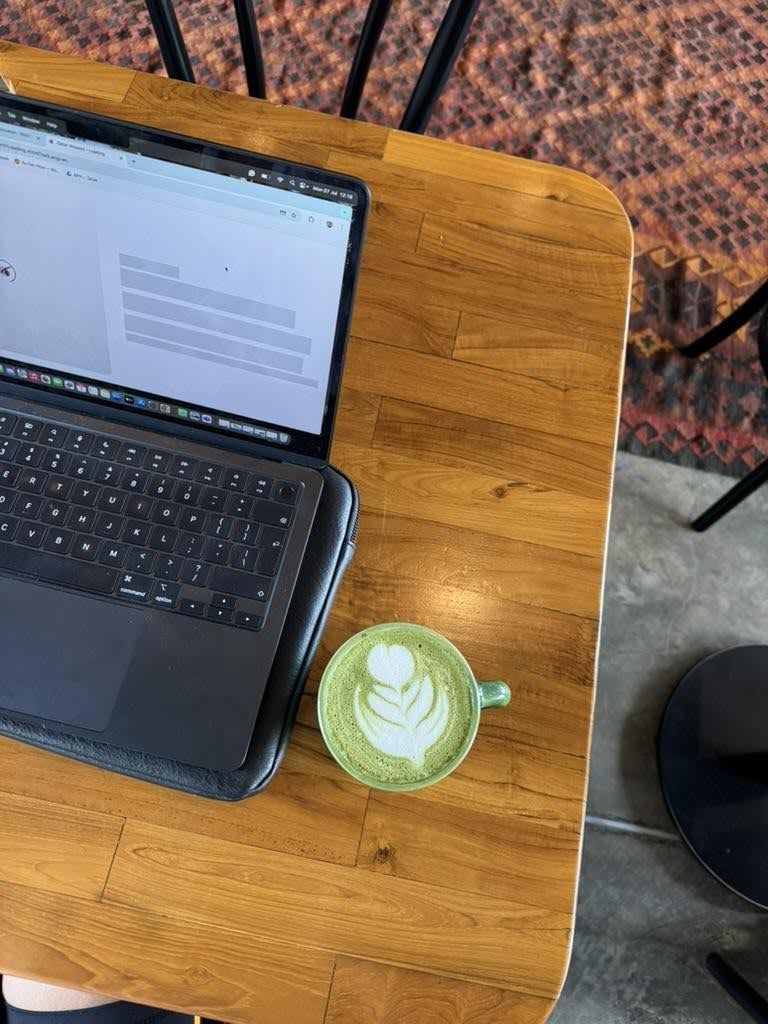

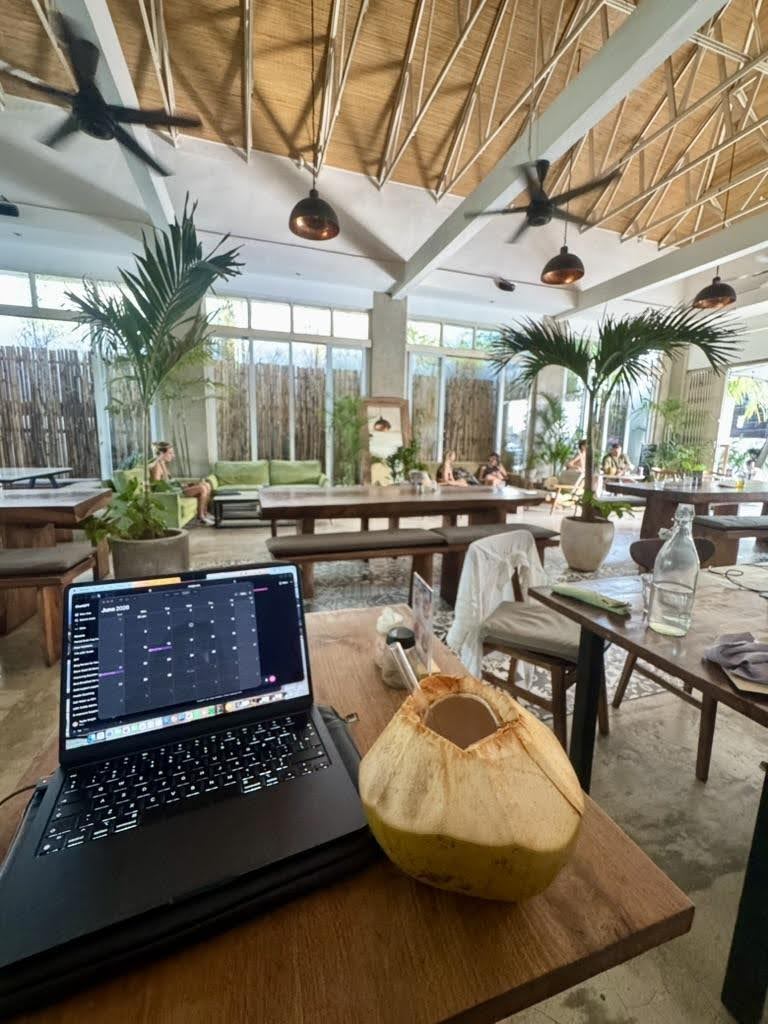
After spending three years teaching English in classrooms and language centres around Vietnam, I never imagined I’d end up teaching students through my laptop from cafés, apartments and co-working spaces around the world.
At the time, my days revolved around lesson planning, navigating Hanoi’s traffic and travelling between schools. Teaching was something I associated with physical classrooms, whiteboards and face-to-face interaction. Back then, the thought of teaching students through a laptop screen didn’t even cross my mind.
And then COVID happened.
Like many teachers around the world, I suddenly found myself making the transition online. What started as a temporary solution quickly became something much bigger.
Not only did it change the way I taught, but it completely changed the way I thought about work, location freedom and building a work-life balance that truly aligns with me.
Looking back, there are quite a few things I wish I’d known before making the switch.
If you’re considering teaching English online, here are some of the biggest lessons I learned along the way.
Read more: How Teaching Online Can Help You Travel The World
Teaching through a screen feels stranger than you expect
One of the biggest surprises was how awkward online teaching felt in the beginning.
Which sounds ridiculous when I think about it now.
I’d already spent years teaching English in person. I’d worked with children, teenagers and adults. I’d taught classes where students had almost no English and classes where students were practically fluent. Standing in front of a classroom felt like second nature to me.
Yet somehow, seeing my students through a webcam had me out of my comfort zone.
I remember feeling strangely aware of every little detail. My lighting. My internet connection. Whether my microphone was working properly. Even seeing my own face staring back at me throughout the lesson felt distracting at first.
Read more: How To Design Your Ideal Teaching Setup
In a classroom, interaction happens naturally. You can read body language, pick up on energy shifts and immediately see whether students are engaged or confused. Online, there can be a slight delay between everything. Sometimes a student pauses to think, and your brain immediately assumes you’ve lost connection. Other times you’re convinced nobody is listening, only to discover they were paying attention the entire time.
Like most online teachers, I also had my fair share of technology mishaps. Frozen screens, internet dropouts, and accidentally speaking for several minutes before realising my audio was on mute.
What I wish I’d known is that feeling awkward at the beginning is completely normal.
The technology feels like a big deal at first because it’s foreign. But after a few weeks, it fades into the background. Eventually, you’re not thinking about the camera anymore. You’re simply focused on teaching.
You don’t need the perfect setup
Before I started teaching online, I had a very specific image in my head of what online teachers looked like.
I imagined beautifully designed home offices, expensive equipment and flawless backgrounds that looked like they belonged in a YouTube studio.
The reality is a lot less glamorous, which was a relief because you don’t need an elaborate setup to start.
Most of the time, my biggest win was simply having a quiet place with strong, reliable wifi.
Looking back, I spent far too much time worrying about equipment that ultimately made very little difference.
Of course, a high-quality webcam and microphone are helpful. Good lighting makes a difference too. But the things that matter most are surprisingly simple:
- a stable internet connection,
- a quiet environment,
- and the ability to create an engaging lesson.
It helps to remember that your students are there to improve their English, not to be wowed by your fancy ring light.
For me, the biggest confidence boost came from knowing I had the right training behind me. Getting TEFL certified through The TEFL Academy gave me a strong foundation that helped me transition from teaching in physical classrooms to teaching online.
Having an internationally recognised and fully accredited qualification meant I wasn’t relying on guesswork. I understood how to structure lessons, manage different learners and adapt my teaching style when needed.
Online teaching requires a different kind of energy
Before moving online, I assumed teaching from home would be easier than teaching in person.
In some ways, it is.
You don’t have to commute. You don’t have to rush between classes. You don’t have to arrive at school after sitting in traffic for an hour.
What surprised me was how much energy online teaching requires.
Especially when you’re teaching young children.
In a classroom, your presence naturally helps hold students’ attention. There are fewer distractions and the learning environment feels more structured. Online, you’re competing with pets, siblings, notifications and everything else happening around your student.
As a result, I found myself becoming far more animated than I ever was in person. Sometimes I had to overemphasise my facial expressions, my reactions, and my energy levels.
At times, it felt like being a teacher and an actor rolled into one.
I also discovered that teaching adults online and teaching children online are completely different experiences.
Adults generally arrive ready to learn. They usually have a specific goal in mind, whether that’s improving their conversational English, preparing for an upcoming exam or building confidence for work.
Children, on the other hand, often arrive with very different priorities.
Sometimes those priorities include showing you their favourite toy, introducing you to their cat or enthusiastically telling you a story before you’ve even started the lesson.
As challenging as that can be, it’s also what makes teaching children so enjoyable. Some of my funniest, most memorable teaching moments happened during online lessons with younger students.
No matter how carefully I planned, there was always an element of unpredictability – which keeps things fun and interesting.
Read more: 6 Differences Between Teaching Adults And Young Learners

Time zones become part of your job
When people talk about the benefits of teaching English online, flexibility is usually one of the first things they mention.
And I have to agree. The flexibility is a major upside.
What people don’t always talk about is the role time zones play in your life.
At one point, I was teaching Vietnamese students living in the US, others based in South America and learners throughout SE Asia. As you can imagine, that led to some interesting working hours.
There were periods where my mornings started before sunrise. Other times I taught late into the evenings. My schedule very rarely looked like a traditional nine-to-five job.
At first, I resisted this.
I kept trying to create a schedule that felt “normal.”
Eventually, I realised I was missing the point.
The most amazing thing about online teaching is that it gives you the flexibility to design your schedule around your lifestyle.
Once I embraced that mindset, I enjoyed it much more.
A late lesson wasn’t necessarily a bad thing if it meant having the entire morning free. Likewise, an early start wasn’t a problem if it allowed me to finish work earlier in the day.
Read more: How To Schedule Online English Lessons Across Time Zones
You’ll gain more time than you realise
One benefit I didn’t fully appreciate until I experienced it was how much time online teaching gave back to me.
When I was teaching in person, a significant part of my day was spent getting from one place to another. Depending on where I was teaching, that could mean navigating traffic, travelling between schools or sitting on the back of a Grab bike hoping I’d arrive on time.
Then I moved online.
Instead of rushing out the door, I could slow down, enjoy some coffee, open my laptop and start teaching.
It sounds basic, but the impact was huge.
I had more time to exercise, see friends, be outdoors, and travel. More time for the things that mattered outside of work.
I don’t think I realised how much mental energy commuting consumed until it was no longer part of my day.
The freedom is amazing, but boundaries matter
One thing I wish someone had told me from the beginning is that flexibility and boundaries go hand in hand.
The freedom that comes with online teaching is genuinely one of its biggest advantages. Being able to work from different locations, have more control over your schedule and avoid long commutes is life-changing.
But freedom can also make it surprisingly easy to overwork.
When your classroom exists inside your laptop, there isn’t always a clear separation between work and personal life. It’s easy to accept one extra lesson. Then another. Then another. Before you know it, you’ve filled every available gap in your schedule. There were times when I realised I hadn’t left my apartment all day because I’d gone straight from one lesson to the next.
Teaching online gave me flexibility, but it also taught me the importance of creating structure for myself.
Taking breaks between classes. Going for walks. Spending time away from my screen. Knowing when to close the laptop and call it a day. Those habits became just as important as the teaching itself.
Online teaching changed what I thought work could look like
When I became an online English teacher, I used to view it as a temporary solution. Something I was doing just because circumstances required it.
But it very quickly made me completely change the way I thought about my career and what was possible.
For the first time, I realised that meaningful work didn’t have to be tied to a specific location.
My laptop becoming my classroom created possibilities I had never considered before.
It gave me more flexibility, more autonomy and ultimately more freedom over how I wanted to live my life.
While I genuinely enjoyed teaching in person, online teaching opened doors that simply didn’t exist before.
One last thought
Looking back, I never planned to become an online teacher.
I got TEFL certified because I wanted to teach abroad. I moved to Vietnam because I wanted adventure. I started teaching online because a global pandemic gave me very little choice.
None of those decisions were part of some grand plan. But somehow they all led me here.
That’s why I tend to laugh when people ask exactly how to map out their future teaching career.
The truth is, some of the most amazing opportunities are the ones you can’t see yet.
For me, that started with a TEFL certificate and a one-way flight to Vietnam.
For you, it might start with an online classroom.
Either way, don’t be surprised if the journey ends up looking completely different from what you imagined. Mine certainly did.

Author Bio

Accreditation & Quality Assurance
The TEFL Academy was the world’s first TEFL course provider to receive official recognition from government regulated awarding bodies in both the USA and UK. This means when you graduate you’ll hold a globally recognised Level 3 (120hr) Certificate or Level 5 (168hr) Diploma, meaning you can find work anywhere and apply for jobs immediately.